Get Full Government Meeting Transcripts, Videos, & Alerts Forever!
Get email alerts on the Attempted Murder Definition topic
No spam. Unsubscribe anytime.
Committee backs change to attempted murder definition to cover violent acts likely to kill or cause great bodily harm
Summary
The subcommittee approved an amendment and advanced a bill that restructures the state definition of attempted murder to cover unlawful violent acts committed with malice that cause or are likely to cause injury, adding transferred intent language and clarifying that acts likely to cause death or great bodily injury meet the standard.
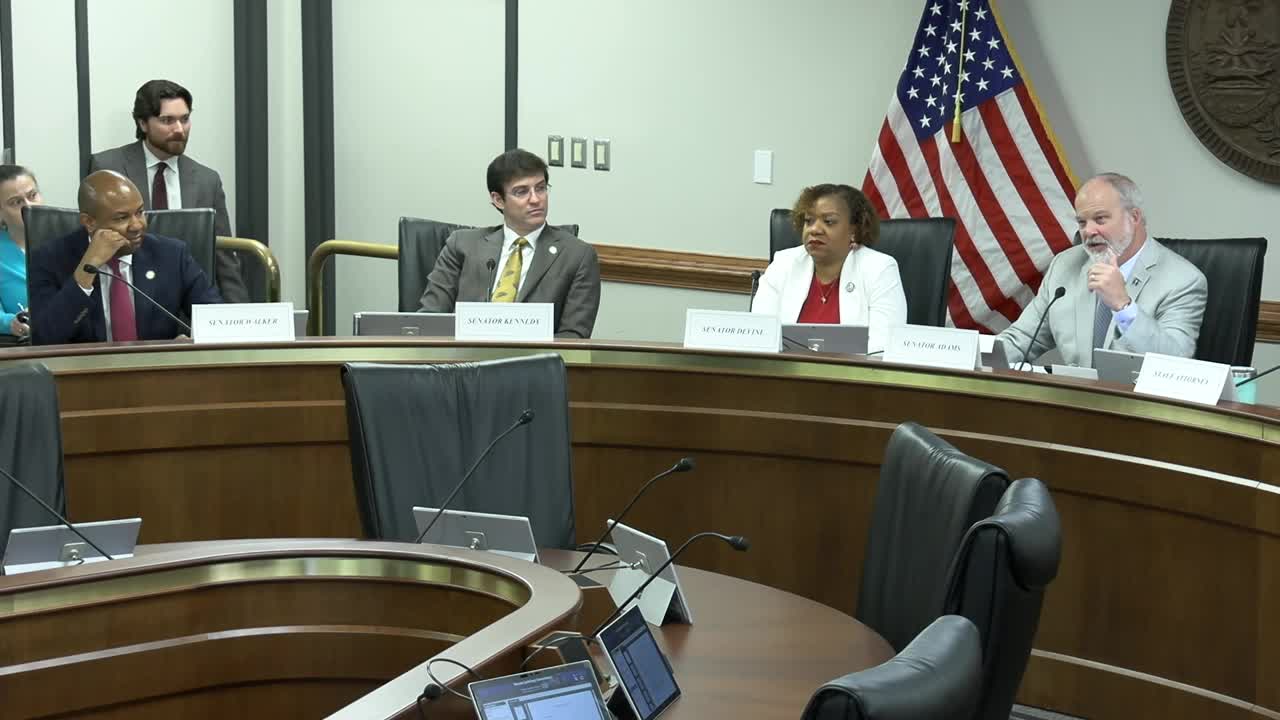
The Senate Judiciary subcommittee voted to advance a bill (Bill 270) that would broaden South Carolina’s attempted murder statute so prosecutors can charge unlawful violent acts committed with malice that cause, or are likely to cause, serious injury as attempted murder.
A staff-presented amendment, proposed by the South Carolina Commission on Prosecution Coordination, clarifies the bill’s language by defining “act of a violent nature” as “any act directed towards another person that, if completed, would have been likely to cause death or great bodily injury” and by adding the doctrine of transferred intent. The amendment makes the statute responsive to incidents in which an assailant’s act — even if not targeting a specific individual — results in a serious injury that would commonly be understood as the type of conduct constituting attempted murder.
Madison, the staff presenter, explained the amendment: “The proposed amendment would also add that act not only causes injury but is likely to cause injury to another. Additionally, the amendment defines an act of violence, a violent nature is 1 that if completed would have been likely to cause death or great bodily injury. And finally, the amendment includes the doctrine of transferred intent.”
Solicitor David Stumbo and other prosecutors told the subcommittee they have struggled to obtain attempted-murder convictions in cases where a shooting produced catastrophic nonfatal injuries. Stumbo gave a common-sense example: “A drive by shooting where a bullet hits someone and kills them is a murder. But when it hits them and paralyzes them ... it's not attempted murder. It's a lesser degree of an assault.” He and other supporters said the change would align the statute with what jurors typically expect attempted murder to mean.
Senators and solicitors cautioned that prosecutorial discretion would guide charging decisions and that the bill targets serious gun crimes rather than minor scuffles. The subcommittee voted to report Bill 270 favorably to the full committee as amended.
Votes at a glance: Bill 270 was amended and reported favorably to the full committee by voice vote.