Get Full Government Meeting Transcripts, Videos, & Alerts Forever!
Get email alerts on the Judicial topic
No spam. Unsubscribe anytime.
Tennessee Court of Criminal Appeals hears challenge to denial of judicial diversion for Mario Albanese
Summary
The Tennessee Court of Criminal Appeals heard arguments on an appeal by Mario Albanese over the trial court's denial of judicial diversion and imposition of a nine-year supervised probation term.
The Tennessee Court of Criminal Appeals heard arguments on an appeal by Mario Albanese on whether a trial court erred in denying him judicial diversion and imposing a nine-year term of supervised probation.
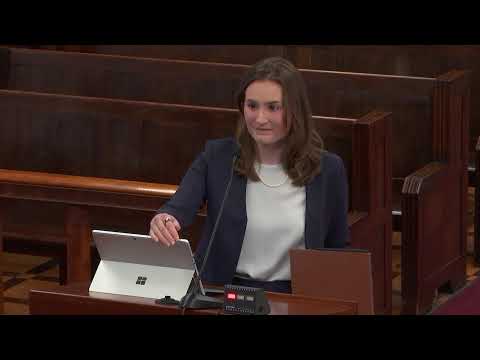
Appellant counsel Catalina Goodwin told the three-judge panel that "this is a mental health case" and argued the trial court committed "legal and factual errors" by giving only lip service to the factors governing judicial diversion, relying on its prosecutorial experience, and denying the defendant meaningful allocution before sentencing. The state, represented by Johnny Saraceno, urged the court to affirm, saying the trial court "discussed each of the Parker" factors and did not abuse its discretion.
The appeal stems from a 2023 plea and sentencing in which Albanese pleaded guilty to three counts of reckless aggravated assault under a plea agreement that included nine years of supervised probation. As announced at sentencing, the probation term includes special conditions that he continue to support his family financially and have no direct or unsupervised contact with either of his children. At the sentencing hearing, counsel and the state addressed an agreed statement of facts that described incidents when the child was approximately 2 years old and later reported the conduct at about age 8; at the hearing the parties and the state agreed on the factual recitation presented by sentencing counsel.
Goodwin told the appeals court the record supports de novo review because the trial court failed to make adequate findings under the statutory and common-law diversion framework (citing the Parker factors) and procedurally "denied the right of allocution." She said the written statement the defendant filed and a counsel proffer were not an adequate substitute for permitting the defendant to speak before the sentencing decision was announced, and that when the defendant did speak after the court announced its denial of diversion, the court did not clearly reevaluate its earlier decision.
Goodwin also relied on expert evidence in the judicial-diversion packet, including a report by Dr. Thomas Schacht that described severe autistic tendencies in Albanese and autism in the victim and the victim's mother. Goodwin said the trial court improperly treated that mental-health evidence as neutral or discounted it, and that the record contained an assessment (a psychosexual evaluation) concluding Albanese presented a below-normal risk to reoffend.
The state responded that the trial court explicitly addressed the diversion factors, assigned weight to each, and permissibly considered matters such as deterrence and the circumstances of the offense. Saraceno argued the court reasonably concluded the facts and the parties' statements supported concern about deterrence and public safety, and he asked the court to "affirm the sentence here, and deny relief." The prosecutor who handled the underlying case at sentencing, Joni Stewart, told the panel the "mental health component was substantial and it was the reason" experts were involved and why the state resolved the matter as it did at plea.
Counsel and the state disputed whether the trial court improperly relied on a dismissed original charge. Goodwin said the court repeatedly referred to the dismissed count and to its own prosecutorial experience in a way that overwhelmed the record evidence. The state said a sentencing court may consider the original charge and the court had also credited some mental-health evidence and assessed whether Albanese could comply with probation conditions.
The panel asked several procedural and record-related questions, including whether there was a formal stipulated factual basis for the plea and what evidence the court expressly relied on when weighing diversion factors. Goodwin emphasized the absence of a separately filed stipulated-facts document and urged that the sentencing hearing transcript and the diversion application together show the record is sufficiently developed for de novo review on the diversion issue.
After argument the court took the case under advisement. Presiding Judge Robert Holloway told counsel, "We'll take this case with us and get an opinion out shortly." No written opinion was issued at the hearing and no further schedule was announced.
Background and context: judicial diversion in Tennessee is an alternative to a criminal conviction for eligible defendants in which a court may defer a final conviction and impose conditions aimed at rehabilitation. Counsel debated whether the trial court sufficiently articulated the purpose of diversion and adequately applied the governance factors cited at sentencing.
What remains: The appeals court will issue a written opinion resolving whether the trial court's factual and legal handling of the diversion request — including the timing of allocution, the evidentiary weight given to mental-health and psychosexual evaluations, and the use of the court's prior prosecutorial experience — requires vacatur and remand for further proceedings or affirmation of the sentence.