Get Full Government Meeting Transcripts, Videos, & Alerts Forever!
Get email alerts on the Gangs Rico Reform topic
No spam. Unsubscribe anytime.
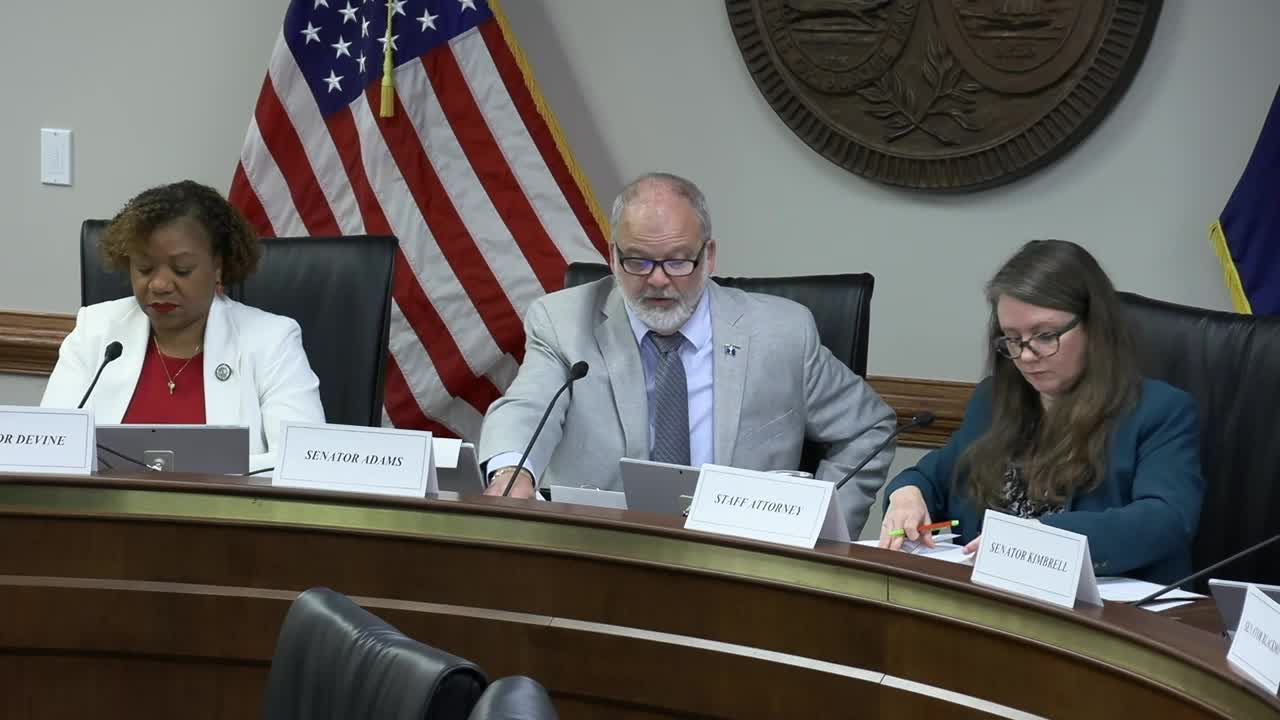
Subcommittee advances competing bills to broaden gang statutes and add racketeering offenses
Summary
Senators and law enforcement urged the Judiciary Subcommittee to advance two bills that would revise South Carolina’s gang statutes — lowering the numerical threshold for a gang, expanding covered activities, and adding a state racketeering (RICO-like) statute — saying prosecutors lack tools to pursue organized criminal enterprises.
A Senate Judiciary subcommittee voted to advance two related measures that would substantially change how South Carolina criminal law treats organized criminal groups: one would revise the state’s criminal gang statute and the other would create a state racketeering (RICO-like) offense and rename gang offenses as enterprise offenses.
Senator Hembree introduced changes to the Criminal Gang Prevention Act that would add activities to the definition of criminal gang activity and lower the numerical threshold that defines a criminal gang from five to three members. The proposal also would allow solicitors to prosecute an entire gang for related offenses rather than charging only individual members.
A second measure — described in the hearing as the South Carolina Enterprise and Racketeering Suppression Act — would replace the criminal gang offense name with criminal enterprise, revise penalties, and create a standalone felony for unlawful racketeering. The racketeering proposal defines a “pattern of racketeering activity” as two qualifying activities within a four-year period, excluding periods of incarceration, or as one or more acts of domestic terrorism.
Senator Young, who has sponsored similar earlier proposals, said the bills were prompted by testimony to the Senate oversight committee that criminal street gangs were entering South Carolina from neighboring states and that prosecutors lacked tools available in other states. “Chief Keel testified that criminal street gangs were a significant problem in South Carolina,” Young said. “He strongly encouraged us to look at ways to give law enforcement more tools in the toolbox to prosecute criminal street gangs.”
Attorney General Alan Wilson urged the subcommittee to pass a RICO-style statute and to make it available to the state grand jury. “Gangs are business enterprises,” Wilson said. “If we can't turn a gang case or a drug trafficking case into a white collar case, we haven't gone high enough. That's what our leadership in our office says.” He told the committee a state RICO statute would allow prosecutors to pursue leadership and money behind organized criminal activity and to use the state grand jury for multijurisdictional investigations.
Solicitor Duffy Stone said the bills drew on models used in Georgia and other states and described local experience. “Just in my circuit ... we know for a fact that we have 13 verified gangs that operate in those five counties,” Stone said, describing a mix of retaliatory shootings, drug distribution, human trafficking logistics and organized retail theft that he said the new statutes would better address. Stone said prosecuting enterprise-level cases together could reduce resources over time by consolidating indictments and prosecutions.
Law-enforcement witnesses emphasized the importance of definitions, the value of preserving a database/reporting framework (including SLED gang-net and NCIC entries), and the role of a pattern element in some investigations. Sergeant Brian Zwolek of the Lexington County Sheriff's Department said updating the list of predicate crimes and adding penalties for recruiting juveniles were important; he expressed concern about removing a “pattern” requirement because proving an organization’s pattern of conduct can strengthen prosecutions in court. Agent David Rivera, a SLED gang task-force officer and FBI task force officer, described multi‑state trafficking and recruitment patterns and stressed the role of state statutes in supporting witness protection and proffer efforts used in federal prosecutions.
Where the bills differ: sponsors said there is significant overlap but different drafters leaned on distinct models. One bill leans more on a Georgia model for gang definitions; the other leans more explicitly on federal RICO drafting and penalty structure. Solicitors and senators said they had compared provisions and that elements such as forfeiture, nuisance abatement of gang properties, civil remedies, and whether to include a forfeiture scheme vary between the drafts.
The subcommittee voted by voice to report the bills favorably to the full committee.
Votes at a glance: Bills 76 and 85 were reported favorably by the subcommittee and will be considered by the full committee.