Get Full Government Meeting Transcripts, Videos, & Alerts Forever!
Get email alerts on the Public Safety Power Shutoffs topic
No spam. Unsubscribe anytime.
SCE briefed Calimesa council on January PSPS event and mitigation steps
Summary
A Southern California Edison representative told the Calimesa City Council that a January 2025 Public Safety Power Shutoff (PSPS) was driven by extreme weather and dry vegetation, affected hundreds of thousands of customers and exposed communication shortcomings; SCE described grid-hardening and customer programs it plans to expand.
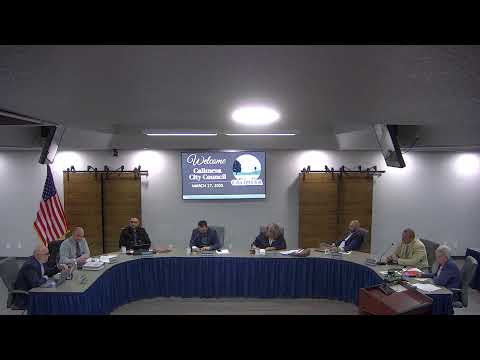
Southern California Edison told the Calimesa City Council on March 17 that a January 2025 series of public safety power shutoffs (PSPS) were driven by an extraordinary convergence of high winds, very dry vegetation and low humidity, and that the utility is expanding grid-hardening and customer-support programs to reduce the number of impacted customers.
The presentation, delivered by Arlene Flores, SCE representative, outlined the scale of the utility's service territory and the numbers involved in the January events. Flores said SCE covers about 50,000 square miles and operates more than 51,000 miles of overhead distribution and transmission lines; roughly 1,700 weather stations and crew patrols supply situational awareness on circuits in scope for PSPS decisions. She said more than 712,000 customers were notified that they might experience PSPS, and SCE de‑energized circuits serving about 365,000 customers during the January events.
“SCE is committed to improving and looking closely at ways to reduce PSPS usage with increased grid hardening and enhanced monitoring,” Flores said. “During the January PSPS events, we identified over 70 instances of damage in areas in which we had de‑energized; had the lines remained energized, in some cases the damage could have ignited a fire.”
Why it matters: PSPS is a preventive tool the California Public Utilities Commission and fire agencies accept to reduce wildfire ignitions where energized equipment could be an ignition source. Flores said the decision to de‑energize is not made for wind alone but when wind, dry vegetation and low humidity combine in forecasts.
What SCE described: Flores walked the council through SCE’s notification timeline and operational steps. SCE said it begins planning for a potential PSPS about four to seven days ahead of a wind event, starts formal customer notifications about two days before an expected de‑energization, and performs safety inspections before circuits are re‑energized. Flores said restoration typically requires up to eight hours after lines are cleared and inspected; remote circuits that require helicopter or foot patrols can add daylight‑dependent delays.
SCE acknowledged communication failures during the January events. Flores said the volume and complexity of the event overwhelmed the utility’s notification systems and that customers reported website and notification problems. She said SCE is reviewing its notification technology, testing systems, and convening internal working groups to make communications clearer and more reliable.
Planned mitigations and customer supports: Flores listed near‑term grid upgrades SCE is using to reduce the frequency and size of PSPS events, including coated (covered) conductor, fast‑acting fuses, circuit segmentation and advanced monitoring. She also noted programs to assist vulnerable customers: a medical baseline designation (for customers dependent on medically necessary equipment), door‑knock notifications when positive confirmation cannot be obtained, and a battery‑backup program for qualifying customers in high fire areas. SCE also pointed attendees to Inland Empire 2‑1‑1 for prequalification for social‑service assistance during outages.
Council questions and next steps: Council members asked how early notifications could be issued and whether SCE conducts system tests of its communications. Flores said SCE balances the accuracy of circuit‑level predictions against customer desire for earlier notice and confirmed SCE will expand testing of notification systems and solicit community input on clearer messaging.
Flores asked residents to verify their contact information with SCE to ensure calls or texts reach the right numbers and reiterated that SCE will continue to refine operations and technologies to reduce PSPS impacts.
Ending: Council members thanked SCE for the briefing and asked staff to invite SCE back when the utility updates outreach or notification procedures so the city can communicate changes to residents.