Get Full Government Meeting Transcripts, Videos, & Alerts Forever!
Get email alerts on the Affordable Housing topic
No spam. Unsubscribe anytime.
Council approves framework to split Local Affordable Housing Aid between homeownership and preservation
Summary
Bloomington council approved a proposal to split Local Affordable Housing Aid (LAHA) roughly 50/50 between affordable homeownership programs and housing development/preservation, and authorized entering a mutual agreement with the HRA to administer funds.
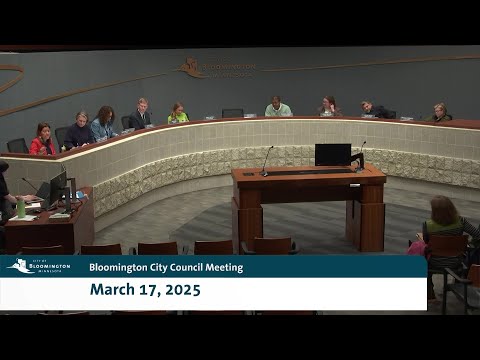
The Bloomington City Council on March 17 approved a resolution directing how the city will use Local Affordable Housing Aid (LAHA) received under the Metropolitan Area sales tax established by the Minnesota Legislature in 2023.
Housing staff (Mister Niemeyer) proposed a framework that splits LAHA roughly 50% for affordable homeownership programs and 50% for affordable housing development and preservation. Niemeyer said Bloomington received a little over $500,000 in LAHA in 2024 and now expects roughly $1,000,000 annually going forward. About $250,000 remained unspent from last year’s allocation, Niemeyer said; the first half of the current year’s distribution is expected in July and the second half in December.
Under the approved approach, city staff will enter a mutual agreement with the Housing and Redevelopment Authority (HRA) that would mirror the city/HRA process used for Community Development Block Grant administration. The HRA would administer the LAHA funds (included in the HRA annual budget), allocate funds within the agreed 50/50 split, and provide annual reporting both to Minnesota Housing and to the city council and HRA. Niemeyer said the mutual agreement will include a clause allowing termination for convenience so allocations can be revisited if priorities change.
Council members questioned how prescriptive the allocation should be and whether specific projects should be named in the mutual agreement. Niemeyer and other staff said the 50/50 framework is intended to preserve flexibility to respond to incoming project proposals (for example, preservation work such as South View Estates or existing homeownership subsidy programs and down‑payment assistance). Council members offered differing views: some favored the flexibility and HRA administration to respond quickly to opportunities; others asked that major uses come back to the full council for approval.
Council adopted the resolution approving use of 2024 and 2025 LAHA funds and authorized execution of related documents by a 6‑0 vote.