Get Full Government Meeting Transcripts, Videos, & Alerts Forever!
Get email alerts on the County Budget topic
No spam. Unsubscribe anytime.
County finance officials warn of multi-year shortfall; propose hiring freeze and other savings
Summary
Finance staff presented a five‑year general fund forecast showing a structural gap of roughly $20 million in 2026 under baseline assumptions and outlined options including attrition, hiring freezes, centralizing services and winding down discretionary projects to close the gap.
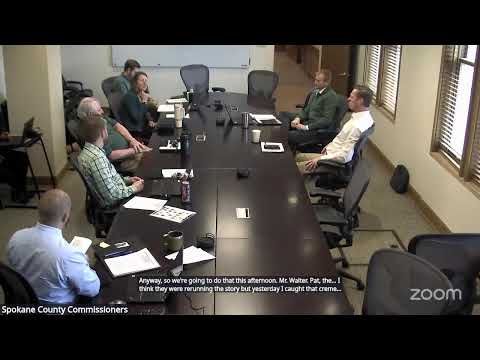
Spokane County finance officials told the Board of County Commissioners on March 17 that a five‑year forecast shows an operating gap of about $20 million in 2026 under current assumptions, and that the county must act this year to avoid drawing down fund balance to unsustainable levels.
Jeff McMorris, senior director of finance and administration, and other finance staff presented revenue and expenditure assumptions, a sales‑tax update and a menu of operational options. They said sales tax collections for December (remitted in February) came in stronger than budgeted, but longer‑term indicators — rising consumer delinquencies and slowing economic signals — warranted a conservative forecast and immediate cost control measures.
Why it matters: under the forecast presented, county revenues cannot sustain baseline spending growth in wages, benefits and capital plans without either new ongoing revenue, repeated use of fund balance, or permanent savings. Staff outlined near‑term actions (hiring freeze, attrition, centralize support services, monthly salary recovery and stricter indirect cost recovery on grants) and longer‑term options (levy lid lift, if the board chooses, or structural program changes) to reduce the deficit.
McMorris and staff said the county is largely salary‑driven (about 69% of general fund expenditures) and estimated average fully‑loaded FTE cost in the $110,000–$130,000 range. Their model showed that a one‑time $10 million ongoing reduction this year compounds to roughly $14 million in five years; conversely, failing to act would exhaust primary available fund balance within roughly 18–24 months at current spending patterns. The presentation included capital needs (boiler replacements, courthouse roof and assessor/treasurer IT systems) and showed a shaded sensitivity band around central forecasts.
Staff recommended immediate administrative steps the board can authorize now: implement a hiring‑freeze policy for departments that report to the BOCC with exceptions for critical posts (for example corrections officers), better centralization of payroll and similar support functions, monthly salary/benefit recovery to discourage year‑end baseline growth from unspent positions, and stricter recovery of grant‑related indirect costs. Finance also proposed scaling back travel/training and professional‑services spending as near‑term savings targets.
On revenue levers, staff noted two primary options: a road‑shift of property tax (one‑time and limited banked capacity) and a voter‑approved levy lid lift. Staff said Spokane County’s existing banked property‑tax capacity is smaller than many expect and that a levy lift is politically unlikely in the near term. They quantified that each penny of property tax equals roughly $950,000 under current assessments and observed that public‑safety and criminal‑justice spending constitutes a large share of the general fund.
The county’s finance team proposed a monthly reporting cadence: staff will return monthly on sales tax receipts and the status of implemented savings, and will prepare a formal budget‑letter (for department guidance) in April or May. Commissioners generally supported starting with low‑impact steps (attrition, centralization) and being transparent with outside contractors and agencies about potential funding changes early enough that those partners can adopt their own budgets accordingly.
Jeff McMorris summarized: “We are heading into a big contrast right now,” and staff emphasized the forecast is a planning tool — not a final budget decision — intended to give the board time to decide whether to pursue tax changes, deeper program reductions or preserve services with fund balance.
Ending: staff will return with a draft budget letter and monthly updates; no board vote was taken at the meeting.