Get Full Government Meeting Transcripts, Videos, & Alerts Forever!
Get email alerts on the Recycling And Waste Cip topic
No spam. Unsubscribe anytime.
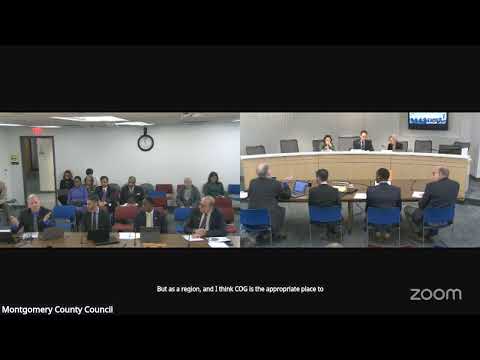
Committee backs executiverecommended CIP amendments for Oaks leachate treatment, recycling center upgrades
Summary
The Transportation and Environment Committee of the Montgomery County Council on March 17 reviewed and expressed support for two county executive amendments to the FY26 capital improvements program that would add funding to the countyrecycling and resource management CIP, including retrofitting the Oaks Landfill leachate pretreatment plant and a full upgrade of the existing materials recovery facility (MRF).
The Transportation and Environment Committee of the Montgomery County Council on March 17 reviewed and expressed support for two county executive amendments to the FY26 capital improvements program that would add funding to the countyrecycling and resource management CIP, including retrofitting the Oaks Landfill leachate pretreatment plant and a full upgrade of the existing materials recovery facility (MRF). The executiverecommended sixyear CIP total across all programs was described at roughly $387,000,000 with an $11.2 million increase above prior appropriations.
The amendments would be funded from the solid waste disposal fund (current revenue and revenue bonds) and the water quality protection fund for stormwater-related projects, staff said. "This is for the Oaks Landfill Leachate Pretreatment Plant," said Jamie Foster, section chief of plan and design, construction, and monitoring in the resource and recycling management division, explaining the retrofit work is intended to address PFAS and to develop treatment technologies appropriate for discharge to the sanitary sewer.
Foster said the county tested granular activated carbon systems but "based on the testing, we realized that we would not meet the 4 parts petroleum treatment goal," and that staff is evaluating other treatment technologies. The requested funding, she said, will continue evaluation and planning to identify the appropriate treatment system to mitigate PFAS in effluent discharged to the Washington Suburban Sanitary Commission (WSSC) sanitary sewer.
On the MRF upgrade, staff described completed facility condition assessments and a move from 30% toward 60% basis of design. Willie Weiner, who identified himself as chief of the area department, said the current sorting and processing equipment dates to the 1990s, with an upgrade in 2001, and that it now processes roughly 8 tons per hour. "The facility that we are looking for right now as an upgrade will be processing about 22 to 25 tons an hour," Weiner said, projecting roughly a threefold increase compared with existing equipment and noting that current capacity forces the county to bypass material to other processors.
Committee members pressed staff on the likely impact of these capital investments on the solid waste management fee the county executive proposed in the operating budget. Councilmember Balcom and others asked whether the two projects alone would trigger the proposed fee increase; staff said the projects before the committee would have only a marginal effect on rates. "I imagine... these projects alone are not driving significant impact on time," a staff member said, adding that the larger operating-budget changes and a separately proposed new capital project carry greater rate implications.
Committee members asked DEP to return with a project-by-project breakdown of the fee implications so the council can prioritize work before approving rates. Staff also said the committee will review the broader solid waste management plan and the FY27 operating budget in coming weeks and months; the committee noted the MRF upgrades and the Oaks PFAS work have regulatory and capacity rationales driving the near-term need to move forward.
The committee voted "without objection" to support the executiverecommended amendments as presented and asked staff for more detailed fee-impact scenarios before final rate decisions later in the budget process.