Get Full Government Meeting Transcripts, Videos, & Alerts Forever!
Get email alerts on the Facility Master Planning topic
No spam. Unsubscribe anytime.
Four finalist architecture firms present master‑planning approaches to Central CUSD 301 board
Summary
Architects from Architectural Resource Corporation, SDR Partners, Larson & Darby Group and Corrigan Clark each gave ~15‑minute presentations to the Central CUSD 301 board on facility master planning, community engagement and referendum strategy; the board’s facilities committee will return a recommendation in April or May.
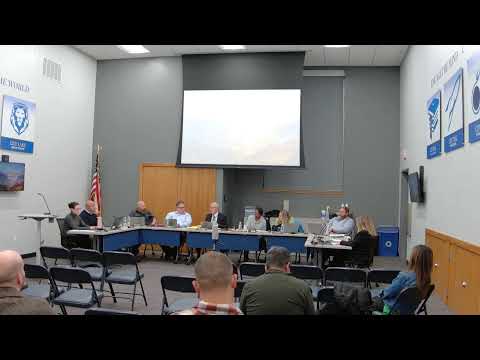
Facilities Director Holloway introduced four finalist architecture teams that each presented their proposals and answered board questions during the meeting. Architectural Resource Corporation (ARC), SDR Partners, Larson & Darby Group, and Corrigan Clark described how they would approach a districtwide master plan, community engagement and potential referendum work.
ARC emphasized local Illinois experience, sustainability, and a data‑driven programming approach. ARC’s presenter said the firm is “exclusively local, deeply invested in Illinois” and pledged a partnership approach to translate the district’s vision into projects.
SDR Partners focused on master planning, survey research and referendum strategy. Its team described a multi‑phase process of discovery, capacity analysis and community surveying and said, “referendums are really hard” but that surveys and targeted outreach can identify which projects the community will support.
Larson & Darby highlighted a long record of work in the district and nearby counties, including prior additions and renovations for Central 301. The firm framed its role as a partner that can lead master planning and community engagement, and a presenter closed by asking the board to “continue our relationship” with them.
Corrigan Clark described a full‑service delivery model that combines architecture, engineering and construction management and emphasized “target value design” to hold projects to budget while integrating construction expertise early in the design process.
Board members asked about each firm’s community engagement approach, experience with referendums, and capacity to handle both small maintenance work and large campus projects. Several firms described tools such as facilitated steering committees, public surveys, VR visualization and phased schemes to test cost versus benefit.
Facilities committee members and staff said they will evaluate tonight’s presentations alongside the RFQ responses and bring a recommendation to the board in April or May. No procurement decision or vote was taken at the meeting.