Get Full Government Meeting Transcripts, Videos, & Alerts Forever!
Get email alerts on the Tax Captures Library School Funding topic
No spam. Unsubscribe anytime.
Residents urge council to act on tax captures, missing library funds and looming school funding cuts
Summary
Multiple residents used their March 11 public comments to urge Detroit leaders to stop tax captures and abatements that they say harm school millages, to demand repayment of $407,000 missing from a 2021 Detroit Public Library wire fraud, and to press the council to declare a housing state of emergency and reallocate funds.
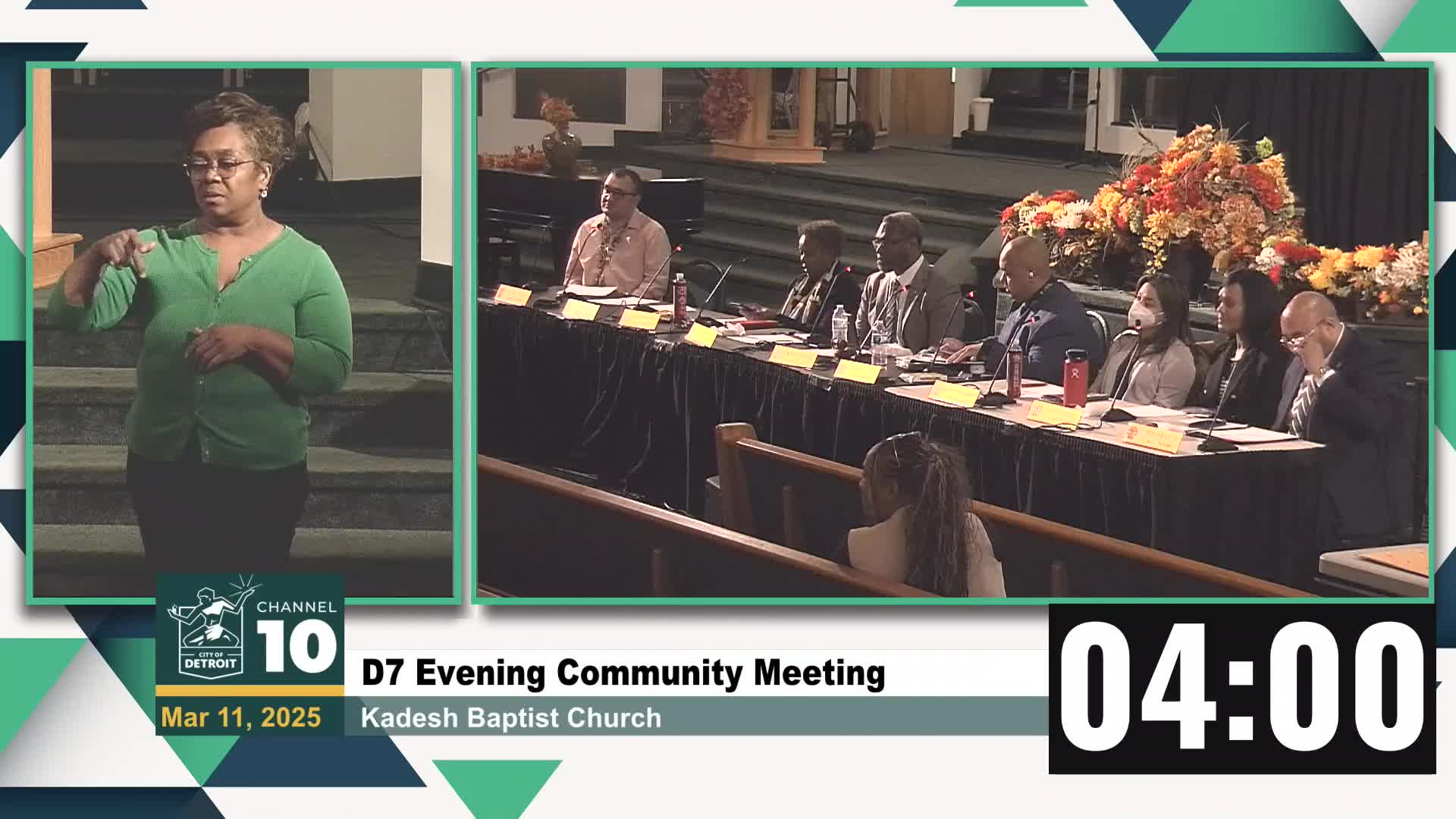
Several residents at the March 11 Detroit City Council evening meeting urged elected officials to address tax captures and abatements that they said reduce local millage support for schools, libraries and other public services.
A caller who identified himself during public comment raised alarms about proposed state and federal education cuts, saying the district could lose tens of millions of dollars and urging the council to “stop the tax captures and the tax abatements on the millages for the Detroit Public Schools.” He said tax captures impose 30-year obligations that reduce millage revenue for schools, libraries and community college.
Adam Barrett of Detroiters for Tax Justice asked the council to lower the Detroit Public Library’s administration fee (he requested adjusting it to $50,000 from a reported $800,000), to authorize repayment of $407,000 still missing from a February 2021 wire-fraud incident affecting the library account, and to declare a state of emergency on housing and reallocate resources accordingly.
Veronica Smith, also with Detroiters for Property Tax Justice, reiterated those three demands and said the city—not the library—has sole access and control of the account implicated in the wire-fraud case.
Council member Fred Derhall (Durhall) responded in part by noting that some tax-capture reimbursements come from the state and by offering to continue the discussion offline; he said his office would share appropriations details that clarify reimbursement mechanics. Derhall stopped short of promising immediate policy changes and emphasized the need to balance economic investment with protecting students.
Speakers called for greater transparency and accountability for tax incentives and for city officials to ensure that voters’ millage dollars support the services they intended, including nutrition programs and other K–12 priorities.
No formal action was taken at the meeting; speakers asked the council to examine appropriations documentation and to consider policy changes during the budget process.