Get Full Government Meeting Transcripts, Videos, & Alerts Forever!
Get email alerts on the Water Quality Backflow topic
No spam. Unsubscribe anytime.
Committee introduces ordinance to strengthen cross-connection rules, sets public hearing to protect Detroit drinking water
Summary
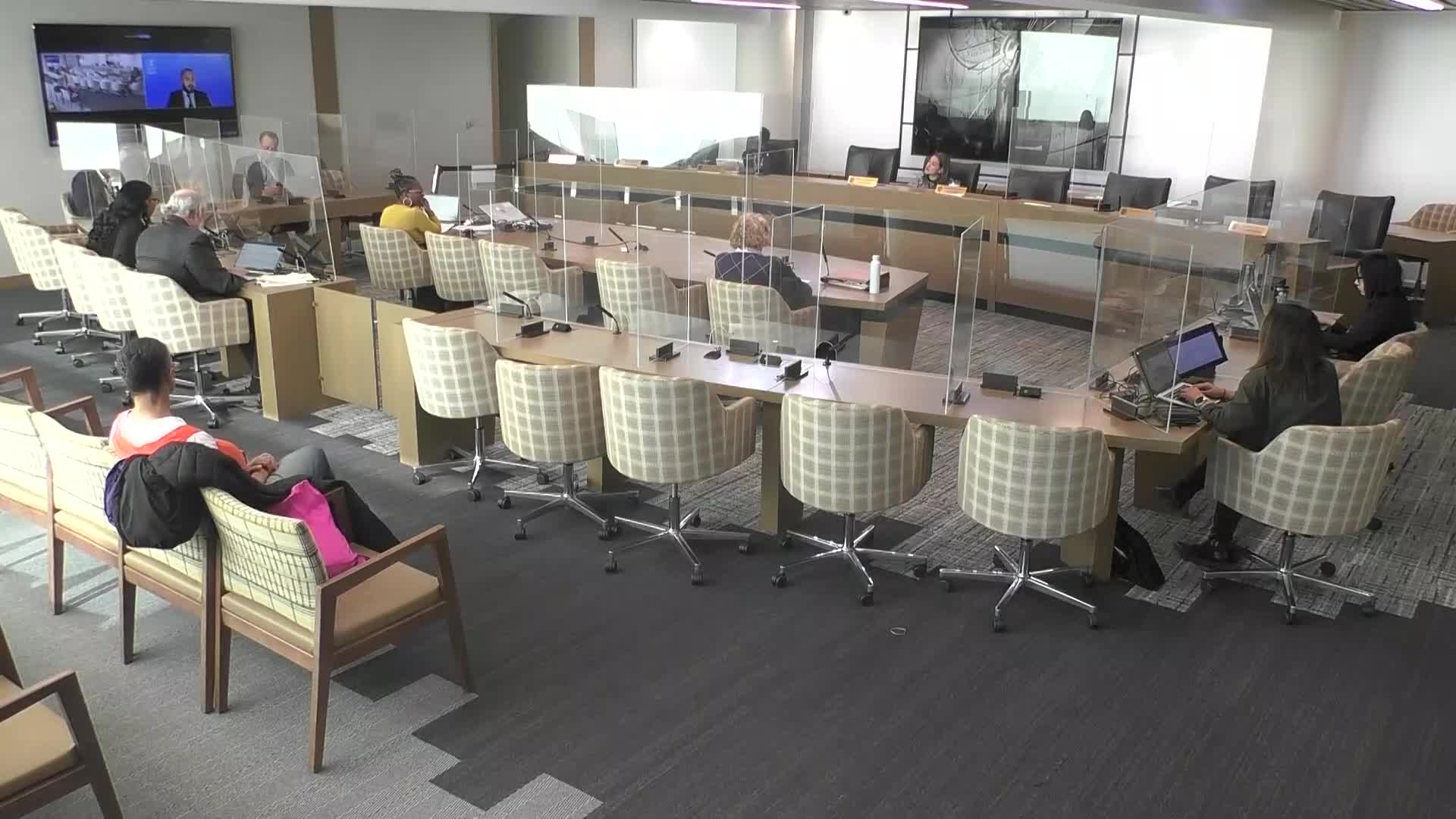
The Public Health & Safety Committee voted to send to new business an ordinance strengthening cross-connection rules that require installation, testing and inspection of backflow-prevention devices to protect Detroit’s drinking water supply.
The Public Health & Safety Committee voted to send to new business—and to set a public hearing on—an ordinance that would amend Detroit City Code Chapter 19 to strengthen cross-connection controls and give the city authority to inspect, test and enforce backflow-prevention requirements.
Jacob Bahari, associate general counsel for the Detroit Water and Sewerage Department (DWSD), told the committee the proposed changes update the city’s cross-connection ordinance to meet requirements under the Michigan Safe Drinking Water Act and guidance from the Michigan Department of Environment, Great Lakes, and Energy (EGLE). The amendment would clarify prohibited cross-connection types, require installation and periodic testing of backflow prevention devices, add inspection authority and establish violations with potential service interruptions for noncompliance.
DWSD staff showed a short public-education video describing common household cross-connections—such as irrigation systems, pool connections and hose bibs tied to chemical sprayers—and simple prevention steps. DWSD said the initial residential rollout will prioritize higher-risk systems, notably irrigation, and that present enforcement for high- and medium-hazard commercial accounts would expand to the residential class as required by state law.
On enforcement and implementation, DWSD staff said the department plans to absorb the cost of installing required backflow-prevention devices for residents where needed. Officials described a stepped notification process; the department said an initial written notice is expected to allow 30 days for a response and that bill notices could be used if mail is not returned. Some devices carry different testing frequencies depending on hazard level; DWSD described a likely 10-year inspection cycle for many residential accounts, with more frequent testing for higher-risk connections.
Council Member Scott Benson, who said he is sponsoring the ordinance, described it as required for state compliance and public-health protection. Committee members praised DWSD’s short explainer video as a helpful educational tool. The committee approved sending the ordinance to new business for introduction and setting a public hearing, where the public will have an opportunity to comment.
Next steps: the ordinance will be introduced at new business and a public hearing will be scheduled; DWSD will continue outreach and provide details on inspection timelines and the assistance program.