Get Full Government Meeting Transcripts, Videos, & Alerts Forever!
Get email alerts on the Renaissance Center Demolition topic
No spam. Unsubscribe anytime.
Residents and callers criticize council after study of Renaissance Center was denied; raise demolition, health and gentrification concerns
Summary
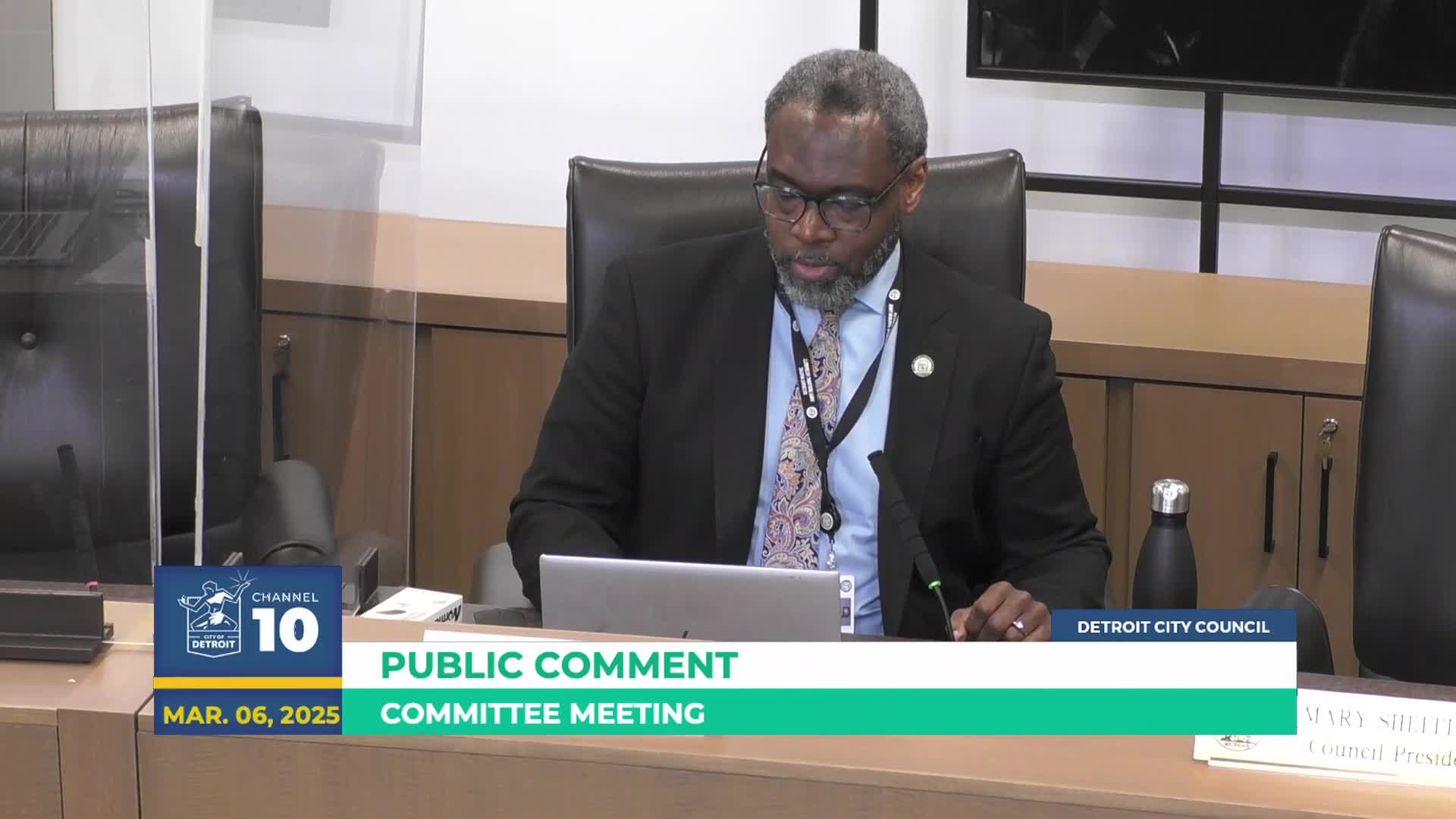
During public comment at a Detroit Planning & Economic Development committee meeting, multiple residents criticized the committee’s denial of a study on the Renaissance Center, urged against demolition, and raised concerns about gentrification, ARPA spending and air-quality risks from implosions.
Public commentators at a Detroit Planning & Economic Development standing committee meeting urged the council to allow a study of the Renaissance Center and raised wider concerns about demolition, spending and gentrification.
The speakers, nearly all members of the public, criticized the committee’s 8‑1 decision to deny a study of the Renaissance Center and urged that the building not be demolished. One caller said, “Detroit City Council for you to vote down a mere study about the Renaissance being designated as a historical site shows that you all colluded together with the mentality of slavery.”
Why it matters: Commenters said a study would preserve community input and protect residents from potential environmental harm and displacement. Several speakers connected the issue to broader worries about private development, use of public funds and the pace of neighborhood change.
Several callers tied the denial of the study to gentrification and corporate influence. One caller criticized private developer Dan Gilbert and the company Bedrock by saying redevelopment renderings may be only initial designs and expressed concern that buildings could be left empty. Another caller asked why the project is being rushed and asked why elected members would “listen to Dave Massaron and Jared Fleischman” rather than hold a study.
Public commenters raised environmental and health concerns about demolition methods. One caller who said they had watched the implosion of the Hudson Building said, “asbestos blew all over the place,” and urged caution before any implosion near the Detroit River.
Other public comments at the session addressed related civic concerns. Joyce Moore of the Virginia Park Community Coalition urged that the city not allocate demolition money in the upcoming budget and suggested participatory budgeting to prioritize rehabilitation funding over demolition. Another speaker, who identified himself as an outreach volunteer, described handing out bus tickets, warm clothing and low‑income housing lists and said the city should support street outreach rather than harm it with disruptive demolitions.
Council chair responses and next steps: Council President Pro Tem James Tate told one caller the committee views public comment as a valuable input among others; Tate noted he holds three community meetings monthly and invited an in‑person follow-up. Member Leticia Johnson and committee staff did not take final action on a demolition of the Renaissance Center at the session; public comment closed and the committee moved on to agenda business.
Ending: The committee did not vote on demolition at the meeting. Public commenters urged additional study, clearer environmental protections for demolition, and more transparent use of ARPA and other public funds. The Renaissance Center issue remains a public concern and was discussed repeatedly during the meeting’s public‑comment period.