Get Full Government Meeting Transcripts, Videos, & Alerts Forever!
Get email alerts on the Early Childhood Education topic
No spam. Unsubscribe anytime.
4K and early childhood update: district proposes full-day pilot, adds community site and expands early childhood sessions
Summary
District staff reported stable long-term 4K enrollment but lower district participation relative to surrounding districts, described a new community site onboarding, added early childhood sessions to meet growing special education needs, and recommended a targeted full-day pilot to address wrap-care barriers.
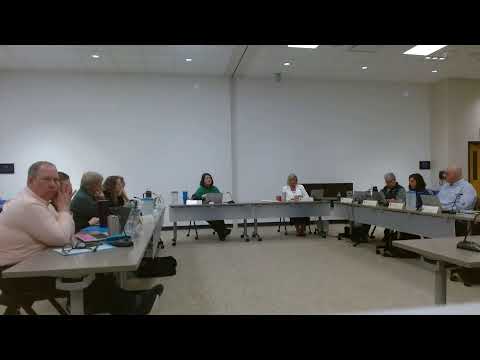
District staff presented a detailed update on four-year-old kindergarten (4K) and early childhood (EC) programs at the March 3 board meeting, outlining enrollment trends, program structure, recent expansions, and proposed next steps to increase participation and inclusion.
Program structure and services: Staff said the district’s district-run 4K program is a voluntary, developmentally appropriate, play-based 2.5-hour program for students age 4 by Sept. 1 of the school year (presentation materials list program rules). The Early Learning Center (ELC) hosts the district-run AM and PM co-taught 4K classes (general-education teacher + special-education teacher + paraprofessional plus itinerant related services). Eight community partner sites run additional 4K sessions under a community-collaborative model; partner sites hire DPI-licensed teachers while the district provides curriculum, professional development and special-education services at the sites.
Recent changes and capacity: Staff said the district has added the Goddard School (AM only) as a 4K community site for next year. They reported that some West Middleton-area families were being bused to other sites this year due to full rosters at preferred local sites, and that Academy for Learners (a private site) is full. Staff noted the ELC’s higher concentration of students with significant special-education needs and that related-services providers (speech, OT, PT, vision, assistive tech, audiology) serve the ELC classes.
Early childhood and special-education services: The EC classroom (3–4 year olds with significant disabilities) is housed at the ELC; staff reported class sizes of 5–6 students per session and said rising demand led to an added Tuesday/Thursday AM session in January with five students. Staff recommended reducing session length for EC classes (from 2.5 hours to a shorter session) to allow more sections with smaller numbers of students and to keep instructional minutes while reducing classroom dysregulation. They also recommended adding general-education peer models and exploring a partnership with Milton Parks & Rec to recruit peer models.
Enrollment trends and evaluation findings: District staff presented a multi-year analysis showing 4K participation among district kindergarten cohorts has remained relatively steady but that the district’s internal 4K participation rate (percent of kindergarten students who attended a district 4K program) ranges approximately 64–71% — lower than several neighboring districts that reported 84–95% in-district participation. Staff surveyed families who did not use district 4K and found reasons included attendance at private preschool/daycare sites (families stayed at an existing provider) and lack of wrap care (transportation/wrap care availability was a barrier for some families). At the time of the presentation staff reported about 75 registrations open for next year (a typical registration cycle has January/February spikes and further summer changes).
Assessment and interventions: Staff described a small winter AIMSweb pilot with positive feedback and said all 4K teachers will be required to administer AIMSweb in spring; that assessment will provide fall-to-spring measures and data to share with kindergarten teachers. The district runs Child Find developmental-screening dates (federal requirement); staff reported about 35 children attended Child Find this year and about 24 referrals followed, with 50 initial evaluations across 4K/EC levels overall. Birth-to-3 transition referrals (as children approach age 3) were also active; staff said 15 referrals from Birth-to-3 had been received as of March 10 and five transition meetings were scheduled for the week of the presentation.
Proposed next steps: Administration proposed work for the 2026–27 planning cycle including better census outreach to families, piloting a full-day 4K at the ELC with partner wrap care (targeting Title I schools where wrap care is a barrier), and exploring inclusive models to raise Wisconsin DPI indicator-6 ratings (early childhood environments). Administration said the pilot would be used to test operational and financial effects before any wider expansion.
Board questions and discussion covered how assessment data would be used, transportation and slot availability at community partner sites, the possible financial implications of a full-day pilot for private partner sites, and the impacts of shortening EC session time on families’ routine and respite needs.
Ending: Administration asked for board feedback on the proposed pilot approach and said it will return with a planning timeline and more detail for any 2026–27 pilot.