Get Full Government Meeting Transcripts, Videos, & Alerts Forever!
Get email alerts on the Public Safety Traffic Enforcement topic
No spam. Unsubscribe anytime.
Vendor pitches automated speed cameras and plate-reading tools; council hears legal, cost and privacy questions
Summary
A vendor presentation described fixed-position speed cameras, automatic license-plate readers and a proposed three-year contract; council members and the police chief discussed legal alignment, costs, data ownership and community notification but took no formal vote.
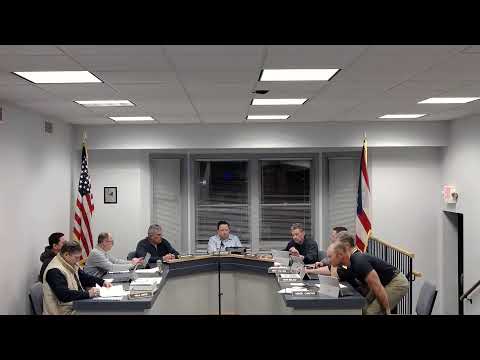
Trevor Elkins, president of Targeting Solutions and mayor of Newburgh Heights, told the Village of East Canton council that his company’s speed enforcement system can run fixed cameras and automatic license-plate readers and that “the data is yours, it’s not ours.”
Elkins gave a 40-minute overview of the technology’s operation, the review process and how the municipal review and municipal-court appeal work. He said the vendor would deliver photographic and video evidence to the police department, and that a police officer would review potential citations before any civil notice was mailed.
The presentation matter-of-factly addressed legal and budget questions that council members raised. Elkins advised aligning the village’s citation code with state guidance and suggested amending the Ohio basic code so photo-based civil citations are equivalent to a substantially similar criminal traffic citation. He also described a $25,000 deposit from the vendor that would be recouped from future citation revenue, and a vendor share that in the vendor’s estimate would leave the village with roughly 60% of collected sums after the vendor’s percentage and assumed collection rates.
Why it matters: council members said the village has a speed problem on local streets and that technology could reduce dangerous speeding without requiring officers to be physically posted at every location. Residents who drive in and out of the village figure into the projected citation volumes discussed by the presenter.
Details from the presentation and council’s questions
- How it works: Elkins said fixed units are set to a speed threshold the chief specifies; the system captures photos and video when vehicles exceed that threshold and packages hits for police review. “It captures the data, picture of the car, several pictures, and including video of the vehicle that we then take that, match it with . . . an international database,” he said. He added that mismatches are rejected by the reviewing officer.
- Data practice and privacy: Elkins said non-violation footage would be deleted and that the village would retain control of the data. “We don’t save it,” he said, describing deletion of non-violation captures.
- Legal alignment: Elkins recommended the council consider changing the traffic citation classification used for camera-issued violations so the municipal citation and camera citation “align” with state traffic-camera guidance and with mayor’s-court practice.
- Costs and revenue: Elkins described an initial $25,000 deposit that is deducted from early monthly remittances as tickets are paid. He discussed projected citation volumes (the packet he referenced estimated large numbers) and said the village would retain about 60% of collected revenue under the sample contract after vendor and collection assumptions. He also called attention to other operating costs, including poles, metered electrical service for camera posts and occasional relocation expense if posts are moved.
- Flock Safety and ALPR: The police department said it was discussing a memorandum of understanding with Flock Safety for camera-based plate-reading services; Elkins said his company’s equipment can be used with ALPR overlays and that the vendor can offer automatic license-plate readers similar to Flock.
Council response and next steps
Council members asked for a speed-study–grounded view of expected ticket volume; Elkins cited ODOT traffic counts and a prior study that he said showed about 26% of motorists exceeded the limit by at least 10 mph, which he said supported the vendor’s projection. Council members pressed for clear accounting of hidden installation costs beyond the vendor fee.
No ordinance vote or formal procurement decision was taken at the meeting. Elkins recommended three readings of any ordinance that would amend the village code; he said that would allow public comment. Council members asked for a work session to review the proposal, legal language and operating costs. The council scheduled a work session for Monday at 7 p.m. to discuss the ordinance language, handbook and related operational questions.
Ending
The council did not adopt any contract or ordinance at the meeting. The chief said he and staff would continue negotiating memorandums of understanding and provide details for council review. Elkins left contact information and asked the council to send follow-up questions by email.