Get Full Government Meeting Transcripts, Videos, & Alerts Forever!
Get email alerts on the City Goals And Cip topic
No spam. Unsubscribe anytime.
Sweet Home council reviews draft five‑year CIP, prioritizes goals after resident survey
Summary
At a work session, the Sweet Home City Council reviewed a draft five‑year capital improvement plan, discussed funding for key water and generator projects, and highlighted results from a resident survey that flagged downtown vacancy and homelessness as top concerns. Staff will return with a memo and prioritization options in two weeks.
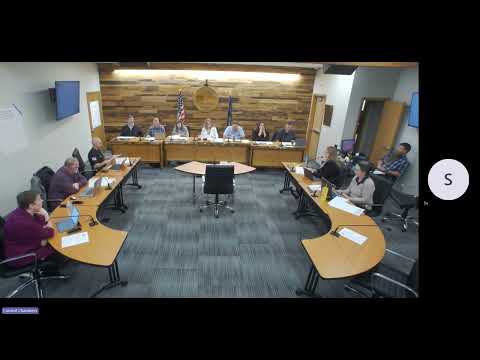
SWEET HOME — The Sweet Home City Council spent a work session reviewing a draft five‑year capital improvement plan and identifying priorities for the next fiscal year after staff presented results from a resident survey and an updated project list.
Mayor Mary Coleman opened the session by urging the council to set actionable goals, and summarized a city survey of 399 respondents that flagged downtown vacant buildings (204 mentions), homelessness (59 mentions) and cleanliness (20 mentions) as recurring concerns. "We got 399 responses," Mayor Mary Coleman said, listing the top topics residents raised.
The session’s nut graf: councilors were asked to place potential goals under five aspirational buckets — effective and efficient government; an economically strong environment; viable and sustainable essential services; viable and sustainable infrastructure; and making Sweet Home a desirable community — and staff provided a draft CIP to help translate those goals into multi‑year projects and funding steps.
City staff member Cecily (last name not provided) walked council through the draft CIP and current status of several projects drawn from recently adopted master plans, including the water master plan, stormwater master plan, transportation system plan (TSP) and parks master plan. She said the CIP is a draft and that many infrastructure items are dependent on external funding and staff capacity.
Councilors discussed several specific items and constraints. Members raised questions about the Eighth (clarified to Ninth) Avenue water main replacement and ARPA funds; staff said ARPA allocations previously set aside for a water main project had already been spent. A generator procurement awarded through federal funding would cover purchase of generators, staff said, but the estimated additional cost to install a generator at the wastewater treatment plant is about $1,000,000; council directed staff to seek additional installation funding and to explore other funding buckets and congressional spending requests.
Councilors also asked about WIFIA (Water Infrastructure Finance and Innovation Act) financing. City staff said the city is preapproved and has submitted the application fee, but WIFIA is pending because the city must complete a prior audit and secure a new credit rating before final financing can proceed. Staff noted other possible funding sources — the EPA’s loan programs, the state revolving fund, USDA programs and EDA funding — and said they had not been informed of any freezes on those programs as of the meeting.
On community priorities, councilors and staff flagged several recurring items for potential inclusion in next year’s goals or the CIP: downtown vacancy/landlord engagement; library technology upgrades and 20‑year planning; emergency plan review and East Wing renovations; Mountain View Road multiuse path and sidewalks; wastewater treatment plant Phase 1 and generator installation; and acquiring small maintenance equipment for in‑house street repairs (paver and roller). Cecily told the council staff would prepare a memo analyzing items that received three or more council stickers during the work session exercise and would return in two weeks with feasibility and cost information.
There were no formal votes taken during the work session. Councilors were asked to narrow their priorities before the next meeting so staff can produce a focused set of recommended goals and related budget or grant options.
Ending note: Staff said they will return with a detailed memo on the highest‑ranked items and with recommendations about whether items should be pursued as council goals, manager goals, or included in the CIP; the council scheduled a follow‑up in two weeks to finalize priorities.