Get Full Government Meeting Transcripts, Videos, & Alerts Forever!
Get email alerts on the Mayor Election Charter topic
No spam. Unsubscribe anytime.
Sweet Home council votes to refer charter change allowing direct election of mayor; measure set for May ballot filing
Summary
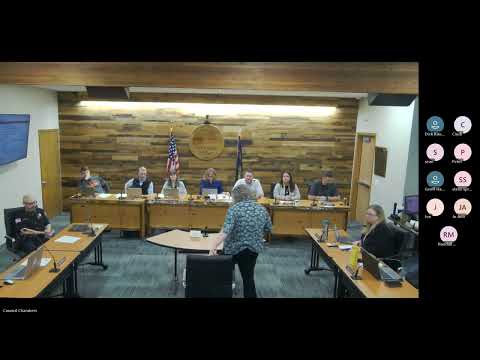
The Sweet Home City Council voted 4–2 with one abstention to refer a charter amendment to voters that would allow residents to elect the city's mayor rather than have the council appoint the position.
The Sweet Home City Council voted 4–2 with one abstention to refer a charter amendment to voters that would change how the city’s mayor is chosen, moving from a council appointment to a direct election by residents.
City Attorney Blair Larson told the council the draft amendment would change council composition so three councilors are elected at each biennial election, give councilors four-year terms and make the mayor a two-year position chosen by popular vote. Larson said the referral resolution would need to pass the council by Feb. 28 to meet state deadlines for the May 20, 2025 ballot; if the council delays, the same amendment could be placed on a November 2025 ballot (at cost) or on the May 2026 ballot at no cost to the city.
Why it matters: supporters told the council they want all registered voters to choose the mayor rather than having a majority of councilors appoint the post. Opponents stressed potential election costs this year and urged delay so the city can avoid fees and allow the Charter Review Committee more time to resolve technical issues such as how to fill vacancies if sitting councilors run for mayor.
Larson said the draft language does not address every possible contingency. For example, if a sitting councilor is elected mayor before that councilor’s current term ends, the resulting council vacancy would be filled by council appointment under current charter language unless the charter is revised further.
Public comment was extensive. Don Miller, who identified himself as the chief petitioner behind the measure, said the effort is “a desire the people of Sweet Home have consistently and repeatedly asked to have happen.” David Lohman, who said there are 7,707 registered voters in Sweet Home, urged the council to “put it on the ballot to let the 7,707 voters have a hand in voting our next mayor.” Several speakers — including Rob Lambert, Renita Cohen, Brandy Wysong Frick, Gary Jarvis of the Charter Review Committee and others — urged immediate referral so voters can decide; others, including Matthew Bechtel (chairman of the Budget Committee) and Elizabeth Curtis, asked the council to delay to avoid election costs and possible negative effects on levy measures.
Council discussion ranged from procedural questions about the petition and committee appointments to fiscal concerns. Councilors and staff clarified that Linn County charges a fee for each separate ballot measure and that placing a measure in even-numbered years (for example, May 2026) can avoid a direct cost to the city. Larson summarized the next steps if the council approves the referral: the ballot title would be filed with the city elections official, published in a local newspaper, subject to a seven-day judicial review window in the Circuit Court in Albany if contested, then filed with the county elections office and assigned a measure number.
The motion to adopt Resolution No. 6 (2025) — the charter amendment referral for direct election of the mayor — passed with four ayes, two nays and one abstention. The council record shows the ordinance would not affect when the first popularly elected mayor would actually appear on the ballot (Larson said the earliest citizens would vote for mayor under this draft is November 2026) but that the referral itself, if placed on the May 20, 2025 ballot, must meet filing deadlines this month.
Votes at a glance
- Resolution No. 6 (2025): Charter amendment referral for direct election of the mayor — Approved, 4 ayes, 2 nays, 1 abstention. The resolution refers the draft ballot measure to the May 20, 2025 election filing process; city attorney noted filing deadline of Feb. 28 and described the post-filing review steps. (See action record.)
- Ordinance Bill No. 1 (2025), Ordinance No. 1330: Amends several ordinances’ enacting clauses (housekeeping). Adopted, 7–0.
- Consent agenda (three sets of minutes): Approved, 7–0.
What happens next: if the council’s referral stands, the city elections official will publish the ballot title and the measure will be processed through Linn County for inclusion on the May 20, 2025 ballot. Citizens have seven days after publication to file a court challenge to the ballot title, Larson said. The City Council may later consider additional charter edits to address vacancies or other technical items; Larson and speakers noted there are multiple election dates before November 2026 when such follow-up measures could be placed on the ballot.
The council’s debate and the public comment period reflected a split in the community between those who want an immediate ballot question so voters can decide now and those who favor delaying the referral to avoid near-term election costs and to let the Charter Review Committee refine language and address potential unintended consequences.