Get Full Government Meeting Transcripts, Videos, & Alerts Forever!
Get email alerts on the Homelessness Shelter Village topic
No spam. Unsubscribe anytime.
Home Sweet Home Ministries outlines 56‑bed ‘shelter village’ plan for Oakland‑Main parcel
Summary
Home Sweet Home Ministries presented a proposal to convert the Connect Transit lot at Oakland and Main into a 56‑bed non‑congregate “shelter village,” seeking county capital funds and ongoing operational support from multiple public and private sources.
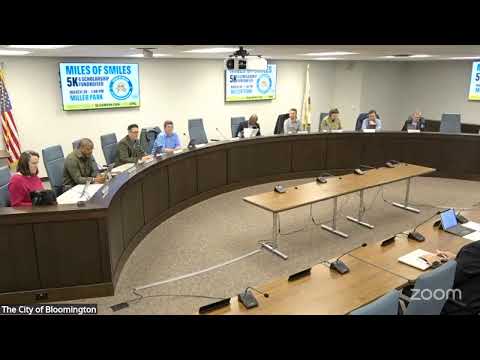
Home Sweet Home Ministries on Monday presented a proposal to develop a non‑congregate “shelter village” with about 56 beds on the city‑rented Connect Transit parcel at Oakland and Main Street, a site the presenter said is already central to the nonprofit’s downtown operations.
Matt Burgess, representing Home Sweet Home Ministries, said the project would mix single‑occupancy and double‑occupancy sleeping cabins, a staffed central clubhouse with showers and bathrooms, and on‑site service partners for behavioral health, medical care and employment assistance. “This is gonna be somebody’s front yard, essentially, where people are gonna be able to be served,” Burgess said.
Burgess told the council the cabins would be roughly 80–100 square feet, climate‑controlled, and equipped with locking doors and an electronic key‑fob system. The clubhouse would include restrooms and showers sized to code (Burgess said he had been told a 1:8 ratio by city code experts). The site would be fenced and gated with staff present 24 hours a day, he said.
Why it matters: Burgess and council members framed the project as an effort to move people indoors from tents and encampments and to reduce the safety risks of unsheltered homelessness. Burgess said shelter villages have been used in multiple U.S. cities and cited Denver figures showing high retention for some programs.
Key details and timeline
- Capacity and design: Burgess said the program is projected to provide about 56 beds, split between single‑occupancy and double‑occupancy units. He described the model as “low barrier,” allowing companion/service animals and permitting residence for people who are under the influence so long as they are not dangerous; on‑site use of substances would remain prohibited.
- Cost and funding: Burgess said capital development costs are projected at $2,500,000 and that Home Sweet Home requested $1,340,000 from McLean County through a county request for proposals (RFP) for mental health and public safety funds. He said operational costs are estimated near $700,000 per year, with roughly $600,000 of that for staffing. Burgess said private philanthropy and the organization’s capital reserves would make up the remaining capital funding.
- Site and partners: Burgess said Home Sweet Home is negotiating a long‑term lease with Connect Transit for the parcel and has engaged Catalyst Construction and Farnsworth Group for design work. He said the city, Bloomington Township and nearby institutions including the library and Eastview Christian Church have been contacted and have expressed support.
Council questions and concerns
Council members asked about scale, operation and community impacts. Council member Ward asked whether the 56 beds would cover local need; Burgess replied the number would not serve everyone currently unsheltered and estimated 70–75 people could be outdoors once winter warming services end, so “56 beds doesn't equal that number.” Burgess acknowledged some people will remain unsheltered and emphasized ongoing outreach to engage them.
Council members pressed on operational funding and staffing. Burgess said Home Sweet Home employs about 40 staff across programs and expects to add roughly a dozen employees for this facility; he listed trainings the organization provides, including trauma‑informed care, de‑escalation, CPR and Narcan. Council member Becker cautioned the operating estimate might be low and warned that programs that start without durable funding risk failure.
Burgess said zoning for the site matched Home Sweet Home’s existing zoning and that code and permitting work would be needed; he asked the city to expedite permitting where possible. He also said the county had opened an RFP and that Home Sweet Home was the sole applicant for county funding at the time of his remarks; he described the county’s commitment as up to $1,500,000 toward a non‑congregate shelter project in 2025, subject to the county evaluation and executive committee review.
What's unresolved
Burgess said a lease with Connect Transit had not been finalized at the time of his presentation. He also said the county funding process was ongoing and not yet finalized. Council members sought more data on long‑term operational funding and permanent housing placement, and one council member recommended involvement by behavioral‑health coordination bodies.
Ending
Burgess said his team hoped to open occupancy in early November and invited council members to contact him with follow‑up questions. Council members thanked him for the presentation and suggested staff follow up on zoning, permitting and funding coordination so the project could move forward if the lease and funding align.