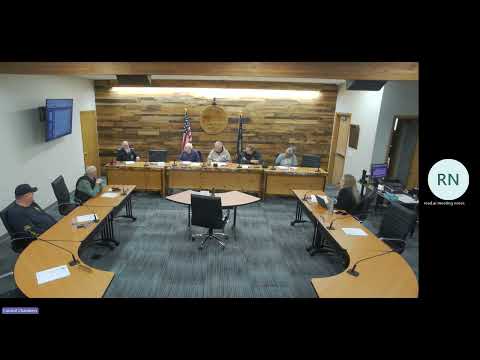
Sweet Home committee moves forward with First Avenue signage and temporary speed-hump study
Loading...
Summary
Committee members reported new taller truck signs on First Avenue, approved a short-term engineering task order to study temporary speed humps, and raised crosswalk and neighborhood-routing concerns that staff will monitor.
At a recent Sweet Home Public and Traffic Safety Committee meeting, members reported that new, taller truck signage was installed at both ends of First Avenue and were notified that the city will execute a task order with an engineering firm to study temporary speed-hump or speed-table options.
The committee said the pole-and-sign replacement appears to have reduced large-truck traffic on First Avenue: a committee member reported seeing "one semi and two dump trucks" since the signs went up. Chair Gallagher said the goal was "increased visibility" and that the signage change was intended to address resident concerns about large vehicles on the street.
Why it matters: First Avenue carries pedestrian traffic and residents have raised safety concerns about vehicle speeds and truck use. Committee members asked staff to view short-term measures as part of a broader traffic pattern that includes nearby intersections at Pleasant Valley and the state highway 228, which they said affect route choice and could shift traffic into neighborhoods.
Staff told the committee that the city is finalizing an on-call engineer contract and has selected a firm to perform the First Avenue investigation; staff expects to execute a task order "in the next week or two" and to receive potential solutions within about a month. The committee was told the initial installation would be a temporary measure (staff described it as a roughly six‑month trial), after which observations and possible next steps will be returned to the committee.
Committee members noted historical context: a traffic-safety recommendation to install temporary speed humps on First Avenue was brought to city council in 2014–2015 with an estimated cost of $10,800, and council declined that measure at the time. Members urged the new study to account for adjacent projects and intersections (Pleasant Valley and the 228 intersection) because changes there can redistribute traffic into residential streets.
Crosswalks: Committee members discussed pedestrian crossings on First Avenue. The group noted there is an outline crosswalk at the 228 intersection but no marked crosswalk at First and Nandina or at Main Street; members said a midblock crosswalk at First and Nandina would be a relatively low-cost safety improvement. Staff explained constraints related to crossing distance and ADA ramp geometry and said they would review crosswalk placement and signal timing as part of ongoing work.
Other monitoring and next steps: committee members asked staff to monitor the Holly Road/Main Street signal for increased queuing that might result from diverted traffic, and to report back with observations after the temporary measures have been in place. The committee chair asked staff to return to the committee with results of the engineering study and the six‑month observation period.
Votes at a glance: The committee approved the minutes from the previous meeting. A motion to accept the minutes was made and seconded; the vote was taken and recorded verbally as "aye." No individual roll-call vote with named tallies was provided in the transcript.