Get Full Government Meeting Transcripts, Videos, & Alerts Forever!
Get email alerts on the Housing Approval Reform topic
No spam. Unsubscribe anytime.
Broad housing reform bill SB 974 draws sharp support and opposition over scope of streamlined approvals
Summary
SB 974 (dash 1) would reclassify many housing approvals as limited land‑use decisions, set 120‑day timelines for engineering and plat approvals and curb some local design review; supporters said the bill will speed housing while opponents warned it could restrict public participation and sweep in high‑impact land‑use changes.
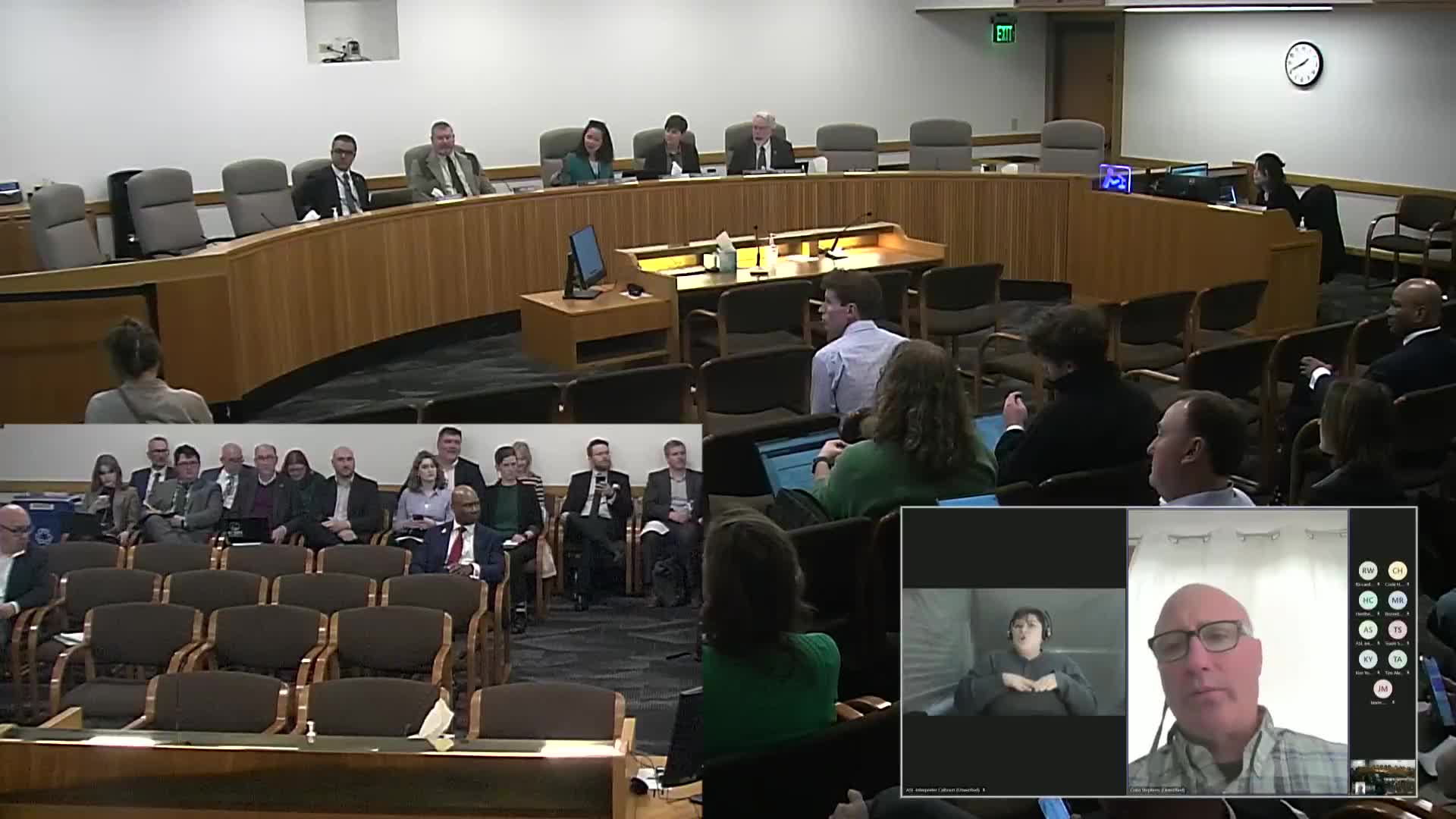
The Senate Committee on Housing and Development held an extended public hearing Feb. 27 on Senate Bill 974 (dash 1), a package of changes aimed at accelerating housing approvals inside urban growth boundaries and limiting some local review processes.
Senator **** Anderson, the bill sponsor, said the bill builds on prior housing legislation and the governor’s housing goals and seeks to “reduce those barriers, streamline the approval process, and incentivize housing development within our urban growth boundaries.” He told the committee stakeholders had worked with his staff and that a dash‑2 amendment was being drafted to address local government concerns.
Key measures in the dash‑1 amendment, as described by proponents and sponsors, include reclassifying “urban housing applications” as limited land‑use decisions, creating a 120‑day deadline for final engineering and final plat approvals, narrowing some design‑review requirements and authorizing reimbursement of prevailing applicants’ attorney and engineering fees when appeals are overturned. Proponents said these changes would curtail frivolous appeals, reduce unpredictable delays and lower costs.
Supporters included the Oregon Home Builders Association and the Oregon Realtors. Jodi Hack of the Home Builders Association said the bill “is a pragmatic common sense solution that makes the approval process more efficient and predictable.” Jason Mayer of Portland Homes and other builders said long timelines — often three to four years from master plan to first finished home — force developers to pay for engineering and planning earlier and take added risks.
Multiple industry witnesses urged the committee to adopt the bill with the forthcoming technical amendments. Tony Kelly, president of Oregon Realtors, said the bill’s provisions to bar local authorities from requiring specific building materials for aesthetic purposes would remove thousands of dollars in added costs for new homes.
Opponents included the League of Oregon Cities, the Association of Oregon Counties (AOC), 1000 Friends of Oregon, Central Oregon Land Watch and several city officials. Alexandra Ring of the League of Oregon Cities said the base bill “would fundamentally change how our building permitting works” and warned it would increase permit costs, denials and legal risk without further fixes. Jody Hack and others noted ongoing negotiations but requested that the committee allow review of forthcoming amendments.
Central Oregon Land Watch and 1000 Friends of Oregon raised specific concerns that the bill’s definition of “urban housing application” in section 8 could be read to convert broad legislative actions — including comprehensive plan or UGB expansions and zoning map changes — into limited land‑use decisions, which would reduce public hearings and public participation for significant community decisions. Corey Harlan of Central Oregon Land Watch said the bill as written “is not about how to streamline locating housing on lands within UGBs already zoned for residential use” and instead “goes beyond” that scope.
Local city officials described operational issues in applying a strict statutory timeline to iterative engineering and permit reviews. Colin Stevens, Bend’s community and economic development director, explained that building and engineering reviews are typically iterative: “If something is submitted and it is perfect to begin with, we will get it out the door. But if it's not, there's a long back and forth process to make sure that it is.” He warned that making a first review into a hard statutory decision would require denials and re‑submittals, increasing contention.
Several witnesses asked for clarification that the limited‑decision classification apply only to quasi‑judicial, site‑specific applications inside UGBs — not to broad legislative code or comprehensive plan changes. In response, Samantha Baer of the Oregon Home Builders Association, who said she had worked on the draft dash‑2 amendment, told the committee the forthcoming draft would clarify that limited land‑use treatment applies to quasi‑judicial applications on parcels already zoned or planned for residential use inside UGBs, not to comprehensive plan changes.
The committee did not vote. Senators and stakeholders indicated they will continue to negotiate technical fixes; the sponsor said a dash‑2 is under legislative counsel review and anticipated additional amendments and hearings.