Get email alerts on the Building Permit Timelines topic
No spam. Unsubscribe anytime.
Senate panel hears support and concerns for 45‑day permit ‘shot clock’ in SB 6
Summary
Supporters told the Senate Committee on Housing and Development that a 45‑day limit for residential building‑permit decisions would cut costs and speed housing delivery; building officials and cities warned the bill as introduced is too broad and does not account for other required reviews.
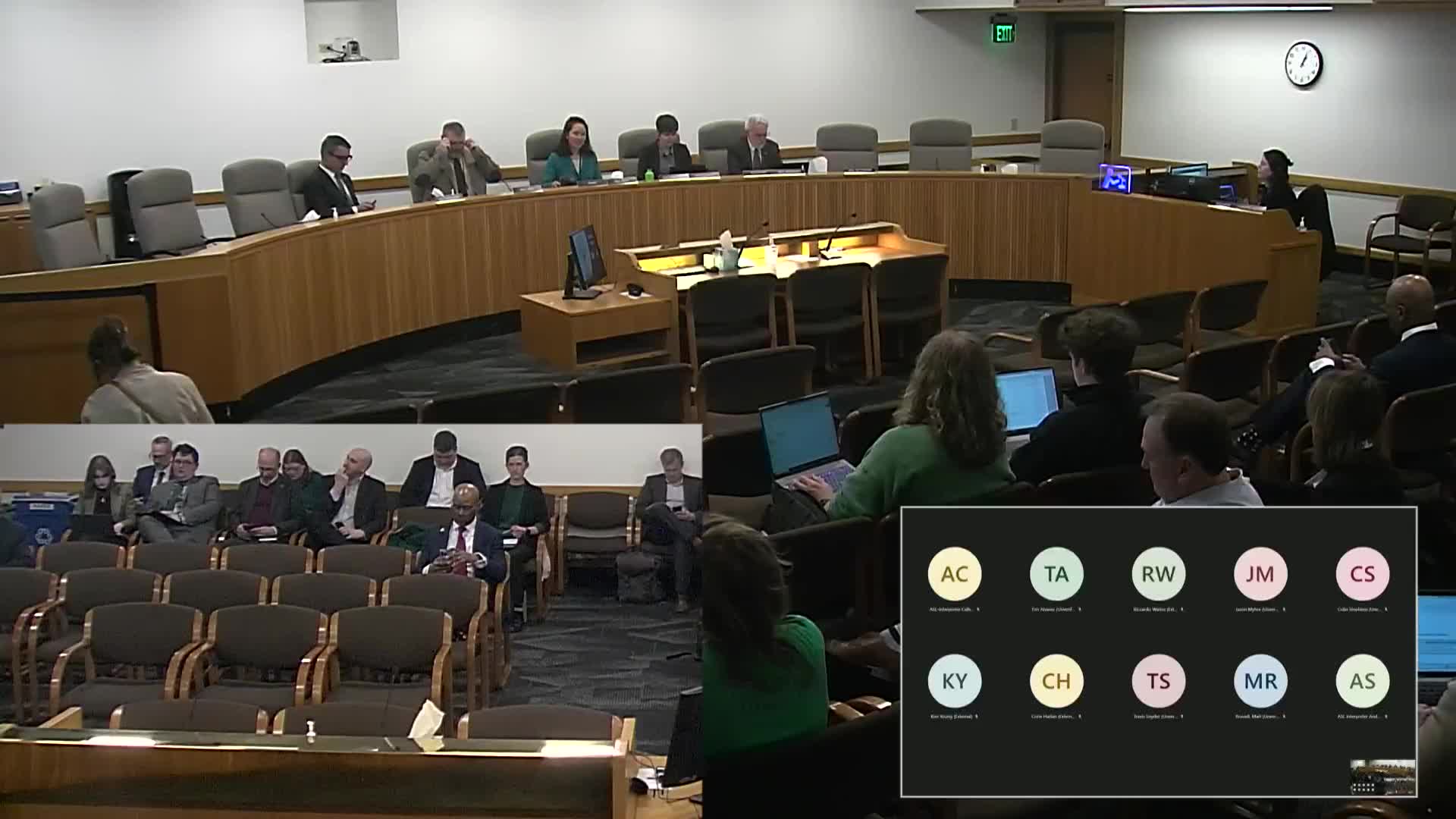
The Oregon Senate Committee on Housing and Development opened a public hearing Feb. 27 on Senate Bill 6, which would require agencies and officials who administer the state building code to approve or deny a complete building‑permit application within 45 days.
The measure drew backing from home builders and trade groups, who said permitting delays drive up project costs and slow housing production. Senator **** Anderson (Senate District 5), the bill sponsor, described SB 6 as a targeted timeline for residential permits: “Simply put, SB 6 will put for a 45 day time cap on housing building permits in Oregon.”
Proponents said the change would create predictability for builders and reduce holding and financing costs. Zach Lindahl of Multifamily Northwest said delays increase interest, labor and material costs and “a streamlined permitting process will help developers bring badly needed housing online sooner.” Deb Flagan, vice president of Hayden Homes and Simplicity Homes, told the committee her companies have pulled building permits in 130 of Oregon’s roughly 242 cities and reported wide variance in review time: 50 cities (about 42%) completed permits in fewer than 45 days while others took 60 to 300 days. “A 45 day time limit for permit reviews would have a direct and immediate impact on Oregon’s housing crisis,” Flagan said.
Builders and local developers repeated that permitting unpredictability raises project costs and curbs housing supply. Travis Snyder, owner of Snyder Creek Development, said the bill “doesn’t lower any standards and it doesn’t cut any corners. It simply ensures accountability in the permitting process.”
Opponents — including the Oregon Building Officials Association (OBOA), the city of Eugene, the League of Oregon Cities and the Association of Oregon Counties — urged caution and changes, saying the bill as introduced is too broad and fails to account for approvals outside building departments. Matt Rozelle, the building official for Clackamas County speaking for OBOA, said the bill “should apply to single family and residential lots and middle housing only,” and that it does not consider other approvals such as land use or work by the Oregon Department of Transportation. Eugene intergovernmental relations manager Ethan Nelson said the state lacks statewide data showing the problem is systemic and requested more municipal input before broad statutory changes.
County and city officials also raised practical concerns. Brandon Persinger of the Association of Oregon Counties said counties must follow the state building code and that “if the state would like county building officials to process building permits faster, the Building Codes Division needs to require the review of less materials.” Alexandra Ring of the League of Oregon Cities said many applications arrive incomplete and staff often work with applicants to reach final approval; she warned the bill would increase costs, denials and legal risk unless revised.
Senator Anderson and witnesses acknowledged changes are coming: the sponsor said a dash‑1 amendment intends to narrow scope and clarify completeness standards, and participants referenced planned further technical edits. The committee was also told by legislative staff that no statewide statutory timeline for all building‑permit decisions currently exists in statute, though rules or local practices may set timelines in some jurisdictions.
The hearing record shows a split between industry groups pushing for a hard timeline to reduce carrying costs and local governments urging narrower scope, clearer definitions of a “complete” application and coordination with outside agencies. The committee did not take a vote during the hearing and invited additional written comment and follow‑up amendments.
Details drawn from testimony include the bill’s 45‑day limit for building permits and an element in the sponsor’s description that would require special jurisdictions such as ODOT to act on their portion of an application within 10 business days. Supporters and opponents said they would continue negotiating changes in forthcoming amendments.
AI generated
The text on this page is AI generated. Summaries, highlights, analysis, and video transcripts are all produced from the original source material.
AI can make mistakes, so if you spot one, and we will fix it for everyone.
Note: the source content is unaltered by us. Any content source we link to, be it a video, an audio recording, or a document, is presented exactly as its publisher released it. That publisher is usually a government body, sometimes an individual official or another organisation.