Get Full Government Meeting Transcripts, Videos, & Alerts Forever!
Get email alerts on the Department Of State Lands Budget topic
No spam. Unsubscribe anytime.
Department of State Lands seeks $116.5 million, cites staffing shortfalls and permit delays
Summary
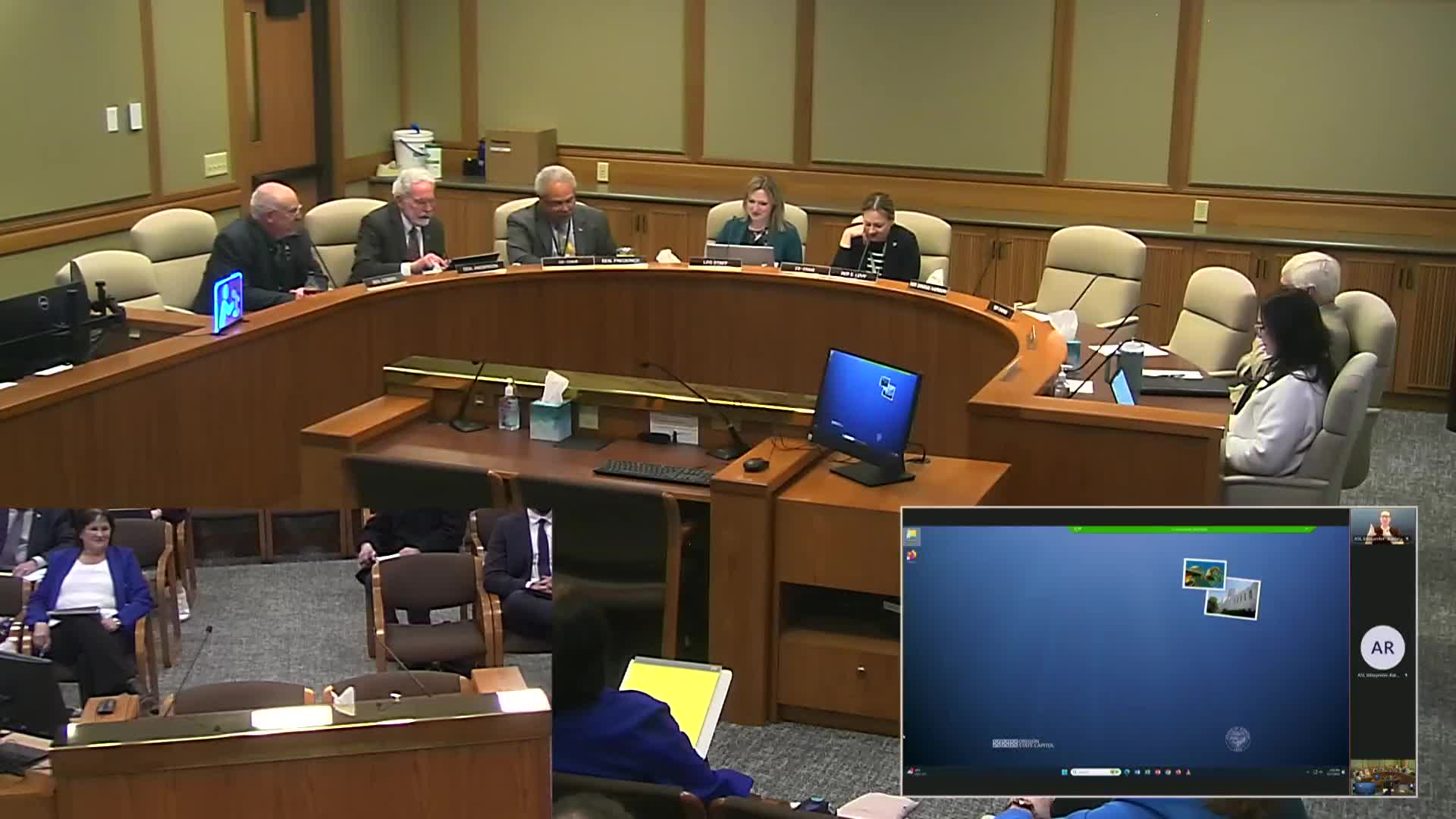
The Oregon Department of State Lands presented its 2025–27 budget request to the Ways and Means Natural Resources Subcommittee on March 17, 2025, asking the governor to approve $116,500,000 and 38 positions to restore core services and advance multi‑year projects.
The Oregon Department of State Lands presented its 2025–27 budget request to the Ways and Means Natural Resources Subcommittee on March 17, 2025, asking the governor to approve $116,500,000 and 38 positions to restore core services and advance multi‑year projects. Director Vicki Walker and Deputy Director of Administration Jean Strait outlined program needs ranging from permit review capacity and GIS staffing to funding for the abandoned and derelict vessels program and the Elliott State Research Forest.
Walker said the request is aimed at “securing adequate resources for this team to meet your expectations,” and described the proposal as intended to restore timeliness and program capacity after declines in performance and customer satisfaction. Jean Strait told the committee the department has missed several key performance targets, including its 60‑day target for individual removal‑fill permit decisions; the department’s fiscal year 2024 average was 94 days for those permits and 81 days for wetland delineation reviews.
The budget materials and staff testimony emphasized several ongoing and planned efforts. DSL is continuing work on the Oregon Waterways and Land Stewardship (OWL) permitting system, the newly created Abandoned and Derelict Vessels (ADV) program funded initially with an $18,800,000 deposit from the Monsanto settlement, and the transition of the Elliott State Research Forest to full operations. Walker said the ADV program has removed 11 vessels to date and cited the December removal of the Dredge Anderson — a large, PCB‑ and lead‑paint‑contaminated vessel — as a high‑priority cleanup that cost about $1,100,000.
Bill Ryan, deputy director of aquatic resource management, described ongoing legal and technical work at the Portland Harbor Superfund site and the department’s role in defense and allocation negotiations. “There’s a core group of four — two assistant attorney generals plus two paralegals — that are full time on the project,” Ryan said, adding that many additional staff and outside reviewers are involved and that roughly 80% of recent defense fees have been covered by insurance.
The department also highlighted the Common School Fund, managed by DSL, as a substantive beneficiary of land management revenue. Staff said Oregon manages roughly 681,000 acres of school lands and reported the Common School Fund is currently valued at about $2.38 billion; the department announced last week that K‑12 public schools will receive a record $76.8 million from the fund in 2025. DSL’s presentation said revenue from school lands supports agency operations as well as distributions to schools.
Proposed policy packages in the governor’s budget include positions and funding to: restore core permitting and compliance services (including a coordinator for large linear projects), add GIS capacity, right‑size the South Slough National Estuarine Research Reserve budget and staffing, continue the OWL permitting system development, support Elliott State Research Forest transition and Shutter Creek planning, and sustain ongoing Portland Harbor Superfund and ADV work. The total requested budget was described in testimony as $116,500,000 and 38 positions.
Committee members asked for detail on Superfund legal costs and timelines. Ryan said the department is participating in a voluntary mediation process with about 80 other potentially responsible parties and expects an initial draft allocation from that process to be presented later in the year; after that the state will move into a phase of defending proposed allocations.
The subcommittee closed the informational hearing and noted a public hearing on Senate Bill 5539 (the Department of State Lands appropriation bill, referenced in committee materials as “Senate Bill 55 39”) is scheduled Wednesday to take public testimony. Staff also said the panel will likely cancel a separate follow‑up meeting because the agency completed its presentation today.
The presentation packet on OLIS includes the Legislative Fiscal Office budget review, DSL’s slides and program annual reports, which DSL staff referenced as sources for program and performance detail. The department requested the committee consider the proposed packages as part of the governor’s 2025–27 budget deliberations.