Get Full Government Meeting Transcripts, Videos, & Alerts Forever!
Get email alerts on the Legislative Memorials topic
No spam. Unsubscribe anytime.
Senate committee advances resolution honoring late Senate President Peter Courtney after hours of testimony
Summary
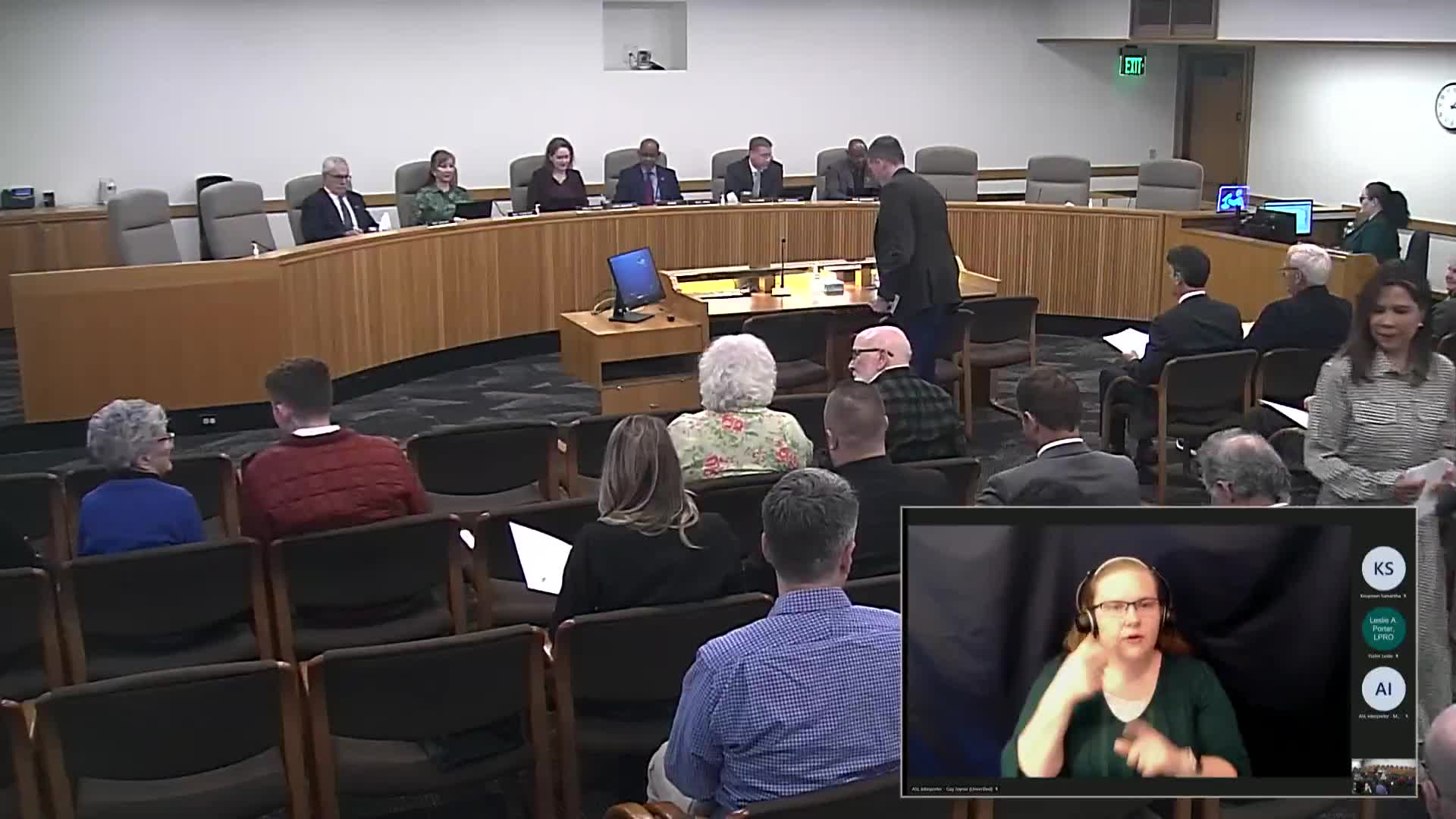
The Oregon Senate Committee on Rules on March 17 advanced Senate Concurrent Resolution 10, which honors the life and public service of Peter Michael Coleman Courtney (1934–2024), after a public hearing that drew scores of former colleagues, community leaders and institutional representatives.
The Oregon Senate Committee on Rules on March 17 advanced Senate Concurrent Resolution 10, which honors the life and public service of Peter Michael Coleman Courtney (1934–2024), after a public hearing that drew scores of former colleagues, community leaders and institutional representatives.
The resolution, which the committee recorded as having no fiscal or revenue impact, was moved to the Senate floor with a “be adopted” recommendation.
The committee heard roughly two hours of testimony describing Courtney’s decades in state government, his role as a mentor and his influence on policy and on the Capitol’s culture. Rob Wagner, Oregon state senator and Senate President, told the committee that Courtney “never forgot to stand up for those who needed a champion,” and announced that the legislature will name the new joint legislators’ lounge on the Capitol’s third floor in Courtney’s honor.
Several former lawmakers who served with Courtney said his leadership style combined strictness and care. Former state senator Ginny Burdick said Courtney’s “gift of empowering others” made lawmakers across party lines feel valued and able to contribute. Former senator Rick Metzger, who served as Courtney’s Senate President Pro Tem, told the committee Courtney treated good ideas the same regardless of which party proposed them and that one word guided him: “respect.”
Betsy Eimholt, who worked for Courtney for years, cited specific policy work. She said Courtney helped pass Senate Bill 8 in 2007, “to require that oral chemotherapy be covered the same as other chemo,” a change she said later spread to more than 40 other states. Courtney’s work on a wide array of bills, Eimholt added, produced an 18-page list of legislation posted in the legislature’s records.
Speakers described Courtney’s support for state institutions and projects. Lisa Sumption, state parks director, recounted how Courtney tested prospective leaders’ commitment, then mentored them: “he cared so much about the fair that he was testing my grit and my drive,” she said. Melanie Doolin, administrator for Oregon Corrections Enterprises, described Courtney’s hands-on interest in correctional job programs and noted he personally signed certificates for adults in custody who worked on renovations to the Capitol.
Community leaders gave examples of Courtney’s impact beyond the Capitol. Andrew Holbert, executive director of Courtney Place Veterans Housing, described an incident in which a single call from Courtney — “do we have that part yet?” — prompted construction to finish and the housing to open. Evan Sorens of Western Oregon University recounted how Courtney’s long career as a professor and administrator tied him to higher education; Western’s student health and wellness center will bear Courtney’s name, Sorens said.
Testimony also included personal anecdotes about Courtney’s mentorship, humor and decades-long presence in the building. Several witnesses said he insisted on correct name pronunciation and took time to speak with staffers, constituents and students. Former-colleagues and advocates urged the committee to approve the resolution as a formal recognition of those contributions.
After the public testimony, Vice Chair Buono moved the resolution to the Senate floor with a “be adopted” recommendation; the committee’s roll call later showed the motion passed. The committee did not record a dollar impact for the resolution and included no policy changes beyond the naming and formal recognition described in the resolution text.
Courtney’s family, friends, former staff and a wide range of civic organizations gave testimony supporting the resolution; the full committee record and posted memorial materials detail the breadth of his legislative work and community ties.
The committee will carry SCR 10 to the Senate floor for disposition; the resolution’s next step is consideration by the full Senate.