Get Full Government Meeting Transcripts, Videos, & Alerts Forever!
Get email alerts on the School Facilities Funding topic
No spam. Unsubscribe anytime.
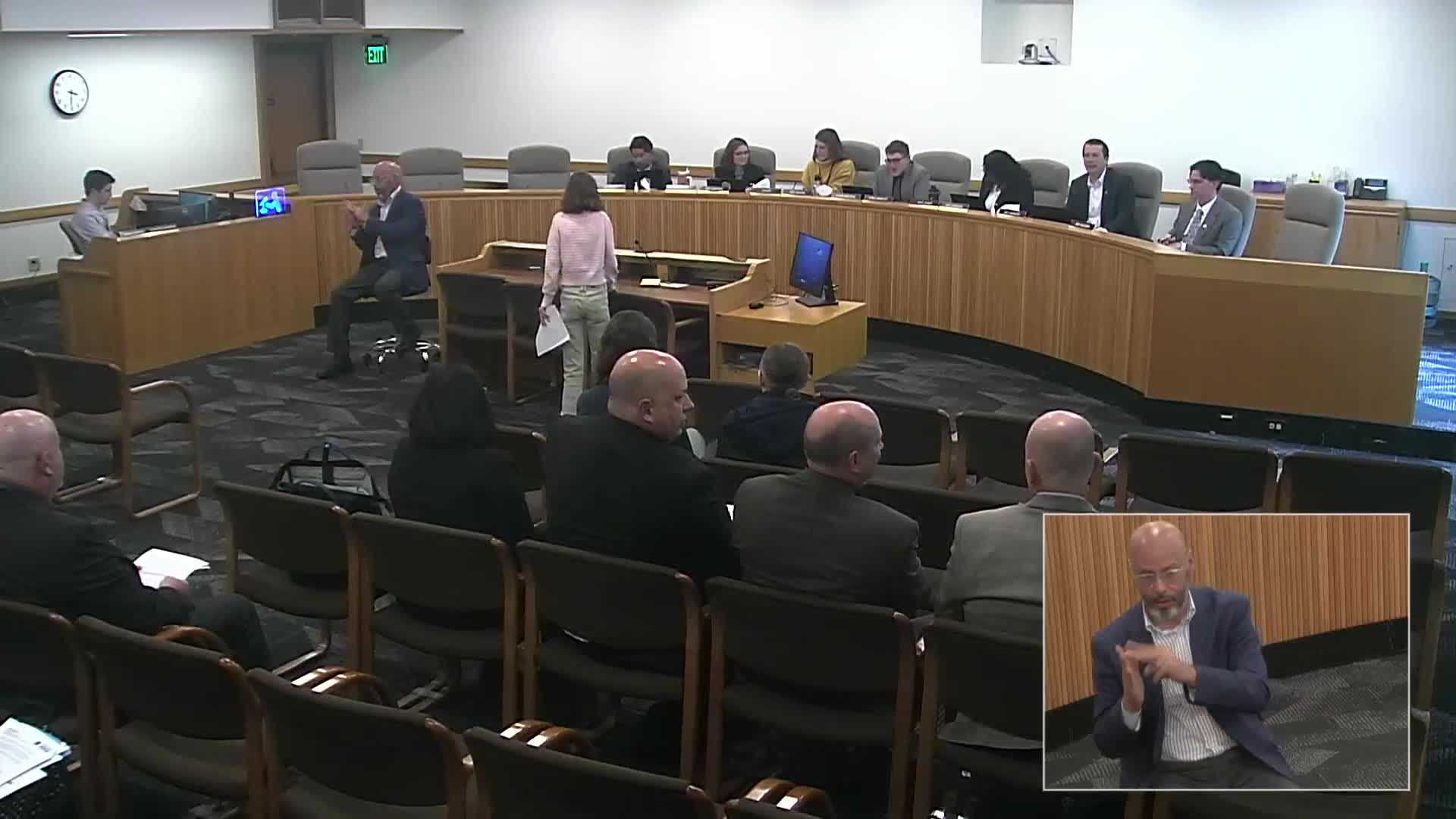
House Education hears proposals to fund school facility upgrades, lottery bonds and kicker redirect debated
Summary
Lawmakers and school officials told the House Education Committee on March 17 that aging school buildings and deferred maintenance in districts with limited tax bases require state action; two bills proposing state funding mechanisms received testimony.
Lawmakers and school officials told the House Education Committee March 17 that long‑deferred maintenance and aging buildings are impairing learning and safety in districts that cannot pass local bonds, and they urged lawmakers to consider targeted state funding.
Two related proposals received testimony. House Bill 30 14 (HB 3014) would establish a School District Facility Equity Fund, authorize the state to issue lottery bonds and direct the Department of Education’s Office of School Facilities to award grants to districts for emergencies and capital improvements without requiring a local bond match. Supporters proposed splitting a $100 million bond into an emergency pot (proposed $50,000,000, with emergency grants up to $500,000) and a second pot (proposed $50,000,000 with grants up to $2.5 million) for districts lacking local taxing capacity.
House Bill 33 60 (HB 3360) would redirect corporate kicker windfalls to a School Facility Improvement Fund to be used for one‑time infrastructure grants and maintenance in districts that have not been able to secure voter approval for general obligation bonds; Representative Zach Hudson said the companion constitutional amendment (House Joint Resolution 13) would be necessary to send the kicker change to voters.
The committee heard multiple on‑the‑record accounts from rural and urban districts about aging buildings and the practical consequences for students. Mark Witte, superintendent of Grant County School District 3, described buildings constructed in the 1930s through 1960s and the decline of the local tax base after mill closures; he said the district’s student population fell from 1,148 in 1998 to 472 and estimated a new facility could cost about $54 million, an amount the district could not raise locally. Will Blood, board chair for Grant County School District 3, and Joel Smallwood, director of facilities for Salem‑Keizer Public Schools, provided additional examples of deferred maintenance and the need for stable funding.
Morgan Allen, speaking for the Coalition of Oregon School Administrators (COSA), framed the bills as tools to address statewide inequities. Allen noted existing “awesome” bond matching and seismic rehabilitation grants that require local matches and said lottery bonds or other mechanisms could provide options for districts without local tax capacity. Stacy Michaelson of the Oregon School Boards Association and Louis Desitter of the Oregon Education Association also spoke in support.
Corbett School District superintendent Derek Fielkevich recounted recent emergency events: a leaking diesel boiler and mold testing that kept students out of a building for months, winter storm damage that closed school for two weeks and large unplanned costs that drained reserves. He said Corbett used an awesome match bond in 2020 but rising construction prices forced the district to cover cost increases from general funds.
Several witnesses urged the committee to move the bills to Ways and Means so funding and design details can be debated; supporters emphasized the need for statewide assessments (currently under way at the Department of Education) to guide prioritization. No committee vote on either HB 30 14 or HB 33 60 is recorded in the transcript; both bills received public testimony and were closed for hearing.
Why it matters: multiple districts — especially rural districts with constrained tax bases — reported aging HVAC, roofing, plumbing and electrical systems, occasional unsafe conditions and ongoing operational strain. Testimony linked facilities to learning conditions, attendance and equity.
Where it stands: both bills were heard and supported by a coalition of education groups and district officials; committee action (amendments or referral) was not recorded in the available transcript.