Get Full Government Meeting Transcripts, Videos, & Alerts Forever!
Get email alerts on the Performance Based Regulation topic
No spam. Unsubscribe anytime.
Supporters tell Senate committee SB 688 would push utilities toward performance-based regulation
Summary
Witnesses told the Senate Committee on Energy and Environment that Senate Bill 688 would require the Oregon Public Utility Commission to design a performance-based regulatory framework for electric utilities by Jan. 2, 2027; testimony cited interconnection delays for rooftop and community solar and urged stronger mandates and funding.
Senate Bill 688 would direct the Oregon Public Utility Commission to adopt a framework, by Jan. 2, 2027, for performance-based regulation of electric utilities, and proponents told the Senate Committee on Energy and Environment on March 17 that the change is needed to align utility incentives with customer and clean-energy goals.
The bill, as summarized for the committee, includes several proposed amendments: a “-1” amendment that makes certain required actions permissive and would appropriate $1,500,000 from the General Fund; a “-2” amendment that is similar but appropriates $500,000; and a “-3” amendment that would limit the act to electric companies.
Why it matters: Supporters said Oregon’s traditional cost-of-service regulation bases utility returns on capital investments, which can slow adoption of lower-cost, customer-owned resources and delay interconnection of third‑party solar and storage. Angela Crowley Cook, executive director of the Oregon Solar and Storage Industries Association (OSEA), told the committee, “Our current system is broken and performance based rate making is really the only way to ensure that our investor owned utilities are putting customers first and complying with Oregon's law in the fastest and most cost efficient way.”
OSEA and others urged stronger language and said the commission should be required rather than permitted to adopt a performance framework. Crowley Cook gave the example of virtual power plants — programs that aggregate rooftop solar and batteries to reduce peak demand — and said utilities have left such programs in pilot phases for years because the current regulatory incentives do not reward timely deployment.
Dr. Pat De Laquille, an energy systems modeler testifying for Mobilizing Climate Action Together (MCAT), said the traditional model “creates a strong financial incentive for utilities to prioritize spending on infrastructure and their own spending in particular because that's what's tied to their rate of return.” He said that creates preferences for building utility‑owned generation and pole‑and‑wire projects instead of lower‑cost alternatives such as demand response and behind‑the‑meter resources.
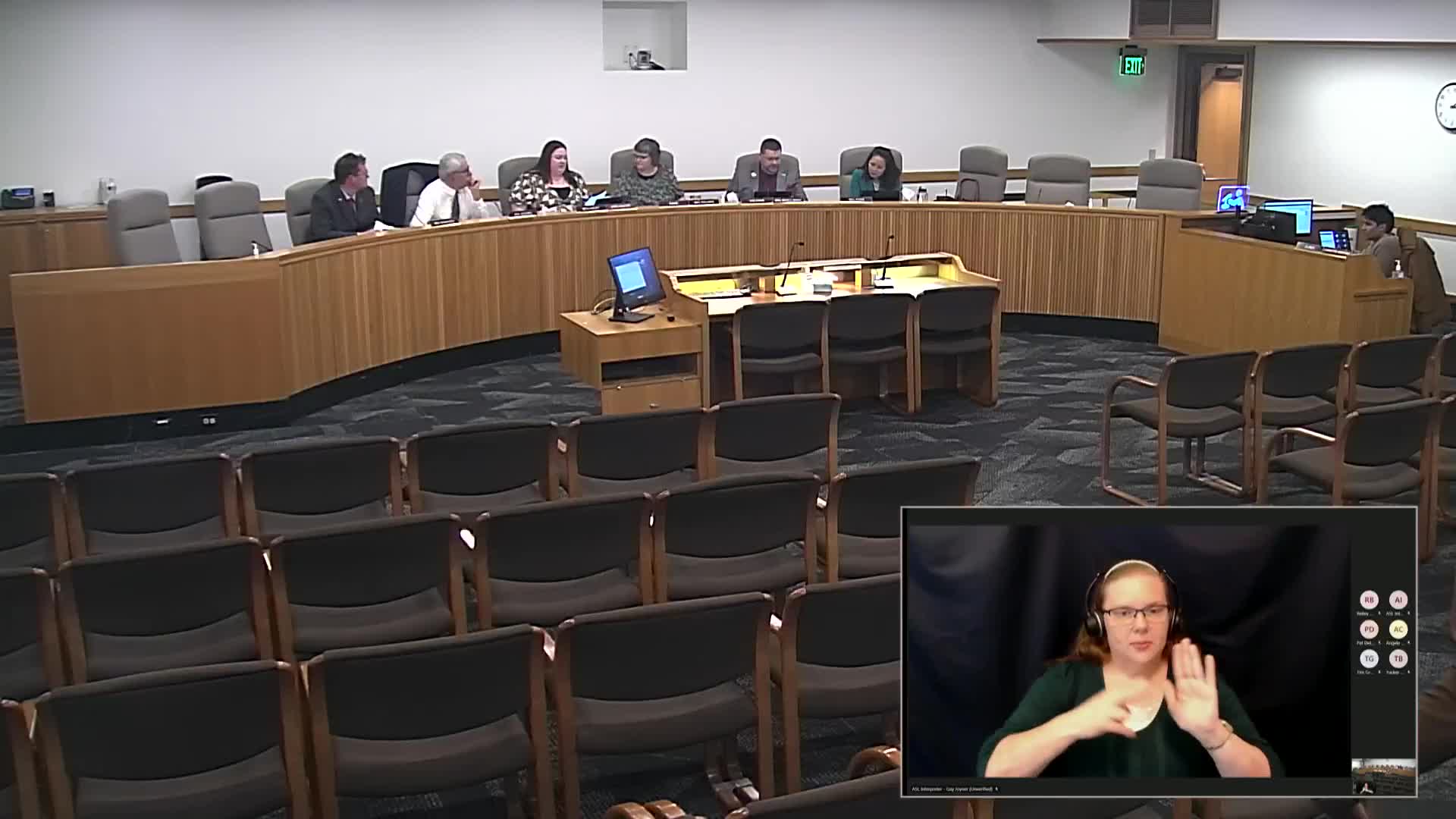
Committee procedure: Chair Solomon opened the hearing on SB 688 and closed testimony for the day after multiple witnesses. The record for SB 688 was left open through 3 p.m. on the next Wednesday for submission of written materials, as stated on the record.
What was not decided: The committee did not take a formal vote on SB 688 during the hearing. The testimony reflected industry and clean-energy advocates’ differing views about how prescriptive the commission’s obligations should be and how much legislative direction or funding is appropriate.
Looking ahead: Supporters asked the Legislature to give the commission a clear statutory direction and, if possible, stronger mandatory language. Opponents or other stakeholders did not present in the hearing; the record remains open for additional written input.