Get Full Government Meeting Transcripts, Videos, & Alerts Forever!
Get email alerts on the Gun Policy topic
No spam. Unsubscribe anytime.
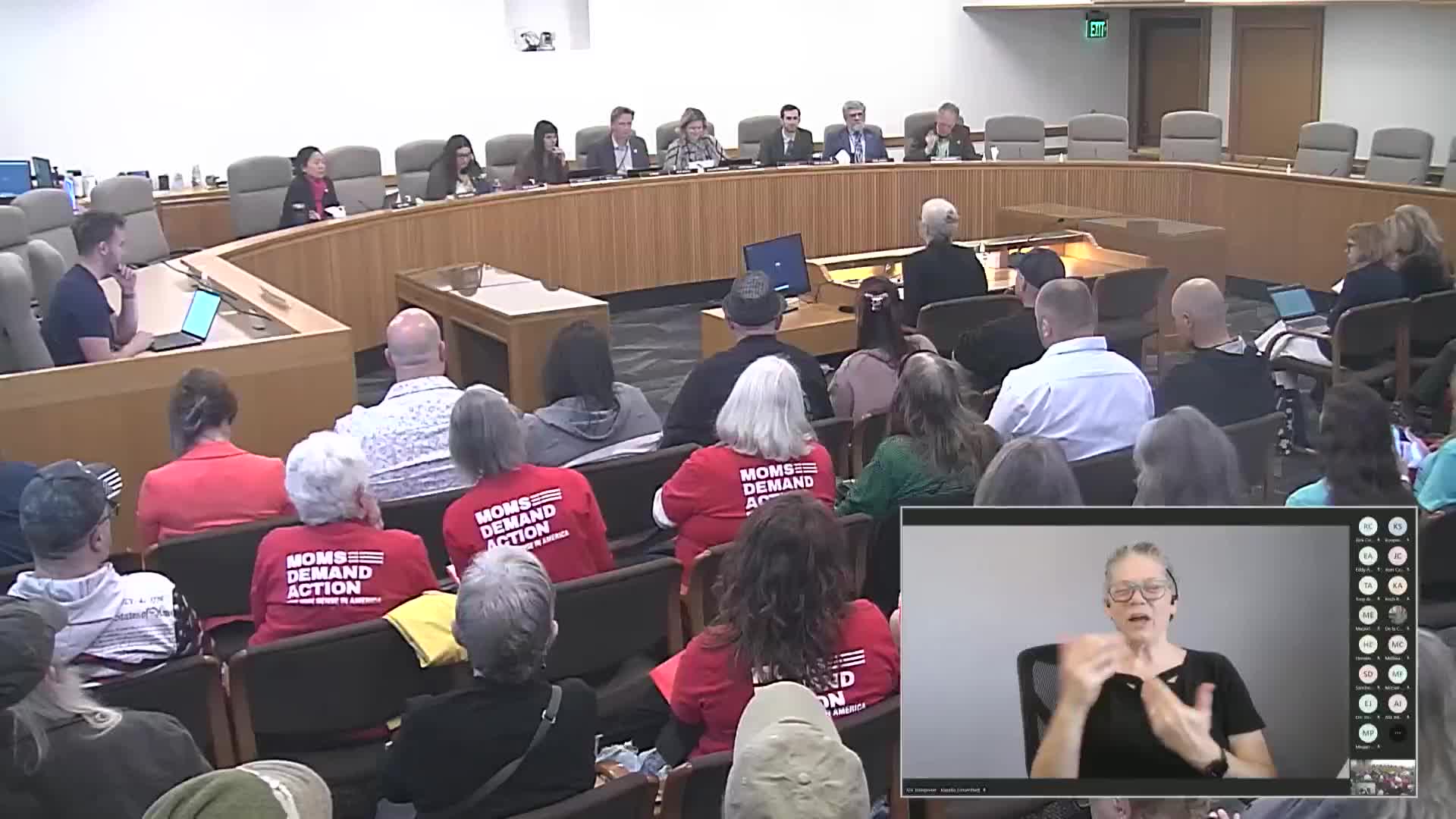
House Judiciary holds public hearing on HB 3,075 to implement Measure 114; wide public testimony for and against
Summary
The House Committee on Judiciary held a public hearing March 17 on House Bill 3,075 (dash-1), legislation to implement and amend Ballot Measure 114; legislative counsel and the Department of Justice outlined bill mechanics and appellate timing, and more than 100 two-minute public testimonies were heard for and against the proposal.
The House Committee on Judiciary held a public hearing March 17 on House Bill 3,075 (dash-1), legislation that would implement and amend provisions of 2022’s Ballot Measure 114, including a permit-to-purchase system and a large-capacity magazine restriction. Jessica Menefee of the Office of Legislative Counsel gave a technical overview of the bill and amendment; Robert Koch of the Oregon Department of Justice summarized the current status of state litigation over Measure 114. The committee accepted two-minute public testimonies from more than 100 speakers who were scheduled to appear.
Why it matters: Measure 114 was approved by Oregon voters in 2022 but has been held from enforcement by litigation. HB 3,075 would specify how and when Measure 114’s provisions take effect if the courts allow enforcement, set permit procedures and fees, and add a statutory mechanism for a 180-day dealer/manufacturer grace period tied to the lifting of any injunction on Measure 114. The bill therefore determines how the state would regulate firearm transfers, training requirements, and magazine limits if and when the law becomes enforceable.
Key provisions described in the hearing: Legislative counsel summarized the principal changes in HB 3,075 (dash-1). The bill: increases an initial permit fee from $65 to $150 and a renewal fee from $50 to $110; extends the time for a permit agent to act from 30 to 60 days; clarifies where applications are filed (codified at ORS 166.505); narrows disclosure of background-check information; expands acceptable forms of firearms training and clarifies who may be an instructor; and sets 07/01/2026 as the date after which a permit will be required for covered transfers identified in the transfer statutes. The dash-1 amendment reorganizes Section 11 (the large-capacity magazine provisions) and creates a new Section 11a that (a) preserves an affirmative defense tied to possession before 12/08/2022, and (b) holds a 180-day grace period for dealers and manufacturers beginning when enforcement resumes after any injunction is reversed.
Legal timing and litigation summary: Robert Koch of the Oregon Department of Justice told the committee the Oregon Court of Appeals recently reversed a trial court injunction and found Measure 114 facially constitutional, but that appellate procedures mean the decision is not final until an appellate judgment issues. Procedural rules give the losing party at least 35 days to seek review by the Oregon Supreme Court; if a petition is filed and denied there are additional timelines that commonly stretch the process to months, and if the Supreme Court accepts the case the review could take one to two years. Koch also noted separate federal litigation is pending at the Ninth Circuit but said the federal case is not presently blocking state enforcement timing.
Public testimony and positions: The committee heard extensive testimony both for and against the bill. Supporters included state elected officials and gun violence prevention groups who said the bill is necessary to implement the voters’ decision and to reduce homicide and suicide by creating permit-to-purchase safeguards. Senator Lisa Reynolds (State Senator and pediatrician) said the bill addresses technical and resource questions identified by law enforcement and urged funding and planning for fingerprint-based checks. Daniel Webster, a public-health researcher at Johns Hopkins, told the committee empirical studies link purchaser-licensing laws to reductions in gun homicides and suicides and projected thousands of lives saved over a decade if implemented.
Opponents, including firearms advocacy groups and individual residents, said HB 3,075 creates burdens for lawful gun owners, that fees and extended processing times disproportionately burden lower-income and rural residents, and that the bill improperly limits constitutional rights. Avian Klein, state director for the NRA (testifying in opposition), argued the dash-1 amendment differs from the version the Court of Appeals considered and repeated constitutional objections that are part of ongoing litigation. Several speakers raised concerns about fiscal impacts, citing earlier cost estimates for implementing Measure 114 that they said were now out of date.
Committee process and next steps: Chair Cropp and committee members did not take a committee vote during the hearing. The chair encouraged members of the public to submit written testimony through OLIS within 48 hours if they were not able to speak in person; Jessica Menefee and other staff indicated they would accept written follow-up questions. The bill contains an emergency clause and a provision that challenges to the bill’s legality be filed in the Marion County circuit court, as noted by legislative counsel.
What was not decided: The committee did not adopt or reject HB 3,075 at this hearing. Specific budgetary appropriations or the allocation of resources needed to implement the permit system, fingerprinting, and expanded background-check capacity were discussed repeatedly by witnesses but not resolved. Committee members asked that written questions be submitted to Legislative Counsel and DOJ for technical follow-up.
Voices quoted (sample): "The permit fee has been increased from $65 to $150," Jessica Menefee, legislative counsel, told the committee in a technical summary. Robert Koch of the Oregon Department of Justice said, "The decision by the Court of Appeals becomes final only when the court issues an appellate judgment." Senator Lisa Reynolds urged the committee to ask what "resources or technical changes do state law enforcement need to issue permits?" Daniel Webster summarized research findings: "Firearm purchaser licensing laws reduce virtually all forms of gun violence." Avian Klein of the NRA argued the amendment "is not the same regime that was considered by the Court of Appeals."
Ending note: The hearing assembled extensive factual detail about how Measure 114 would be implemented in practice and the timelines tied to ongoing appeals. With litigation unresolved and implementation questions remaining — especially about funding, fingerprinting logistics, and training standards — committee members signaled they will use written questions and follow-up sessions to get technical answers before taking formal legislative action.