Get Full Government Meeting Transcripts, Videos, & Alerts Forever!
Get email alerts on the Workforce Standards Board Home And Community Based Services topic
No spam. Unsubscribe anytime.
Divided testimony as Oregon committee holds public hearing on bill to create home‑care workforce standards board
Summary
The House Committee on Labor and Workplace Standards on March 17 opened a public hearing on House Bill 3,838, a measure that would establish a Home and Community‑Based Service Workforce Standards Board to set minimum standards for wages, benefits, training and staffing across a range of care settings.
The House Committee on Labor and Workplace Standards on March 17 opened a public hearing on House Bill 3,838, a measure that would establish a Home and Community‑Based Service Workforce Standards Board to set minimum standards for wages, benefits, training and staffing across a range of care settings.
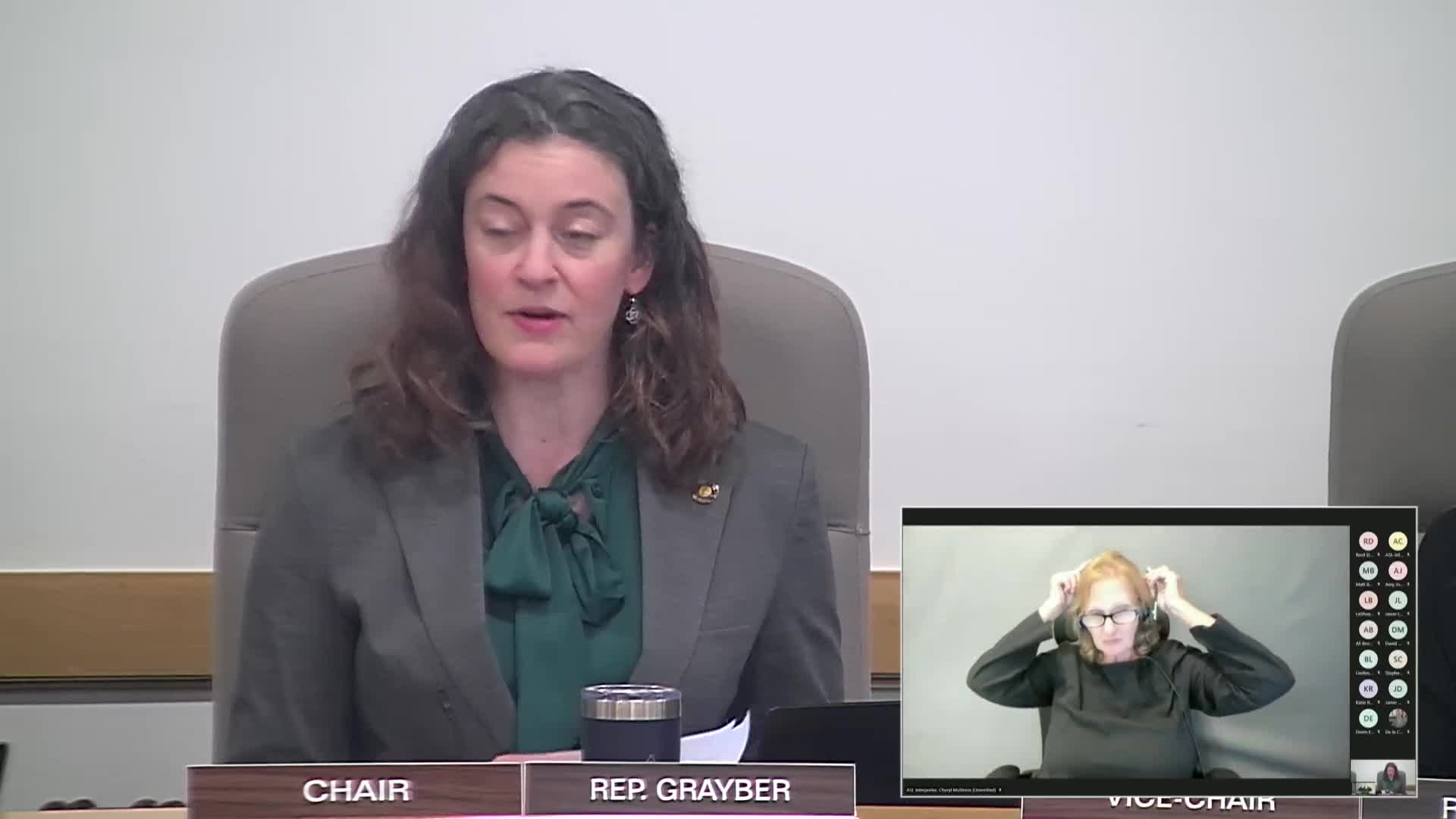
Representative Dacia Graber, the bill's chief sponsor, told the committee the board is intended "to strengthen the supply of skilled home and community based services workforce by examining factors that may present challenges to recruiting and retaining workers including but not limited to compensation work schedules and other working conditions and allow us to adopt rules that establish minimum workforce standards." Graber said the sponsors and stakeholders are preparing an amendment to limit the board's authority over costs so that any standard that requires funding would be considered and ratified by the legislature.
Supporters said the board would give direct care workers a formal voice and help stabilize a workforce that faces low pay and high turnover. Melissa Unger, executive director of SEIU Local 503, told the committee "caregivers face poverty wages, burnout, and extreme turnover, which threatens care quality as demand rises." David Madland, a senior fellow at the Center for American Progress, cited examples from other states and cities and said those jurisdictions "have successfully raised wages and improved access to overtime, paid time off, and training." Testifying for labor and advocacy groups, Felicia Hagans outlined provisions in the bill including a market study before new standards are adopted and a requirement that any board decision affecting the state budget be returned to the legislature for approval.
Opponents ranged from Republican legislators to long‑term care and disability service providers, who said the proposal duplicates existing oversight, would impose large, unfunded costs, and could disrupt care. Representative Ed Deal said he "strongly oppose[d] House Bill 3,838," called it "another small business killer" and said it would add an "unelected board" with power over private employers. Phil Bentley of the Oregon Health Care Association warned the bill's scope is "way too broad," saying it covers multiple care settings with different funding streams and regulatory regimes and would be difficult for a volunteer board to manage.
Providers and nonprofit disability service organizations raised several concrete concerns. Leading Age Oregon's Kristen Milligan and Springs Living Communities' Brenda Conley said most assisted‑living and continuing care residents are private‑pay and would see higher monthly costs if provider expenses rise. Capital Manor's executive director and other residential operators said increased staffing costs would be passed to residents, many on fixed incomes. The Oregon Resource Association and other IDD providers noted the legislature's recent rate and wage work, saying a Burns & Associates rate and wage report (completed in January) and an ODHS‑commissioned study already documented funding shortfalls: witnesses cited a roughly $558 million shortfall for IDD services and an $800 million shortfall cited by some in the home and community care rate study to reach an average $23 per hour wage across sectors.
Providers also flagged policy details in the bill they said are problematic: a requirement that employers provide employee contact information to the board (which opponents said could become public records), a broad private right of action allowing workers or unions to sue to enforce board standards, and subpoena powers for the board (though sponsors said enforcement language was under revision). The Oregon Healthcare Association argued the bill could widen an existing funding gap because Medicaid reimbursement rates do not cover current costs.
Several panelists described practical alternatives. Opponents urged the legislature to fund higher Medicaid reimbursement rates, targeted recruitment incentives, and reduced administrative burdens. Supporters said the board model can coordinate standards across interrelated topics such as wages, scheduling, training and staffing and stressed that similar boards in other states and cities have been credited with lowering turnover and improving worker pay and benefits.
Public testimony filled much of the afternoon. Direct support professionals and caregivers described low wages, long drives between clients and staffing pressures that they say create safety risks for residents. Family members and the state long‑term care ombudsman also spoke: Fred Steele, the state long‑term care ombudsman, said his office has investigated cases where staffing shortages contributed to resident harm and said the bill could represent an investment in caregivers.
The committee did not vote. Chair Graber said sponsors are working with stakeholders and legislative counsel on amendments and noted a Senate informational hearing scheduled the following day. Committee members will have further opportunity to question staff and witnesses as the bill is revised.