Get Full Government Meeting Transcripts, Videos, & Alerts Forever!
Get email alerts on the Victims Rights topic
No spam. Unsubscribe anytime.
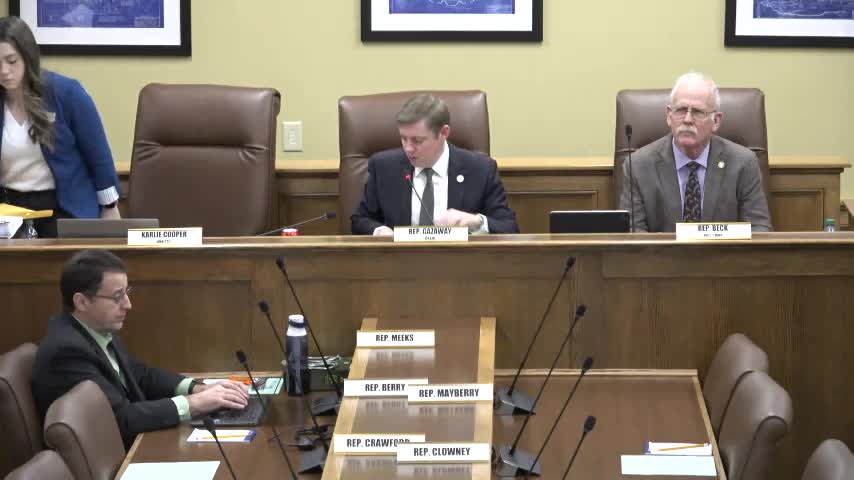
House committee hears lengthy debate on proposed constitutional victims' rights amendment
Summary
Lawmakers and dozens of witnesses debated House Joint Resolution 1009, which would add an extensive victims' bill of rights to the Arkansas Constitution and give victims enforceable standing; prosecutors and advocates sharply disagreed over scope, standing and unintended legal consequences.
Representative Carolyn Brown introduced House Joint Resolution 1009 and explained an amendment removing Senator Gilmore as the Senate sponsor before laying out the proposed constitutional text.
The proposal would add an enumerated set of rights for crime victims — including protections from intimidation, notice of public proceedings, the right to confer with the prosecutor, timely disposition, restitution, and the ability to be reasonably heard — and would, crucially, give victims standing to assert those rights in any court with jurisdiction over the case.
The measure drew extensive testimony from victims and advocates who urged adoption, and from multiple elected prosecuting attorneys who urged caution or opposition. Laura Abbott, a citizen witness, told the committee: “This amendment is about restoring balance. It ensures that when a crime is committed just as much as the rights of the accused.” Julie Eckert, a retired crimes detective, described long case backlogs and said victims often endure repeated continuances: “The defendants have a right to a speedy trial, but victims don't have a right to a speedy trial.”
Elected prosecutors collectively pressed the committee on practical and legal concerns. Daniel Hsu, elected prosecuting attorney for the Twelfth Judicial District and legislative chairman of the Prosecuting Attorneys Association, told the committee the proposal is “too broad” and warned the definition of “victim” and the grant of standing could create frequent court challenges and adversarial hearings that would slow prosecutions. Will Jones, Pulaski County prosecutor, said the measure could “drive a wedge” between victims and prosecutors by creating opportunities for contested hearings about whether prosecutors complied with a victim's asserted rights.
State and national advocates, and a longtime Arizona judge who testified for proponents, said existing statutory protections are insufficient because statutes can be changed; placing rights in the constitution would make them enforceable and durable. Judge Maria Verdin, who served on the bench in Maricopa County, Arizona, described courtroom practices in a Marcy's Law state and said judges can limit when and how victims are heard: “The judge controls the courtroom. The judge decides who will be designated as the representative for the victim.”
Committee members pressed both sides on practical matters raised in testimony: whether victims would be entitled to appointed counsel, who would pay for additional services such as protection or victim advocates, how courts would interpret standing without infusing trials with collateral litigation, and how the measure would interact with existing statutory retention rules for evidence and restitution procedures.
No vote occurred. Representative Brown asked the committee to give the resolution favorable consideration and said the amendment would place Arkansas in line with the majority of states that already enshrine victims' rights in constitutions or statutes.