Get Full Government Meeting Transcripts, Videos, & Alerts Forever!
Get email alerts on the Middle Housing topic
No spam. Unsubscribe anytime.
Oregon Homes bill would create statewide pre‑approved building plans to speed middle‑housing construction
Summary
House Bill 2,258 would create a statewide program of pre‑approved building plans and associated land‑use standards to speed construction of middle‑housing types on eligible urban lots.
House Bill 2,258 (Oregon Homes) would create a statewide program for pre‑approved building plans and land‑use design standards intended to speed construction of single units, duplexes, triplexes, quadplexes, townhomes, cottage clusters and small multifamily buildings (up to 12 units) on eligible sites inside urban growth boundaries.
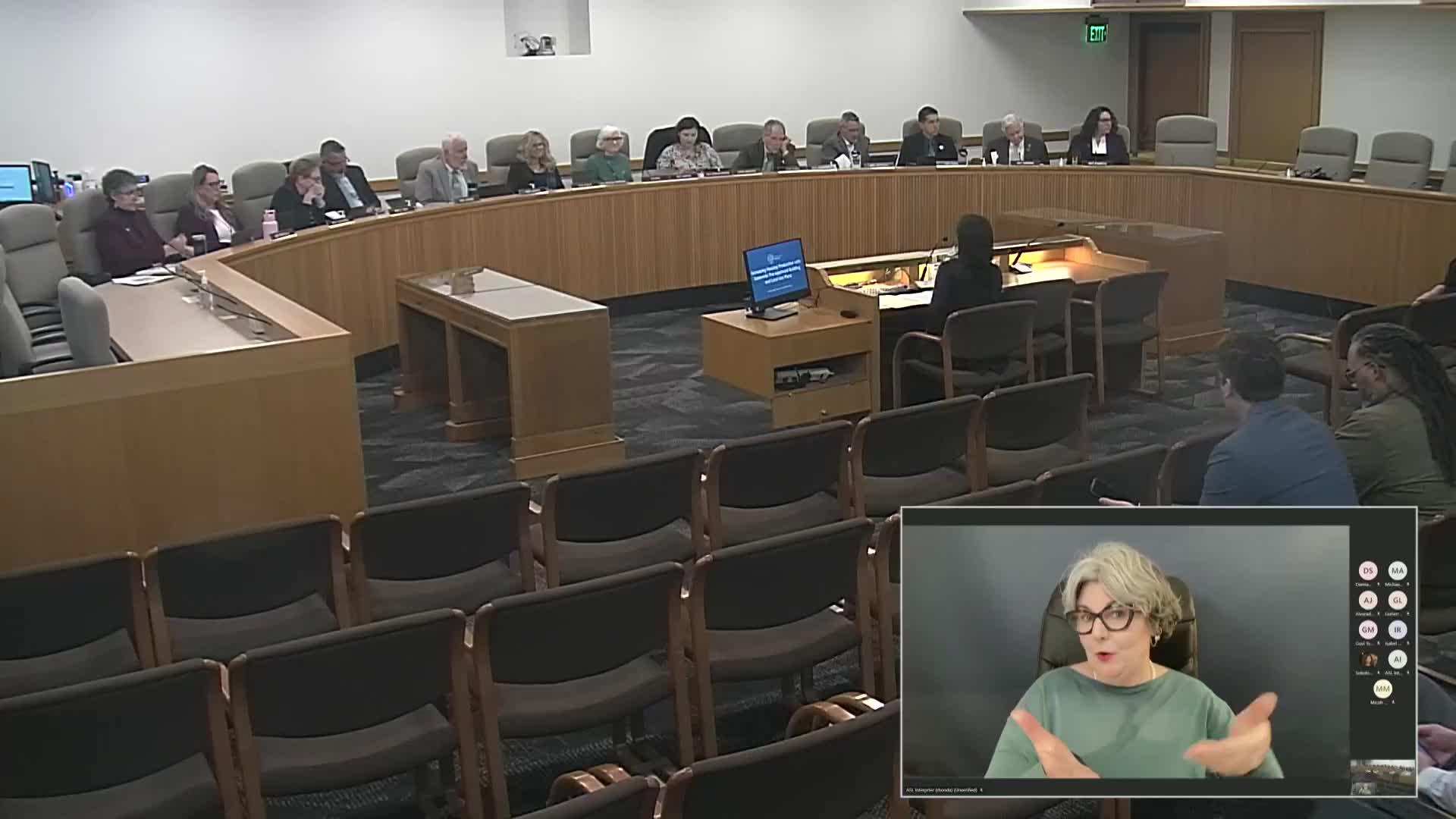
Swetha Mbati, senior housing adviser to Governor Kotek, told the House Committee on Housing and Homelessness on March 17 that the Oregon Homes concept is intended to increase housing supply, reduce permitting time and lower development costs. The program would have the Building Codes Division (BCD) develop a library of pre‑approved construction plans, and the Department of Land Conservation and Development (DLCD) would adopt land‑use and design rules that allow those plans to be used on eligible parcels without the usual local review delays.
Mbati said eligible lots would be at least 1,500 square feet and no larger than 20,000 square feet, vacant or containing a nonconforming nonresidential structure, not in areas zoned for natural hazards or open space, not on slopes averaging more than 15 percent, and subject to protections for heritage trees and urban‑heat‑island tree canopy. The bill would also set unit size maxima — for example, 2,200 square feet per unit for detached/attached single units, duplexes, triplexes, quadplexes and townhomes, and an average of 1,400 square feet per unit in cottage clusters and small multifamily developments — with further implementation details to be set in rulemaking.
Proponents, including Deborah Flanagan of Hayden Homes (a large private builder in the Pacific Northwest), said allowing proprietary plans to be pre‑approved at the state level would dramatically shorten permit review times and reduce carrying costs that are passed to homebuyers. Flanagan said her companies have a library of plans intended for middle housing and have experienced plan‑approval times ranging from 14 days to 300 days across Oregon jurisdictions; she argued that statewide pre‑approval would reduce that variability and lower costs.
Committee members asked several questions, including how the program would ensure cost savings are passed to buyers (the bill contains no price‑control or affordability requirement), whether pre‑approved plans would override important local design standards (such as windows on the street for safety), and how the program would interact with existing city middle‑housing efforts. Mbati said the bill would not mandate price controls but that increased production and smaller unit sizes historically trend toward lower per‑unit costs; she said rulemaking by DLCD and coordination with local jurisdictions would set site standards and allowable variations.
The bill was introduced and taken under advisement; the committee paused the panel after 20 minutes and invited follow‑up sessions for additional technical detail and stakeholder discussion. Multiple members requested additional time and information about how the statewide process would preserve neighborhood livability, safety design standards, and how eligible sites are selected.
No committee action or vote was taken on March 17; the bill will return for additional testimony and possible amendments.