Get Full Government Meeting Transcripts, Videos, & Alerts Forever!
Get email alerts on the Voter Roll Maintenance topic
No spam. Unsubscribe anytime.
Committee hears bill to clear provisional voter registrations; county clerks back state rulemaking authority
Summary
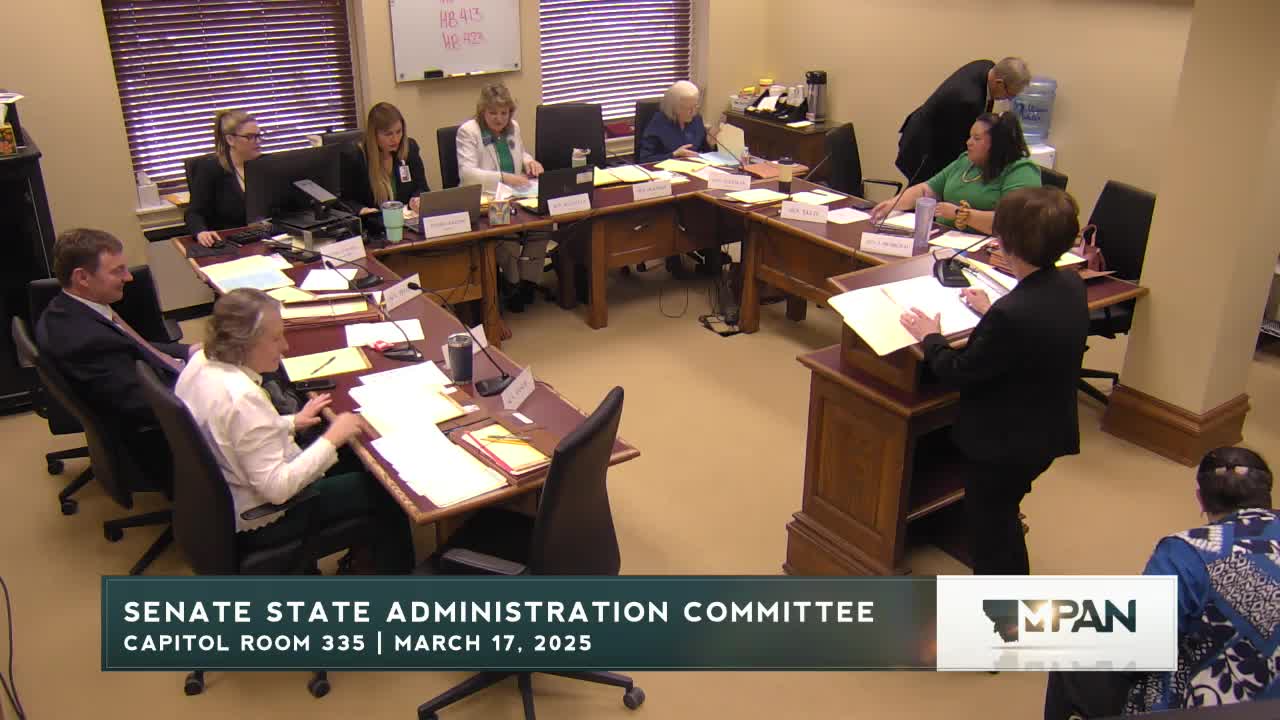
Rep. Love presented HB423 to create a statutory process to handle provisional registrations that cannot be verified. The Secretary of State's office and county election administrators supported the bill as a limited cleanup measure; no opponents appeared.
Representative Love opened the hearing on House Bill 423, a targeted bill that directs the Secretary of State's office to adopt procedures for handling provisional voter registrations that cannot be verified.
The sponsor described a situation in which a voter submits a registration with missing or incorrect information, is marked provisional while clerks attempt to confirm identity, and then becomes stuck in "limbo" when verification attempts fail. The bill would authorize rulemaking and a statutory scheme so clerks and the secretary's office can consistently clean up provisional registrants.
Austin James, speaking on behalf of Secretary of State Christy Jacobson, called HB423 a "common sense bill that closes an unintentional loophole in code and provides for a statutory scheme so that we can keep our rolls clean." He told the committee provisional registrations are a relatively small number in most counties but should not be left indefinitely unresolved.
Ravalli County election administrator Regina Plettenberg, testifying for the Montana Association of Clerk and Recorders, said the bill would give local administrators clearer direction and urged a do-pass recommendation. Plettenberg told senators her county had only about 10 provisional registrations in that status but that consistent statewide guidance would help avoid inconsistent treatment.
Representative Love and witnesses emphasized the bill does not change NVRA (National Voter Registration Act) obligations for active and inactive lists; instead, it provides authority and rules so provisional registrations are addressed in a consistent way.
Representative Love said the statewide count of unresolved provisional registrations is "in the thousands statewide but not hundreds of thousands," while local clerks described the problem as limited in scale but important for list accuracy.
The committee asked questions about potential language such as whether the bill should use "maintain" rather than "remove" when describing provisional registrations. Witnesses and the sponsor said they were willing to work on drafting tweaks; the secretary's office described the bill's intent as creating a list-maintenance procedure rather than wholesale deletions.
The hearing concluded with no committee vote recorded on HB423.
The testimony came primarily from the Secretary of State's office and county election administrators and focused on operational details of list maintenance.