Get Full Government Meeting Transcripts, Videos, & Alerts Forever!
Get email alerts on the Child Protection Procedure topic
No spam. Unsubscribe anytime.
Bill would repeal temporary investigative authority in child-protection law, set 90-day limit for emergency protective services
Summary
House Bill 77 would remove a redundant temporary investigative authority provision from child-protection statutes and set a 90-day limit on emergency protective services, aiming to streamline procedures and reduce confusion for families and attorneys.
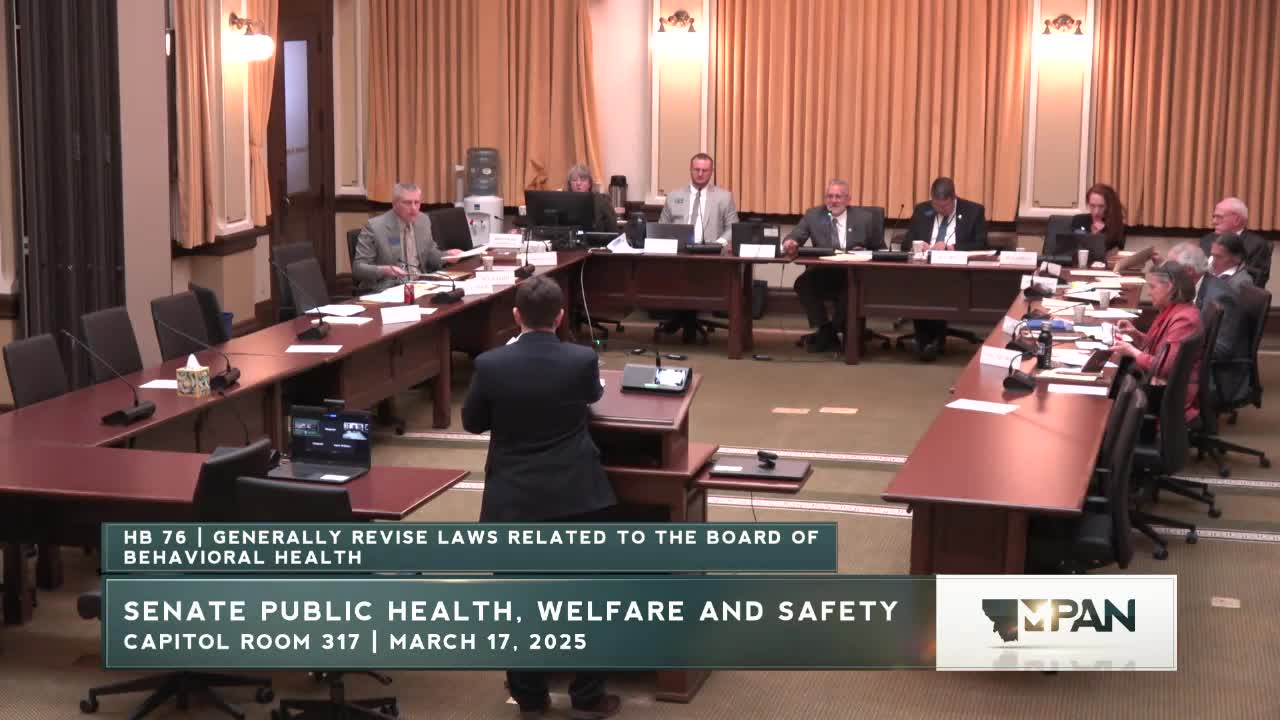
Representative S.J. Howell told the Senate Health and Public Health Committee on March 17 that House Bill 77 removes "temporary investigative authority" (TIA) from Montana child-protection statutes because recent statutory changes make it redundant and cause confusion in practice.
Howell said the bill cleans up code references and adds a 90-day time limit for Emergency Protective Services (EPS). "When a report of abuse or neglect is made, the department has 60 days of investigative authority under a different statute (identified in testimony as 41 3 2 0 2)," Howell said, and EPS already provides emergency legal relief when a case proceeds to court. The bill replaces the TIA mechanism with EPS language and adds the 90-day adjudication limit to ensure cases do not linger.
Supporters included county attorneys and DPHHS division leaders who participated in the CPS work group. Heather Webster, deputy chief county attorney in Yellowstone County, testified she supported the bill and said the change increases uniformity across counties. Nikki Grossberg, division administrator for Child and Family Services, told the committee the bill creates clarity and efficiencies for dependent-neglect casework.
Committee members asked detailed questions about timing and procedural safeguards for removal, show-cause hearings and adjudications. Counsel and prosecutors explained the sequence of protections: a five-day EPS hearing, a 20-day show-cause hearing, and then the 90-day adjudication timeframe the bill would codify. Witnesses said judges can dismiss cases at adjudication if evidence is insufficient, and that the bill aims to reduce inconsistent use of overlapping authorities across counties.
The hearing record closed after sponsor remarks and no committee vote is recorded in the transcript.