Get Full Government Meeting Transcripts, Videos, & Alerts Forever!
Get email alerts on the Health Funding topic
No spam. Unsubscribe anytime.
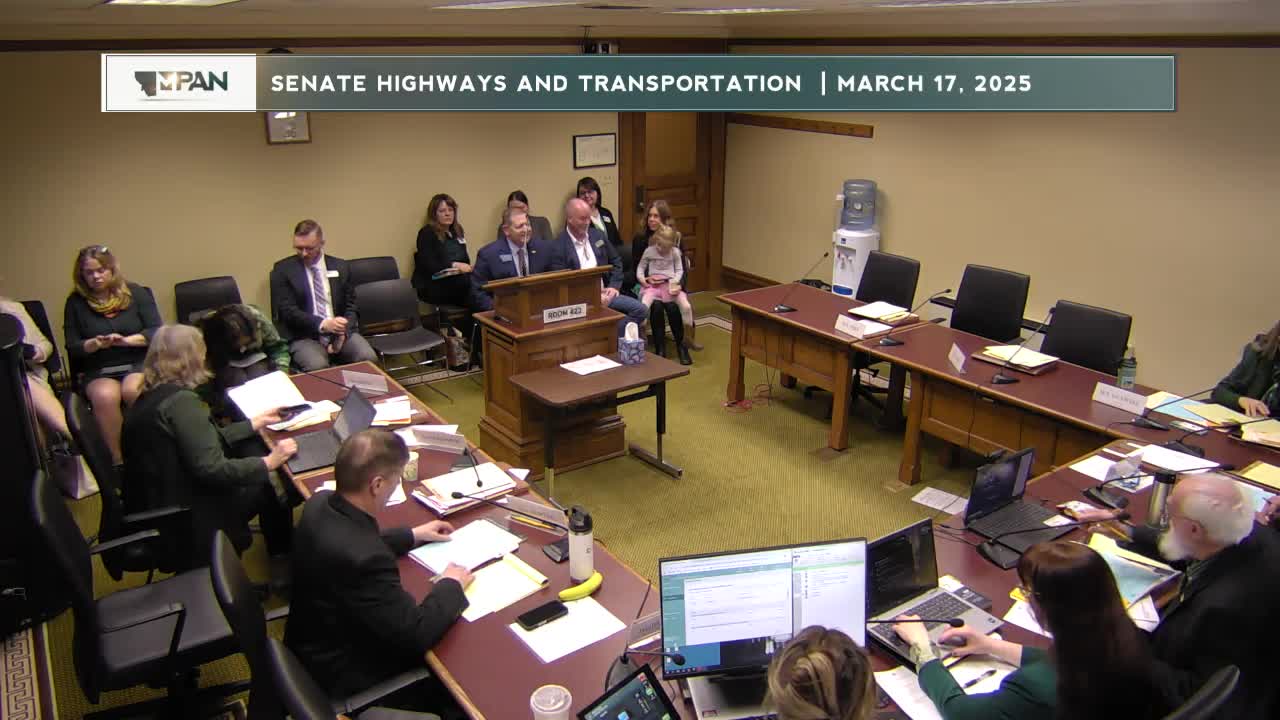
Committee hears bill to refocus traumatic brain injury fund and add $1 opt-out vehicle donation
Summary
Representative Ed Buttry introduced House Bill 341 to expand uses of the traumatic brain injury special revenue account and create a $1 opt-out vehicle registration donation to fund supports for individuals and families.
Representative Ed Buttry introduced House Bill 341, which would broaden the allowable uses of Montana's traumatic brain injury special revenue account and create a $1 opt-out donation on motor vehicle registrations to provide a recurring funding stream. "This is a bill that changes the focus of the work that the state does in supporting those with TBI and also provides for an ongoing funding source outside of the general fund," Representative Ed Buttry said in opening testimony.
Under the bill text described at the hearing, funds currently limited to public information and prevention would be allowed to support direct services for individuals and families living with traumatic brain injury, while continuing prevention and advisory council funding. The proposal also requires county treasurers to post prominent notices that vehicle registrants may opt out of the $1 donation.
Proponents included Ability Montana, the Brain Injury Alliance of Montana, health-care and advocacy groups, survivors and family members. John Bigart, executive director of the Brain Injury Alliance of Montana, told the committee Montana has a high rate of TBI and currently lacks state-funded supports. "Montana has 1 of the highest rates of traumatic brain injury in the nation, but we're 1 of 3 states in the nation that provide no state funded TBI support," Bigart said, urging a yes vote.
Abigail St. Lawrence, who testified remotely and whose experience inspired the bill, said state support for education, recovery and family assistance is essential. "How to address a TBI and finally how to live with a TBI is very important," she said.
The bill includes an initial appropriation of $600,000 from the existing traumatic brain injury special revenue account to the Department of Public Health and Human Services (DPHHS) to begin program work. Proponents said the appropriation would allow DPHHS and partners to start grantmaking and service development while the opt-out donation begins to generate revenue.
Committee members asked detailed fiscal questions. Senator Logie asked whether grants would be available once funds accumulate; Representative Buttry said he expected future legislatures could appropriate money from the account for grants and that the appropriation is intended to "get to work" immediately. But the sponsor and committee discussed a technical concern in the fiscal note: whether additional spending from the special revenue account beyond the $600,000 appropriation would require separate legislative appropriation. "The 600,000 we're saying... put it to work. The rest of the money over time that goes into that TBI account to me should be able to be used by the state for the purposes listed," Buttry said; he acknowledged the fiscal note frames that question differently and said the committee and state budget staff may need to resolve that point.
DPHHS provided informational testimony and committee members asked about program design, eligibility, and how the account would interface with Medicaid and federal matching funds. Proponents argued that state funding would unlock federal grants and make services more widely available.
The hearing closed with the sponsor asking for a do-pass; no committee vote was taken at the hearing.
Ending: The committee will consider the bill further; testimony highlighted an initial appropriation, recurring opt-out revenue, and a fiscal-note question about spending authority that the sponsor and staff said would be clarified before final action.