Get Full Government Meeting Transcripts, Videos, & Alerts Forever!
Get email alerts on the Administration topic
No spam. Unsubscribe anytime.
Bill to create a local appeal process for septic permit decisions draws cautious support and requests to broaden scope
Summary
Representative Larry Brewster’s House Bill 318 would require an appeal process for certain added local requirements on septic system permits; public‑health associations supported an appeals process but proposed amendments to broaden the scope and clarify which local body would hear appeals.
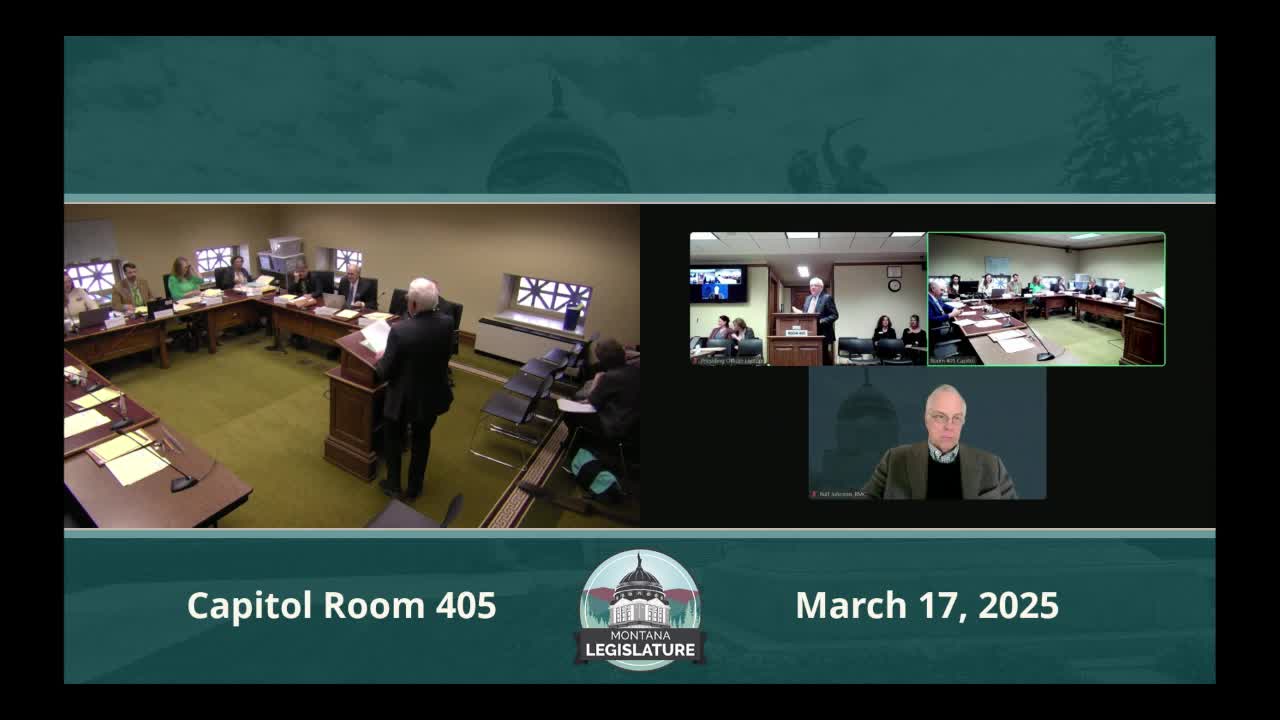
Representative Larry Brewster presented House Bill 318 to the Senate Local Government Committee as a measure to create an appeals path when a sanitarian or local regulation imposes additional requirements that increase permit costs by more than $500.
Brewster said the bill would let an applicant ask the local governing body to review whether an added requirement is appropriate. “You could ask them to judge whether that was a good decision,” Brewster said, describing the intent to have a local, independent review of substantial added requirements after a permit determination.
Lisa Dworak, executive director of the Confluence Public Health Alliance, testified as a soft opponent and offered an amendment to broaden the proposed appeal. She and other public‑health witnesses supported an appeals process but recommended the bill allow appeals during permitting as well as inspection, and to remove a narrow specification that appeals must go to the local governing body. Dworak said local governing bodies vary substantially across the state and suggested appeals should be structured when counties adopt on‑site wastewater regulations so communities can determine the appropriate forum.
Shannon Theriault, Missoula Public Health environmental health director, also supported an appeals process but asked that the language be broader and more consistent with existing practices in some counties. Gallatin County officials said they have a longstanding appeals rule and would support an amendment that clarifies appeal forums; they said appeals are rarely used and typically concern permits that cannot be followed as issued.
Testimony included data from Missoula that roughly 20 percent of inspected systems need some change, most of them minor, and that many installers are recertified annually and coached on frequent issues. Senators pressed about practical effects and whether the amendment would be a friendly change; the sponsor indicated willingness to accept local‑governing‑body language if it retains local elected officials’ role.
The committee closed the hearing after testimony and discussion; no committee vote is recorded in the transcript.