Get Full Government Meeting Transcripts, Videos, & Alerts Forever!
Get email alerts on the Civics Education topic
No spam. Unsubscribe anytime.
Committee advances measure to replace naturalization-based civics test with state-developed assessment for graduation
Summary
House Bill 397 would require a State Department–developed civics assessment aligned to Idaho standards and make it a graduation requirement; the committee advanced the bill to the floor after debate over timing, accommodations and whether the statute should require 'passage' rather than mere 'completion.'
Representative Greg Wisniewski presented House Bill 397 on March 13. The bill would update Idaho's civics graduation requirement by replacing the current naturalization-style test with a civics assessment developed by the Idaho State Department of Education and approved by the State Board of Education.
Wisniewski said the measure implements recommendations from a prior Senate concurrent resolution to emphasize Western civilization and the historical foundations of American government. Greg Wilson, chief of staff at the Department of Education, told the committee the civics test will align with existing U.S. history and government standards and that the department will work with subject-matter experts in developing the assessment.
Teachers and public witnesses raised implementation concerns. Corinne Rue, an American government teacher at Borah High School, told the committee she is “opposed to the change the way that this bill is written” because districts teach components in different years and seniors may not have completed some content before graduation. Rue also noted the draft uses the phrase “successful completion” and said that may be interpreted too loosely; the committee discussed whether the statute should require a defined standard of passage.
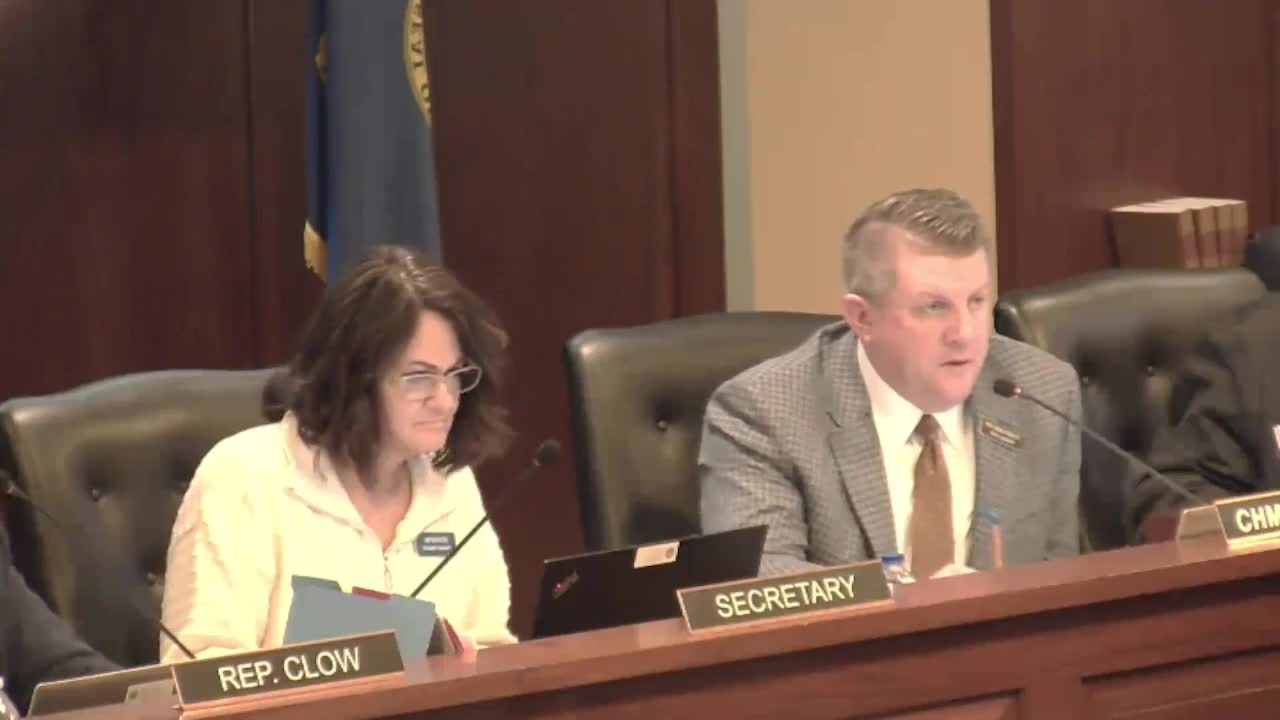
Representative Mathias offered a substitute motion to send the bill to general orders and change the statute’s phrase from “successful completion” to “passage.” The substitute motion failed on a committee vote, and the committee proceeded with the original motion. The committee then voted to send House Bill 397 to the floor with a do-pass recommendation.
Department officials told the committee the department and board would set any proficiency or cut scores, and the department intends to convene educators and experts for development and implementation. Committee members discussed accommodations for special-education students, re-assessment opportunities, and the alignment of the new test with existing standards. Greg Wilson confirmed reassessment options would be available as under the current requirement.
The committee approved sending HB 397 to the floor with a do-pass recommendation; committee members said the department will continue work on test development and implementation guidance.