Get Full Government Meeting Transcripts, Videos, & Alerts Forever!
Get email alerts on the Student Tech Safety topic
No spam. Unsubscribe anytime.
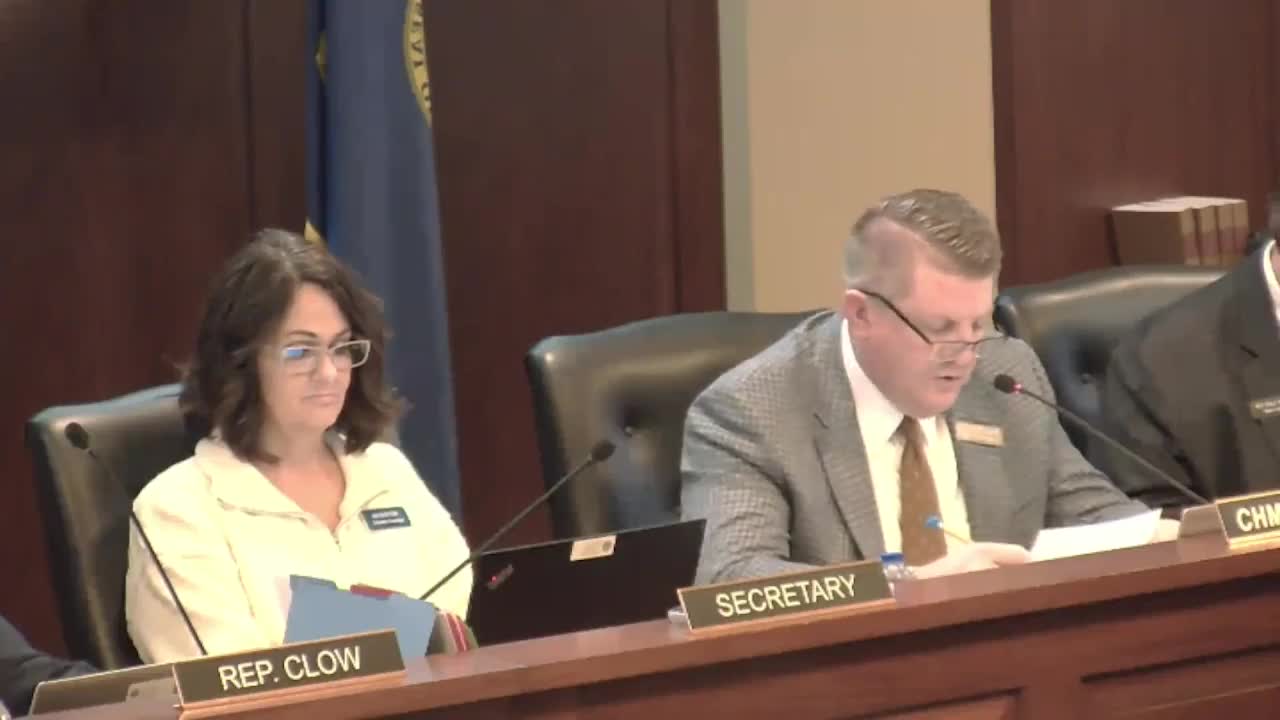
Committee hears PTA-backed bill to notify parents about risks of school-issued technology; motion to advance fails
Summary
Senate Bill 1070 would require the State Department of Education to provide an online, digital platform to notify parents about risks tied to school-issued devices; testimony included the platform creator and PTA representatives, and the committee voted down a motion to advance the bill.
Representative Gerald Raymond and Matthew Todd presented Senate Bill 1070 on March 13. The bill would require the Idaho State Department of Education to make available a digital platform parents can access to learn about risks associated with school-issued technology and steps to mitigate those risks.
Todd, who said he created the platform fortifyyourkids.com and provided it free to Idaho school districts, told the committee the material is not limited to pornography concerns but addresses “actual crimes against children that have already occurred in Idaho.” He said the platform would “meaningfully warn” parents and provide best practices developed with Internet Crimes Against Children (ICAC) commanders. Alexis Morgan of Idaho PTA testified in favor, saying parents reported a “resounding” gap in information about the limits of school-held filters.
Opponents and questioning committee members raised concerns about parental responsibility, cost and whether the signature parents are asked to provide functions as a waiver. Representative Harris argued parents should be held accountable for supervising their children and said the bill risks shifting responsibilities to schools. Representative Hawkins asked whether signature language could limit recourse; Todd said the form is an acknowledgement that information was supplied, not a waiver of rights.
Committee members also discussed technical details of the platform. Todd said the site is a website (fortifyyourkids.com), he funded initial production and will provide logins to districts so district users can access the content free of charge. He said the platform is available without required registration and that some public districts already use it (he cited Nampa and others).
Superintendent Critchfield told the committee that districts do put filters and safeguards in place for school networks but the school’s supervision ends when a device leaves school; she described the proposal as an awareness effort that districts could integrate into registration or informational materials.
Representative Nelson moved to approve and send SB 1070 to the floor with a do-pass recommendation. That motion was put to a roll call. The chair announced later that by a vote of 6 to 7 with one absent and excused the motion failed and the bill was returned to the sponsor/house education committee.
Committee debate highlighted two central tensions: (1) the state and districts’ role in notifying parents about risks connected to state-funded technology and (2) concerns from some members that the measure would shift responsibility away from parents or impose new administrative work on districts. The sponsor and supporters said the measure simply provides information to parents and can be implemented through existing registration or digital channels.