Get Full Government Meeting Transcripts, Videos, & Alerts Forever!
Get email alerts on the Education Reading Coaching topic
No spam. Unsubscribe anytime.
Committee sends Senate Bill 1069 to the floor after hearing testimony on SMART coaching for K–3 reading
Summary
Senate Bill 1069, which would expand and fund statewide coaching for reading instruction based on the SMART model, was recommended to pass by the House Education Committee after extensive testimony from educators, the state superintendent and local superintendents.
The House Education Committee voted to send Senate Bill 1069 to the floor with a due‑pass recommendation after a lengthy hearing featuring the bill sponsor, state education officials and multiple teachers and coaches who testified in favor of the SMART coaching model for K–3 literacy.
Representative Gerald Raymond, the bill’s House sponsor, described SB1069 as a "rifle targeted" approach that focuses on early‑grade reading and on training coaches who work directly with teachers. "10 69 is very targeted towards that goal," Raymond said. He asked the committee to move the bill forward and highlighted the governor’s emphasis on literacy in his State of the State remarks.
State Superintendent maintained the Department of Education has been piloting the SMART Coaching training program and said the bill would expand contracting for trained coaches rather than add new department FTEs. "This isn't something ... it's an individual person, that does coaching for teachers and for administrators to help them understand the best practices around the science of reading," Superintendent Critchfield told the committee.
Megan Wunderlich, director of academics, content and curriculum at the State Department of Education, described the SMART model as a two‑year cohort program with monthly, in‑class coaching visits and a community of practice. She told the committee many participating teachers and administrators — including veteran teachers and rural educators — report sustained improvements in classroom practice and student outcomes.
The hearing drew several district superintendents and SMART coaches who gave district results. Idaho Falls School District Superintendent Carla LaOrange said a school where every kindergarten‑through‑third‑grade teacher had completed SMART training reported 81% of students at grade level on a February benchmark; Temple View Elementary reported similar gains. Multiple classroom coaches and teachers said the program improved instructional fidelity and teacher confidence.
Opponents and questioners pressed fiscal and procurement details. Sam Lair of the Idaho Freedom Foundation noted that the state already spends roughly $72.8 million on literacy interventions and asked whether additional funding was warranted; several legislators asked whether coaches would be Idaho‑based or out‑of‑state, how coaches are paid, and whether the program would require a long‑term appropriation.
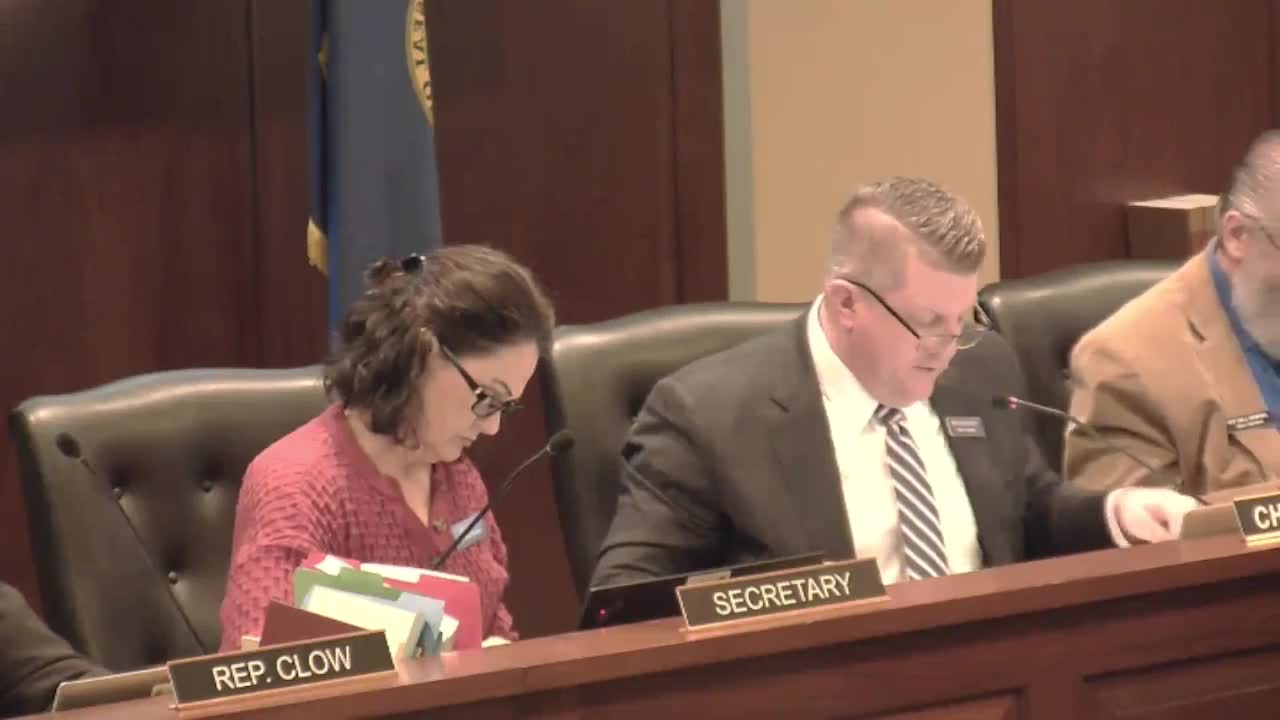
Representative Clow moved that SB1069 be sent to the floor with a due‑pass recommendation. A substitute motion to hold the bill until March 12 failed in committee; by recorded vote the committee rejected the hold motion 5–9. The committee then voted to forward SB1069 to the floor; the final vote on the due‑pass motion was 11–3 in favor. The bill will go to floor debate and, if passed by both chambers and signed, would appropriate funds to expand coaching and training under the SMART model per the bill’s fiscal note.