Get Full Government Meeting Transcripts, Videos, & Alerts Forever!
Get email alerts on the Education Budget topic
No spam. Unsubscribe anytime.
Education committee debates funding formulas, virtual programs and rural equity; members call for off‑session study
Summary
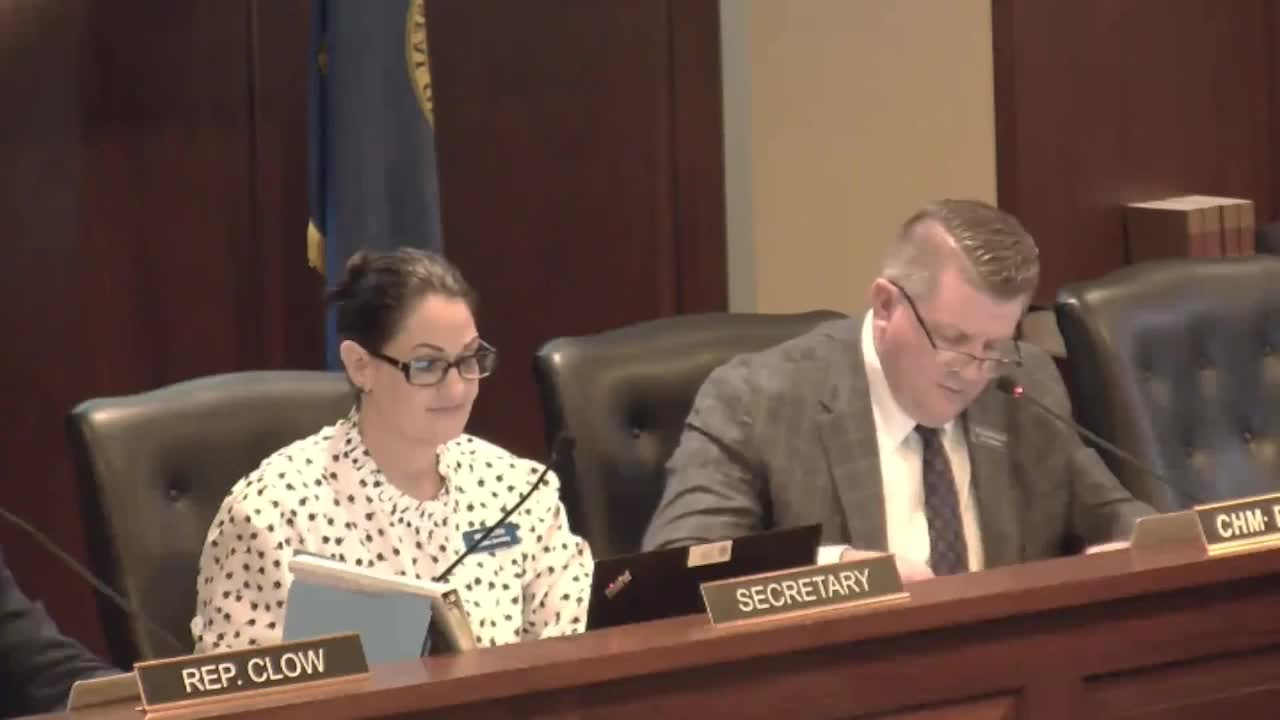
Members of the House Committee on Education spent an extended portion of their meeting reviewing education funding priorities, asking colleagues to submit recommendations before a Joint Finance‑Appropriations Committee presentation and urging interim briefings on funding formulas, rural equity and program overlaps.
The House Committee on Education used remaining agenda time to review and debate education funding priorities, asking members to submit recommendations to the committee chair ahead of a Joint Finance‑Appropriations Committee (JFAC) presentation.
Representative Harris raised questions about the legislative budget book, noting a reclassification that appeared to roll administrators, operations and children’s programs into "student support," and flagged apparent overlap between Idaho Virtual Academy funding and a $24,900,000 appropriation listed in the budget for the Idaho Digital Learning Academy (IDLA). "It looks like they rolled it all into student support," Harris said, and suggested the committee consider whether all existing line items remain necessary.
Representative Clow clarified that the Idaho Virtual Academy is a charter school funded through the public school formula, while the Idaho Digital Learning Academy is a separate state program that provides online classes to districts and is funded differently. "They're totally separate programs. They're not related and they're not funded in the same way," Clow said.
Several members voiced concern that the state may be relying too heavily on loans rather than grants for school facilities, a funding pattern some members tied to past Idaho Supreme Court scrutiny. Representative Mathias urged the committee to prefer grant funding where feasible, especially for rural districts, saying overreliance on loans in facility funding had been a factor in earlier litigation.
Representative Ehart and others recommended that the committee hold off‑session briefings or joint work sessions with the Senate and JFAC to get deeper briefings on how the funding formula and various programs interact. "One of the problems we have is ... a heck of a lot of things are tied through spider webs," Ehart said, arguing that more time is needed to understand overlap and effectiveness of programs.
Members also discussed community college staffing pressures, the cost of medical residencies, and Career and Technical Education (CTE) capacity money. Representative Thius drew attention to residency funding, noting the budget presentation showed roughly 46 residencies and around $28,000,000 in program administration; he warned that increasing residencies would likely raise that line. Representative Tanner and others encouraged compiling out‑of‑state examples of funding models and convening deeper interim briefings.
Representatives Nelson and Clow emphasized geographic disparities in property tax bases and the effect on districts' ability to fund facilities, with Nelson urging the committee to review spreadsheets showing differences in district property wealth. Representative Mathias urged the committee to consider moving away from a strictly "butts‑in‑seats" funding model to support more off‑campus and experiential learning models that might reduce the need for new buildings.
Committee Chair Pickett asked members to forward any budget proposals or recommendations to him for inclusion in the committee's presentation to JFAC; the chair noted the JFAC presentation was scheduled for 8 a.m. the following morning.
No formal committee vote or change in statute resulted from the discussion; members characterized the session as an exchange of questions, concerns and requests for additional information to inform upcoming JFAC deliberations.