Get Full Government Meeting Transcripts, Videos, & Alerts Forever!
Get email alerts on the Electrical Apprenticeship Supervision topic
No spam. Unsubscribe anytime.
Committee advances electrical supervision change after hours of testimony; opponents cite safety and reciprocity risks
Summary
House Bill 214, which would change the statutory supervision standard for electrical apprentices from “direct” supervision to supervision that may be “available,” cleared committee after extensive testimony and a roll‑call vote.
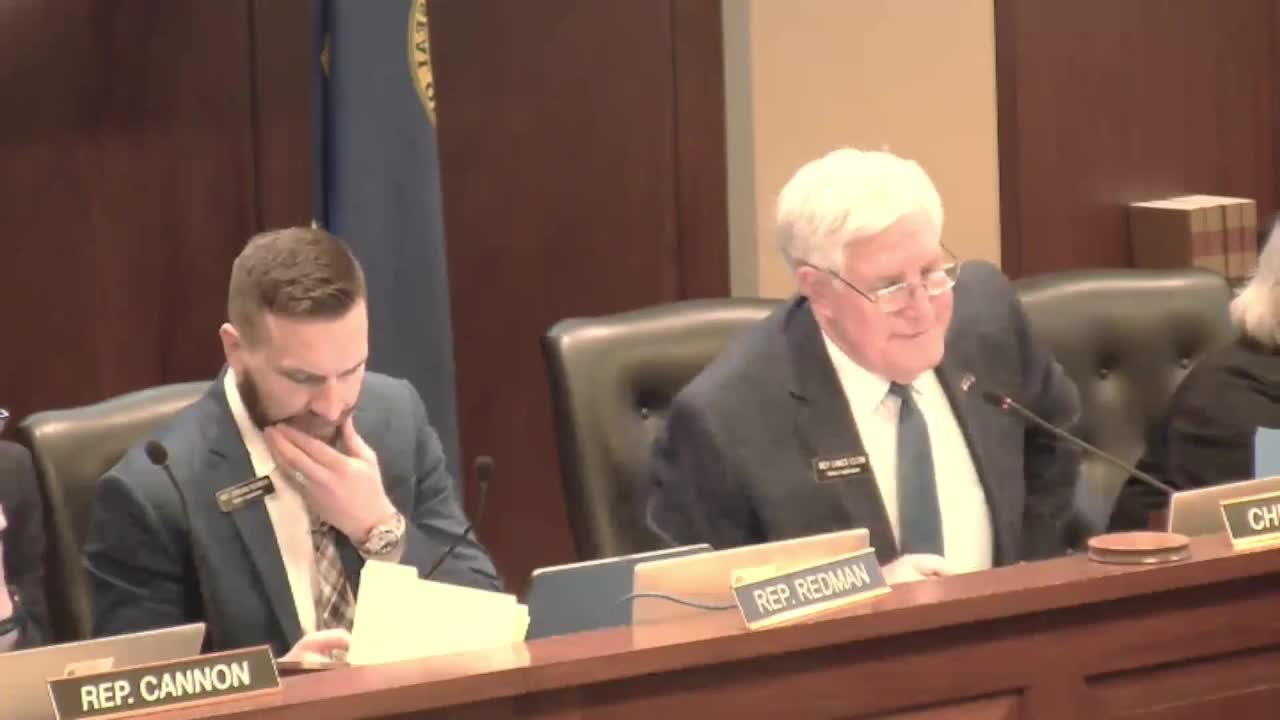
BOISE — The House Business Committee on March 3 advanced House Bill 214 after extended testimony and a roll‑call vote, but the bill drew sustained concern from regulators, contractors and several representatives about safety and interstate reciprocity for credentials.
Representative Kyle Harris, R‑District 7, the bill sponsor, told the committee the measure removes the word “direct” from the statutory supervision requirement and inserts language taken from recently promulgated administrative rules. “This is another, in the words of Representative Cornelis, self regulation bill,” Harris said, adding the change would permit a supervising journeyman to be available to apprentices during working hours rather than physically present on every job site.
Amy Lorenzo, bureau chief at the Division of Occupational and Professional Licenses, told the committee Idaho currently has “just under 6,000 registered apprentices,” “just over 7,000 licensed journeymen,” and “another 2,000 master electricians.” She also noted the new residential license type is newly created and that, at present, there are no licensed residential electricians in Idaho while implementation continues.
Several trade representatives and an experienced inspector urged caution. Jeff Fitzloff, a licensed contractor and longtime industry instructor, said many contractors oppose the change and brought signatures of practitioners opposing the bill. “Are they trying to kill somebody?” Fitzloff said he heard from members who signed opposition statements — a comment the sponsor and others treated as an expression of safety concern about apprentices working unsupervised.
Committee members raised multiple concerns: Representative Wheeler and others pressed whether the change would permit a contractor to distribute apprentices among multiple sites with limited supervision; Representative Green asked how a homeowner would know an apprentice in the house was appropriately supervised. Lorenzo warned that other states could decline to recognize Idaho apprentices for reciprocity if Idaho’s on‑the‑job training framework materially diverged.
Harris and supporters argued liability, insurance and professional accountability keep contractors from leaving unqualified apprentices unsupervised. “Nobody in the industry … is going to have a half a dozen inexperienced apprentices running around” without oversight, Harris said, and he added existing inspection, testing and training requirements would not change.
Public testimony included industry voices on both sides. Fitzloff described quality problems he has observed, including improperly terminated conductors and missing grounding components; he said the faster pace associated with high apprentice ratios can produce rework and delayed inspections. Others representing trade organizations provided written comments opposing the change.
After debate the committee considered two motions. Representative Wheeler offered a substitute motion to hold the bill subject to the call of the chair; that substitute failed on a roll call. The committee then approved a motion to send HB 214 to the floor with a “do pass” recommendation. The transcript records the final roll call as 12‑4 in favor of sending the bill to the House floor.
Next steps: HB 214 will move to the full House for floor consideration. The committee chair and several members said they expect continued discussion and possible amendments in subsequent stages.