Get Full Government Meeting Transcripts, Videos, & Alerts Forever!
Get email alerts on the Insurance Risk Mitigation topic
No spam. Unsubscribe anytime.
House committee holds bill to let insurers offer risk‑mitigation devices, seeks data protections
Summary
The House Business Committee held House Bill 72 on March 3 after questions about consumer data and privacy. The bill would clarify that insurers may provide risk‑mitigation devices or services without violating Idaho anti‑rebating law.
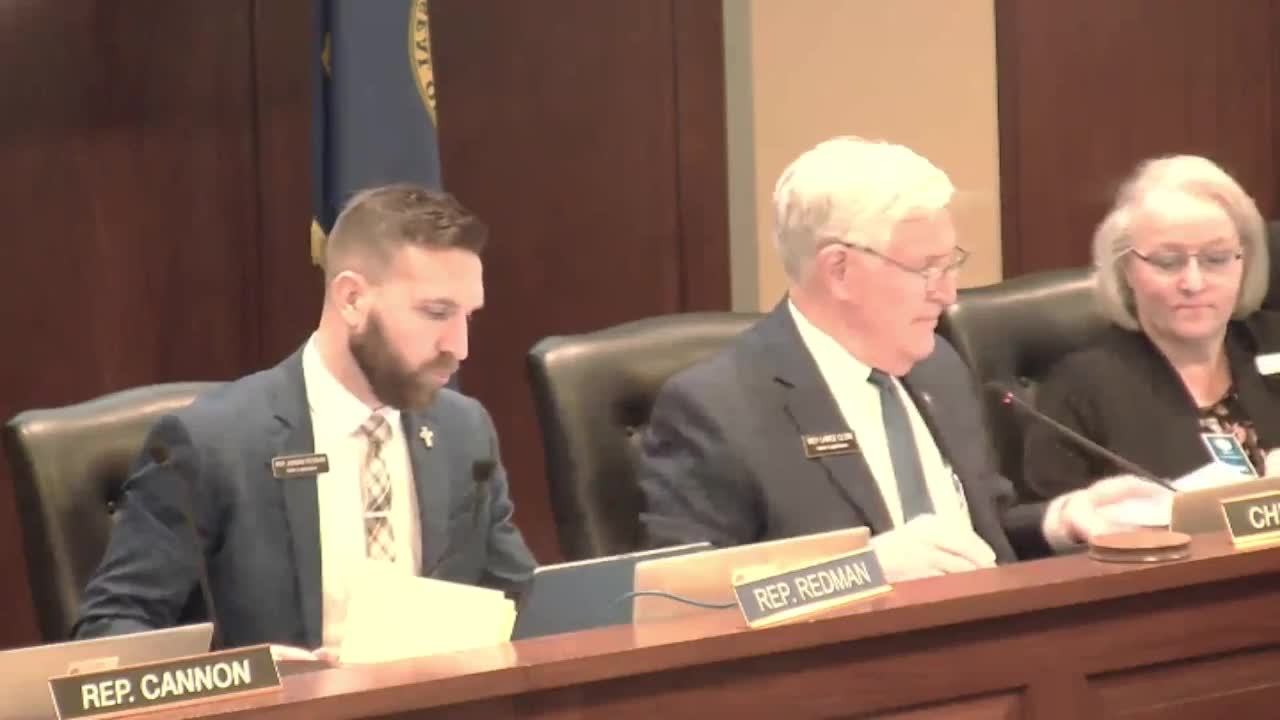
BOISE — The House Business Committee on Monday held House Bill 72, a bill that would clarify that insurers may provide or subsidize devices or services that reduce loss risk without violating Idaho’s anti‑rebating laws.
Representative Jeff Cornelis, R‑Nampa, the sponsor, told the committee the measure is an “agency bill” intended to remove uncertainty about whether insurers may offer technology such as leak detectors or fitness trackers to policyholders. “This is an agency bill. It fixes a couple of things that really weren't broken in the system but they could use a little bit of help,” Cornelis said.
The bill would amend Idaho law to say that providing a risk‑mitigation device for free or at a reduced price in connection with an insurance purchase would not violate the Insurance Unfair Trade Practices Act. Proponents said that would let life, disability and annuity insurers use the same kinds of incentives and tools that health and auto insurers already do.
Liz Hatter, testifying for the American Property Casualty Insurance Association, said the bill “would allow new technologies and innovations to be used in Idaho and help create opportunities for consumers to save money.” She told the committee the measure balances consumer protection and insurer ability to offer “value added products or services that relate directly to the policy.”
Dean Cameron, director of the Idaho Department of Insurance, told the committee the current statute includes a long‑standing $200 limit on what could be provided without running afoul of rebating prohibitions. “There is a limitation on that in the statute that says it cannot exceed $200. That was put in place a long time ago,” Cameron said, and the department’s intent is to remove ambiguity so insurers can offer devices that exceed that historical dollar threshold when appropriate. He said the bill is drafted to make clear that such devices are outside the $200 limit and that the department has worked on the issue for years.
Committee members pressed authors and witnesses about the possible downstream use of data collected by devices such as smartwatches or tracking apps. Representative Crane asked whether an insurer could use data from a smartwatch to deny coverage or increase rates; Cameron said other provisions of Idaho law constrain how certain data may be used and that the bill was not intended to authorize insurers to use health‑tracking data against consumers. “I don't believe there's anything in this bill that would allow for … a health insurance company … to gather that data,” Cameron said. He and other witnesses said the bill envisions devices that primarily provide information to the consumer (for example, a water‑pressure meter that alerts a homeowner to a leak) and would help reduce claims and losses.
Several members asked for specific statutory citations or amendments to make consumer privacy protections explicit. Representative Harris and others pressed for clearer limits on what insurers can do with device data; Director Cameron said he would research the existing statutory protections and return them to the committee.
After testimony and questions, Representative Crane moved to hold the bill “subject to the call of the chair.” The committee approved the motion by voice vote; the chair said the department would provide additional statutory citations and that the committee would revisit the bill after that information was circulated.
The committee did not take a final vote on the bill.
Next steps: Director Cameron said he would provide a list of existing Idaho statutes and regulatory provisions that he believes address data use and rate‑making, and the committee chair said members would consider amendments or additional protections before scheduling HB 72 again.