Get Full Government Meeting Transcripts, Videos, & Alerts Forever!
Get email alerts on the Convention Of States topic
No spam. Unsubscribe anytime.
Committee approves updated rules for Indiana commissioners to Article V convention amid divided testimony
Summary
The committee passed Senate Bill 450, which updates Indianastatutory rules for commissioners to a potential Article V convention, including new qualifications, a name change from "delegate" to "commissioner," and mechanisms for instructions and oversight; proponents and opponents debated the risk of a "runaway convention."
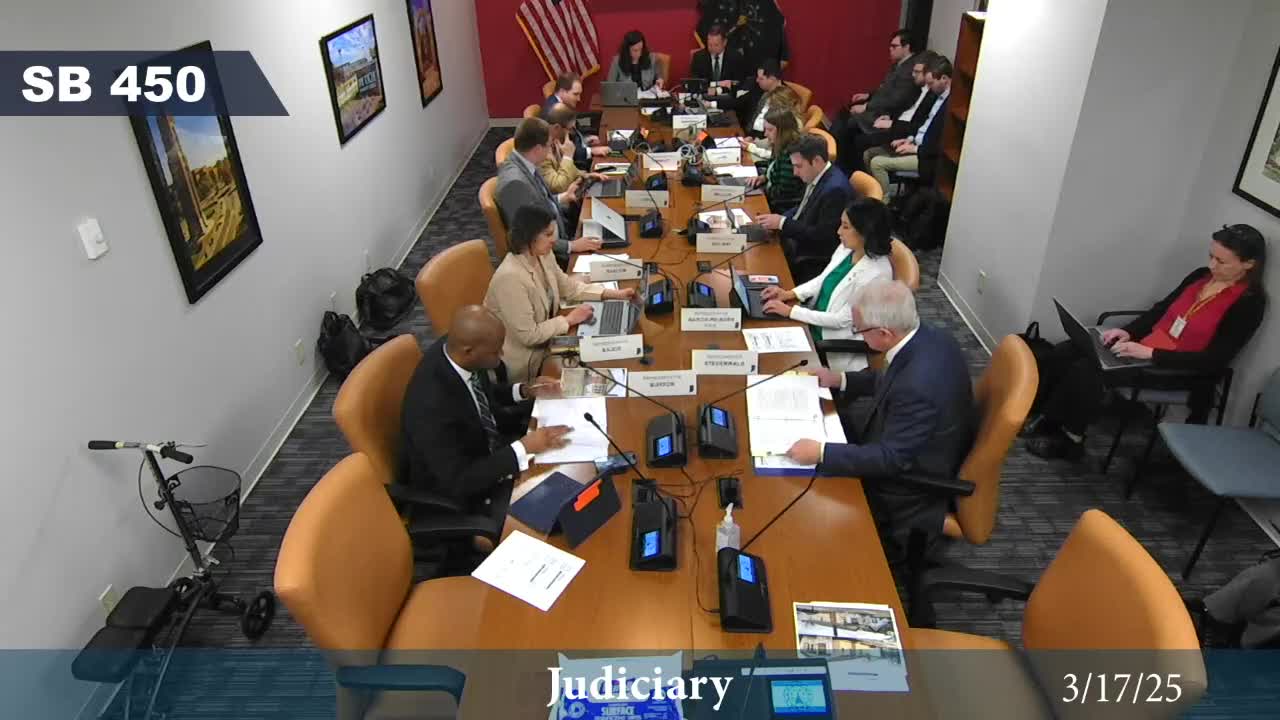
The House Judiciary Committee voted to pass Senate Bill 450, which updates Indiana's statutory framework governing state representatives to an Article V convention of the states and imposes new qualifications, procedural safeguards and oversight mechanisms.
Chairman Jeter summarized the measure as updating the 2013 statute and the 2016 application to an Article V convention. The bill changes the word "delegate" to "commissioner," requires commissioners to be Indiana residents for at least five years, disqualifies registered lobbyists and persons convicted of crimes involving moral turpitude, increases the number of commissioners to three, requires selection of a chair, prohibits acceptance of gratuities, and adds mechanisms for the legislature to provide instructions and to clarify whether a proposed item lies within commissioners' authority.
Supporters from the Convention of States network testified that the changes are prudent preparation if the nation reaches the 34-state threshold to call a convention. Susan Gervais, a legislative liaison for Convention of States, said Indiana has already passed an application and the bill "updates" the state's readiness. Katherine Symonek, a regional director for Convention of States, described petition totals and grassroots signers, saying Indiana's 13 House districts have 8,763 signers and the statewide total exceeds 67,935.
Supporters argued the commissioner model is purposeful: a commissioner serves with written instructions from the legislature and may return to the body for clarification if commissioners confront unforeseen proposals. Dan Stock (appearing as a subject-matter witness) said the bill "allows the commissioners to call up and get information" so they would not be paralyzed when novel proposals arise at a convention.
Opponents included the League of Women Voters of Indiana and Common Cause Indiana. Barbara Tully of the League said the threat of a "runaway" convention is real and criticized which constitutional provisions SB 450 excludes from amendment; Julia Vaughn of Common Cause called an Article V convention "a dangerous proposition" and urged Indiana to rescind its prior application.
Committee members debated whether the changes sufficiently limit convention scope. Proponents pointed to legal precedent saying commissioners are bound by their commissions and that state legislatures, not a convention body, would vote on any proposed amendment; opponents said the protections are insufficient. Representative Meltzer explained he typically opposed an Article V convention but voted yes because the bill adds parameters; several members asked for additional tightening.
The committee approved SB 450 by roll call, 9-4. Sponsors and stakeholders signaled willingness to continue refining language.
Votes at a glance: Senate Bill 450 — committee vote to pass: 9 yes, 4 no.
Next steps: The bill was passed out of committee with a recommendation; proponents and opponents both indicated they may continue to press for further amendments on scope and procedural safeguards.