Get Full Government Meeting Transcripts, Videos, & Alerts Forever!
Get email alerts on the Auditor To Comptroller topic
No spam. Unsubscribe anytime.
Committee passes joint resolution to complete transition from auditor to comptroller in state law and constitution
Summary
The committee approved Senate Joint Resolution 17 to begin the constitutional amendment process that would change references from "auditor" to "comptroller" so statutes and the constitution align; staff and elections officials described the transition schedule.
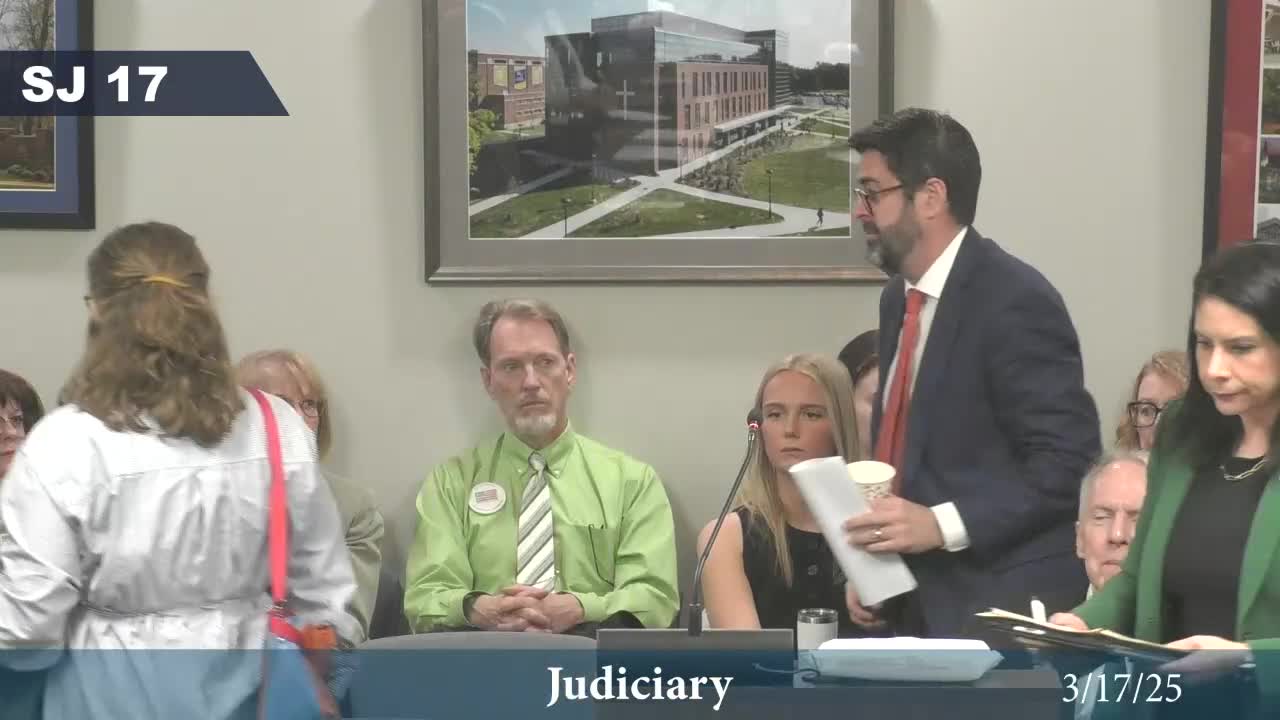
The House Judiciary Committee voted to pass Senate Joint Resolution 17, a measure that begins the constitutional amendment process to change references to the statewide office from "auditor" to "comptroller" so statutory and constitutional language align.
Senator Carrasco and supporters said the change is the final step to complete a name-change process that started in prior budget and technical-corrections bills. Jennifer Thuma, general counsel to the state comptroller, and Brad King of the Indiana Election Division both testified in support. King outlined the multi-step constitutional process and described a transition schedule that treats an individual serving as auditor after June 30, 2023, as serving as comptroller for constitutional purposes through Jan. 1, 2031, to prevent legal uncertainty during the transition.
"To amend the Indiana constitution is not something done lightly," Brad King said, noting that a schedule provision is included to remove any doubt about the effectiveness of financial transactions during the transition.
Committee members asked technical questions about effective dates and term alignment; King said recent standardization makes statewide officers' terms effective Jan. 1 and that the schedule language is intended to avoid legal challenges during the transition. After discussion, the committee voted to pass the joint resolution on a 12-0 roll-call.
Votes at a glance: Senate Joint Resolution 17 — committee vote to pass: 12 yes, 0 no.
Next steps: The constitutional amendment process requires another identical joint resolution in a subsequent session and then voter approval at the ballot, per the process King described.