Get Full Government Meeting Transcripts, Videos, & Alerts Forever!
Get email alerts on the Unsafe Building Law topic
No spam. Unsubscribe anytime.
Committee holds unsafe-building bill after testimony from property owner and Indianapolis officials
Summary
Lawmakers paused action on Senate Bill 197 after extended testimony about code-enforcement practices, notice timelines, liens placed on tax bills and local appeals procedures; the bill's sponsor signaled willingness to work on fixes.
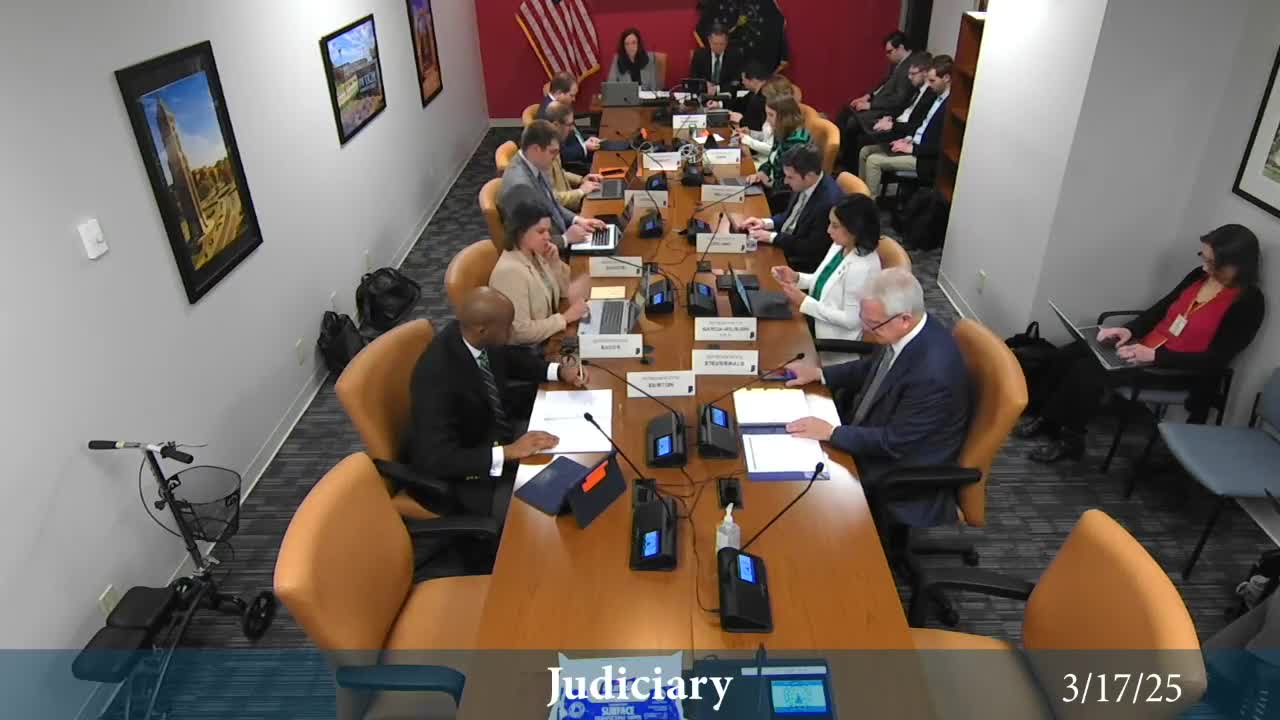
The House Judiciary Committee heard more than an hour of testimony on Senate Bill 197, a bill that would change how unsafe-building enforcement and civil penalties are administered; the committee elected to hold the bill for further work rather than vote.
Senator Greg Freeman, the bill sponsor, told committee members the current law allows a 10-day notice period and then permits municipalities to place civil penalties on a property owner's tax bill without a court hearing. "10 days notice, never seeing a judge, and then fining you on your property tax bill. I find those 3 things to be egregious," Freeman said, urging more time and a hearing mechanism.
The hearing included testimony from the affected property owner, Jim Trimble, who described fire damage and escalating costs of demolition and repair. Trimble said demolition estimates rose from about $27,000 to roughly $60,000 after asbestos testing, and that his property accrued nuisance penalties that appeared on his tax bill as charges of about $1,500 to $1,900. "That's the part where you're guilty and you're proven innocent," Trimble testified.
Abby Brands, director of the Department of Business and Neighborhood Services for the City of Indianapolis, testified in opposition to the bill as currently written. Brands said Indianapolis has proposed compromise language to codify a process allowing a 100% refund waiver once a property comes into compliance, which would let the city keep enforcement tools while guaranteeing property owners a refund if they cure violations and request a hearing. She said Marion County opens the majority of unsafe-building inspections in response to Mayor's Action Center complaints and that administrative law judges currently average about "70 to 80% of a refund" following hearing outcomes.
Banking representatives signaled neutrality but urged clarifying language so liens would be identifiable during title searches and real-estate closings. Dax Denton of the Indiana Bankers Association recommended clearer mechanics for how a lien would appear on title records.
Committee members pressed staff and city witnesses on detail: Marion County's enforcement runs on inspection cycles (inspect every 90 days; penalties assessed every 180 days), a hearing typically takes about two weeks to schedule once requested, and the city reported opening roughly 975 repair cases last year. Witnesses also described current procedural options: once a hearing is requested, enforcement action is put on hold while the administrative law judge schedules the matter.
After questions from members, Chairman Jeter said the bill would be held to "chew on" and the committee would work with the sponsor and stakeholders on language changes.
Votes at a glance: Senate Bill 197 — held for further study by committee; no committee vote to pass recorded.
Next steps: Sponsor Freeman said he and city representatives will continue to negotiate language about notice periods, placement of liens on tax bills, refund mechanics and judicial review.