Get Full Government Meeting Transcripts, Videos, & Alerts Forever!
Get email alerts on the Referendum Timing topic
No spam. Unsubscribe anytime.
Committee backs bill to require local referendums and public questions at general elections; school leaders warn of budget impacts
Summary
House Bill 16-81 would require local public questions and state referendum questions to appear only on general election ballots. School district groups opposed the proposal, arguing it would disrupt budgeting cycles and could force midyear staffing or service disruptions.
Representative Wescow told the committee that House Bill 16-81 would require that local public questions and state referendum questions be placed on the ballot only during general elections, rather than in primaries or special elections.
"House Bill 16 81 would require that local public questions or state referendum questions be placed on the ballot only at general elections," Representative Wescow said, arguing general elections bring higher turnout.
Proponents including the Indiana Secretary of State's office said consolidating referendums to the general election would reduce the number of separate elections clerks must administer. Keegan Prentiss of the Secretary of State's office said scheduling referendums at general elections gives clerks "a reprieve from holding elections when they don't necessarily have to."
Multiple education groups — including the Oriole Advocates (speaking for Avon), the Coalition of Growing and Suburban Schools, the Indiana School Boards Association and the Indiana Small and Rural Schools Association — testified in opposition. Witnesses said restricting referendums to November would misalign funding with school budgeting cycles, create risks of midyear staffing disruptions, and reduce local control.
Todd Singer of Oriole Advocates said his district passed a May 2018 referendum that immediately funded teacher hires and that if renewal is delayed to a November ballot, a failed November vote could leave the district carrying costs through the remainder of the school year. "If that renewal were to fail, our school leaders ... would need to eliminate positions immediately that summer," Singer said. He added that shifting renewals to November could force districts to run a deficit from January through May while awaiting the next budget cycle.
Terry Spradlin, executive director of the Indiana School Boards Association, told the committee that referenda are a limited tool used by about half of school corporations and that the statewide historical pass rate for referenda is near 64 percent. He recommended an amendment that would preserve May primaries as an option while removing special and municipal election timing.
Representative Wescow said he would consider compromise language, including the "cooling-off" language found in another bill (Senate Bill 1) that would address operational referendum timing, but the bill as introduced does not include that provision.
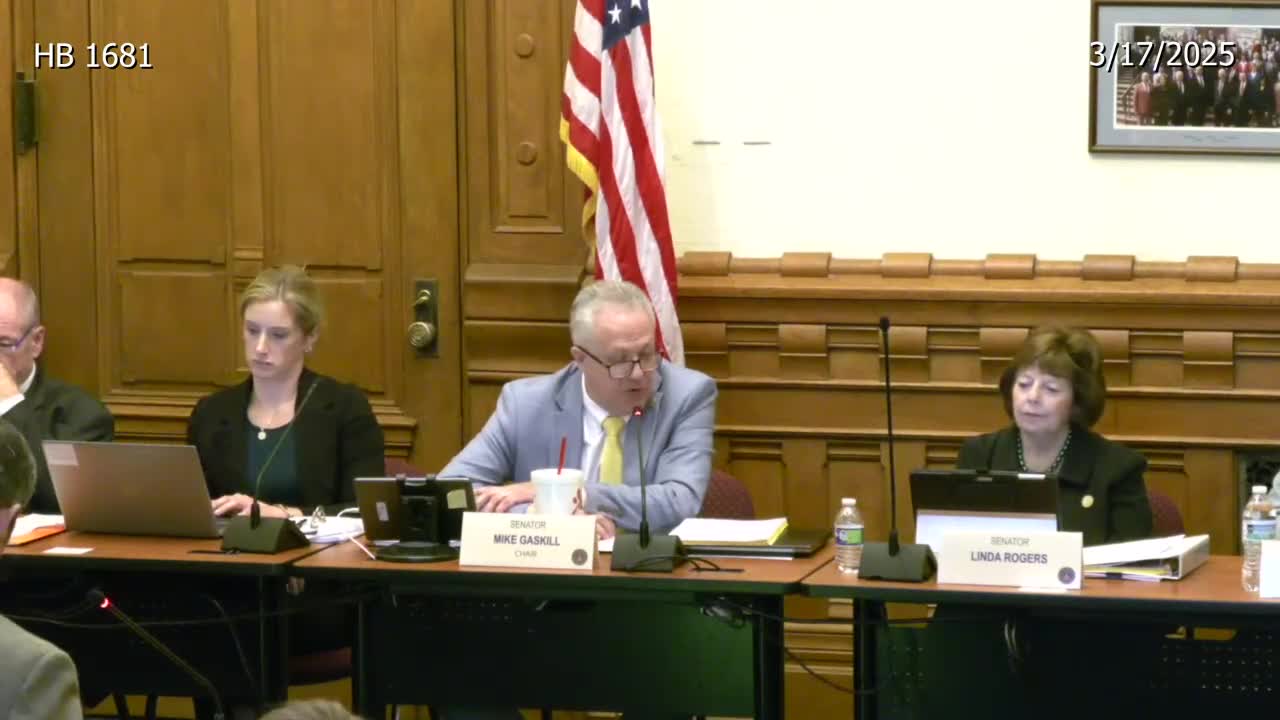
After testimony and questions from members, the committee voted to recommit House Bill 16-81 to the Senate Tax and Fiscal Policy Committee for further consideration. A roll call recorded six senators voting yes and two voting no (6–2). Committee members said recommitment would allow time to consider amendments that address operational concerns raised by school officials.
The bill remains alive for further amendment and fiscal review; opponents urged the committee to preserve May primary and general election options to protect local budgeting flexibility.