Get Full Government Meeting Transcripts, Videos, & Alerts Forever!
Get email alerts on the Foreign Adversary Security topic
No spam. Unsubscribe anytime.
Hughes presents package to counter foreign‑adversary threats; scholars and security experts urge action on transnational repression, procurement and supply‑line
Summary
Senator Brian Hughes laid out a set of bills addressing transnational repression, divestment from CCP‑controlled investments, procurement bans on scrutinized vendors and a geopolitical conflict advisory committee. Experts and survivors testified on the threats posed by foreign authoritarian influence and supply‑chain vulnerability.
Senator Brian Hughes presented four related measures aimed at protecting Texas from influence and operational risks posed by foreign adversaries:
• SB 1349 (transnational repression): creates offenses to address harassment, intimidation, and coercion by foreign governments or organizations against residents and Texans abroad and requires law‑enforcement training and a Department of Public Safety study on the threat.
• SB 667 (investment divestment): directs divestment of certain state pension and retirement funds from companies compromised by the Chinese Communist Party (CCP) and affiliated entities.
• SB 1585 (communications and procurement): would bar governmental entities from contracts for information and communications technology or services with companies controlled by foreign adversaries and require vendor certification; violations could trigger civil penalties and debarment periods.
• SB 2312 (geopolitical conflict advisory committee): creates a nine‑member advisory committee to conduct tabletop exercises, audit critical supply chains, and report on Texas vulnerabilities to potential geopolitical conflicts that could disrupt supplies of pharmaceuticals, transformers, semiconductors and other critical goods.
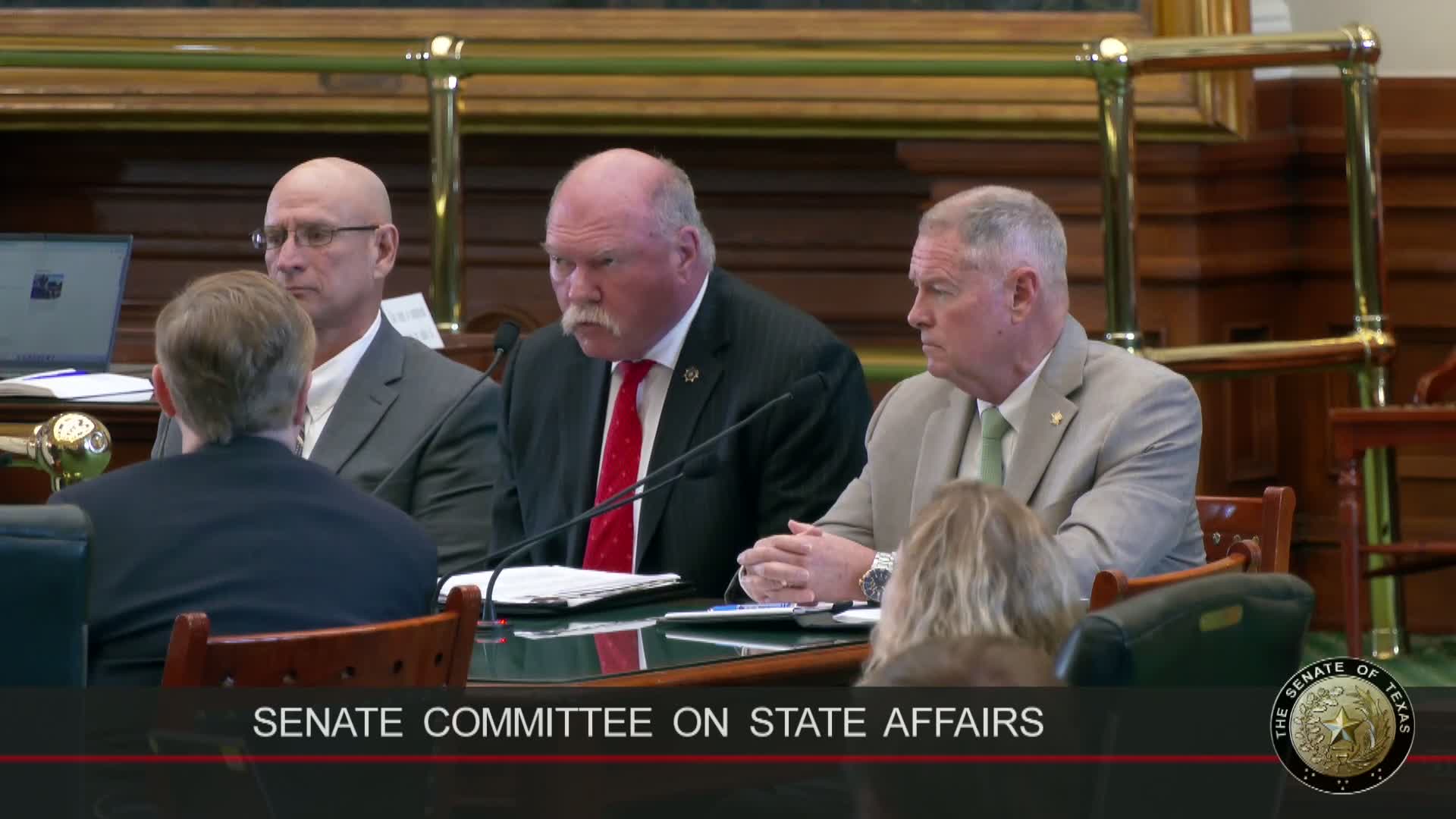
Panel testimony: The committee heard invited testimony from historians and national‑security experts and a survivor of CCP repression. Modern China scholar Rowena He described personal experience of transnational pressure, loss of position in Hong Kong, and threats to family members remaining in China; she urged protections for dissidents in the U.S. Michael Lucci, founder of the State Armour nonprofit, summarized federal warnings about Chinese‑made routers and other equipment sold below cost and argued state avoidance of scrutinized vendors is urgent. Jackie Deal, a scholar of the CCP’s military‑civil fusion strategy, testified that Beijing seeks global control of dual‑use technology and that certain Chinese products enable espionage and sabotage. The Texas Department of Public Safety provided a resource witness, and Major Mark Melson told the committee authoritarian regimes and cartels use tactics such as digital surveillance, coercion of family members and abuse of institutions to suppress opponents abroad.
Supporters framed the bills as a preemptive defense of Texas infrastructure, supply chains and residents; witnesses cited federal intelligence assessments that adversaries are expanding capabilities to attack civilian infrastructure and to weaponize supply chains. Opponents or cautionary witnesses warned of implementation challenges, potential short‑term supply shortages, and the need to coordinate procurement and pension divestment policies with federal standards and with state agencies that operate licensing and investment functions.
Next steps: The committee accepted the presentations and left the bills pending. Multiple witnesses urged further coordination with federal authorities and careful drafting of lists of "scrutinized companies" and carve‑outs to avoid unintended procurement or supply disruptions.