Get Full Government Meeting Transcripts, Videos, & Alerts Forever!
Get email alerts on the Tort Reform Public Nuisance topic
No spam. Unsubscribe anytime.
Heated hearing on SB 779 — proposal to limit public‑nuisance claims draws fierce opposition from local governments and trial lawyers
Summary
Senate Bill 779, designed to curb what sponsors called the "weaponization" of public‑nuisance law, drew extensive opposition from trial lawyers, county attorneys and environmental advocates who said the bill would remove a long‑standing remedy for large, diffuse harms such as opioid and water quality crises.
Senate Bill 779, authored by Senator Brandon Middleton, would narrow the scope of common‑law public‑nuisance claims so that activities authorized or regulated by federal, state, or local law could not be the basis for such claims. Proponents said public‑nuisance lawsuits have been used in other states to regulate lawful industries through litigation and to impose what they called "lawfare" instead of pursuing changes through the Legislature.
Opponents said the bill is broader than proponents claimed and would curtail traditional, centuries‑old causes of action used by governments and communities to seek remedies for widespread harms. Lee Parsley of Texas For Lawsuit Reform and the bill’s author framed the measure as protecting separation of powers and preventing courts from imposing regulatory policy. William Cole, Principal Deputy Solicitor General for the Texas Attorney General’s Office, told the committee he had concerns about limiting the common‑law cause of action because public‑nuisance claims have historically been an important tool in multi‑state and large‑scale litigation, including opioid and tobacco matters; the office said public‑nuisance theories played a role in securing billions for abatement and treatment programs.
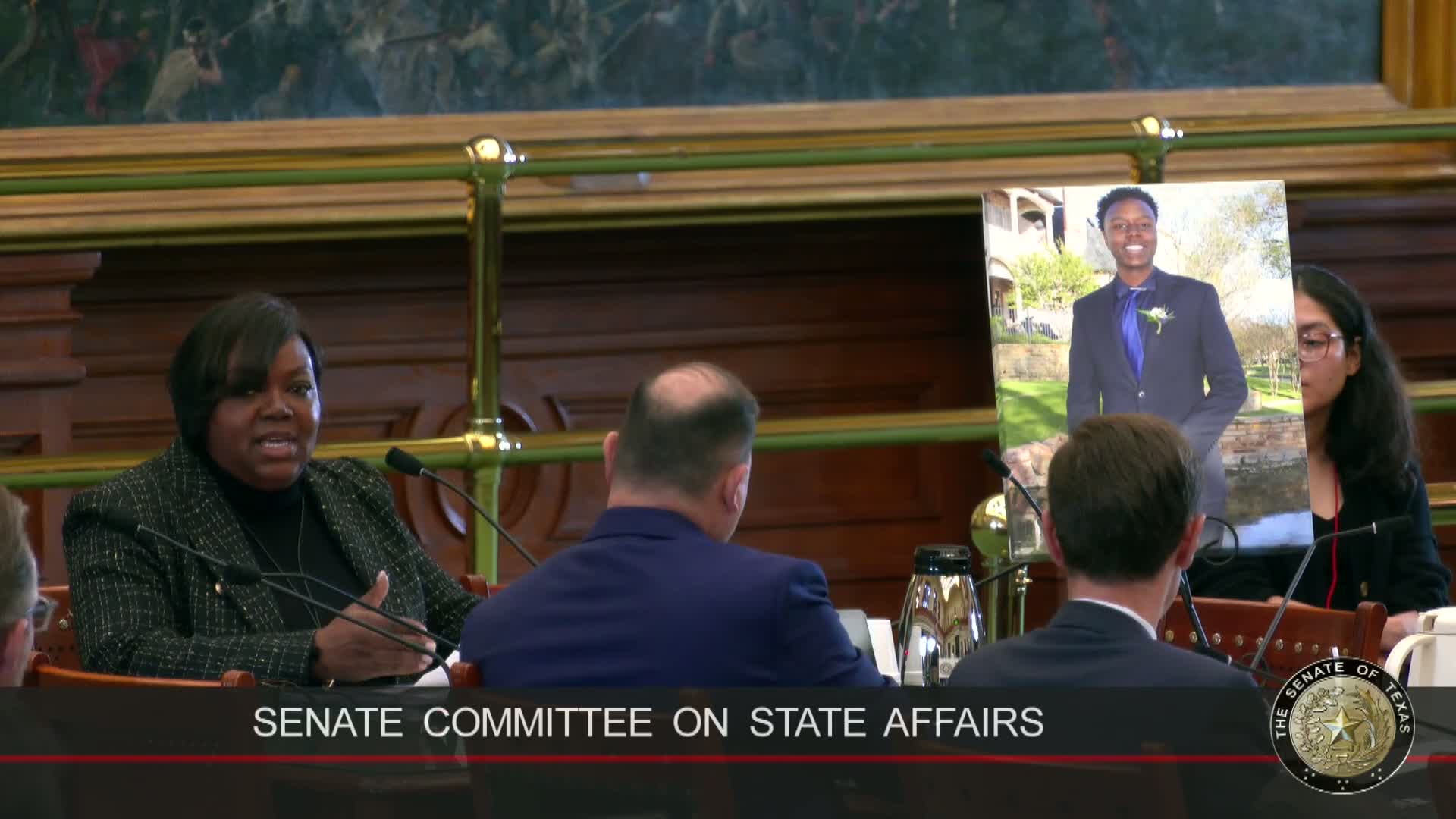
Trial lawyers, county counsel and environmental and community groups urged rejection. Jack Walker, president of the Texas Trial Lawyers Association, said the bill would strip an important tool to address industry conduct that causes broad public harm. Attorney Tiffany Bingham of the Harris County Attorney’s Office said public‑nuisance litigation produced multi‑billion dollar settlements that paid for addiction treatment, criminal‑justice costs, and local abatement efforts, and that courts currently have standards to filter frivolous suits. Environmental witnesses warned that statutory permitting does not immunize operators from civil liability to third parties and that emergency water‑quality harms, once dispersed through an aquifer, can be difficult to reverse.
The committee heard detailed legal and policy arguments on both sides and multiple witnesses said the bill, as drafted, could produce unintended consequences. The measure was left pending for further consideration; no committee vote was taken.