Get Full Government Meeting Transcripts, Videos, & Alerts Forever!
Get email alerts on the Alcohol Tourism topic
No spam. Unsubscribe anytime.
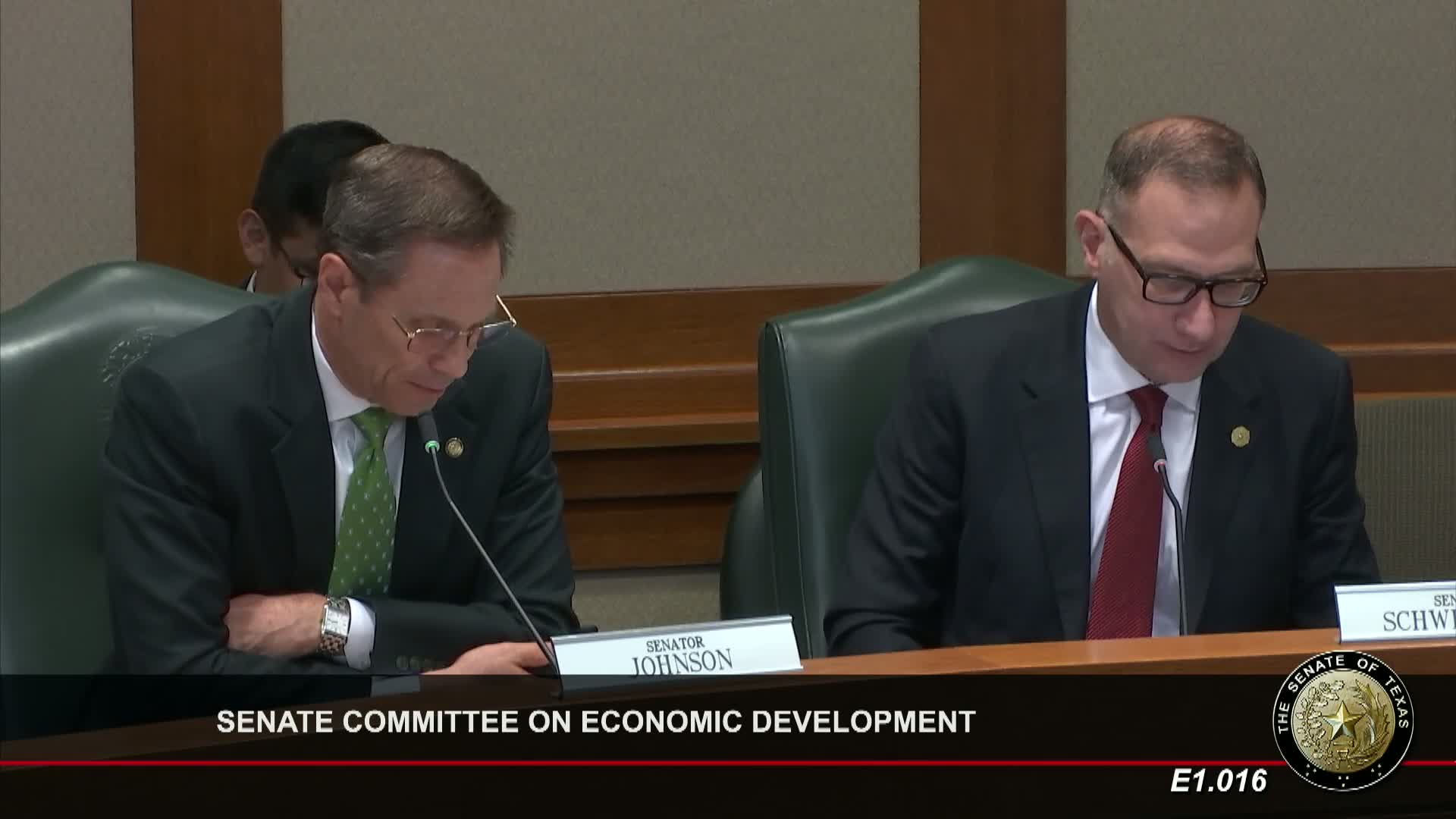
Committee hears proposal to market wineries, distilleries and breweries as tourism destinations
Summary
Senate Bill 1356 would establish an alcohol tourism program in the Governor’s Office to promote wineries, distilleries and breweries as visitor destinations; supporters highlighted economic impact, opponents urged against using public funds to promote alcohol products.
Senate Bill 1356 would establish the Texas Alcohol Tourism Development Program within the Governor’s Office of Economic Development and Tourism to market wineries, distilleries and breweries as tourist destinations. The committee substitute removes language that would promote consumption of products and instead focuses on promoting facilities as destinations, creating a web listing of locations and appointing a nine‑member advisory committee to propose budgets and plans.
Senator Parker, the bill’s sponsor, said Texas now ranks among the top U.S. states in wine, whiskey and craft‑beer production and that a statewide marketing effort could increase hotel stays, retail sales and restaurant business tied to tourism. Supporters included owners and trade groups: John Evans of Wilson Belling Mercantile (Texas Distilled Spirits Association), Natasha DeHart of Bent Distilling Company, the Texas Craft Brewers Guild and the Texas Distilled Spirits Association. Testimony emphasized the industries’ combined economic impact (witnesses cited an aggregate figure of roughly $26 billion), the number of establishments across the state, and the role of tourism for many small producers.
Opposition testimony came from Cindy Asmussen of the Southern Baptist Convention of Texas, who argued taxpayer funds should not be used to market alcohol and cited public‑health harms and statistics she said were associated with alcohol. The sponsor and supporters responded that the program would not promote product consumption, would be structured under a standard advisory committee without paid member reimbursement, and could be implemented without state appropriations if budget riders are not included.
Committee members asked about fiscal impacts, competitiveness with other states’ programs, and the role of existing private and agency marketing efforts. Supporters said other states run similar destination marketing programs and that the committee substitute includes Nelson‑style fiscal‑neutral language and prohibits advisory‑committee compensation.
Ending: The committee left SB 1356 pending. The hearing featured industry supporters pointing to tourism and economic benefits and faith‑based opposition raising public‑health and public‑funding concerns.