Get Full Government Meeting Transcripts, Videos, & Alerts Forever!
Get email alerts on the Teacher Recruitment topic
No spam. Unsubscribe anytime.
House Education Committee advances teacher loan‑repayment pilot (HB28) after split roll call, 4‑3
Summary
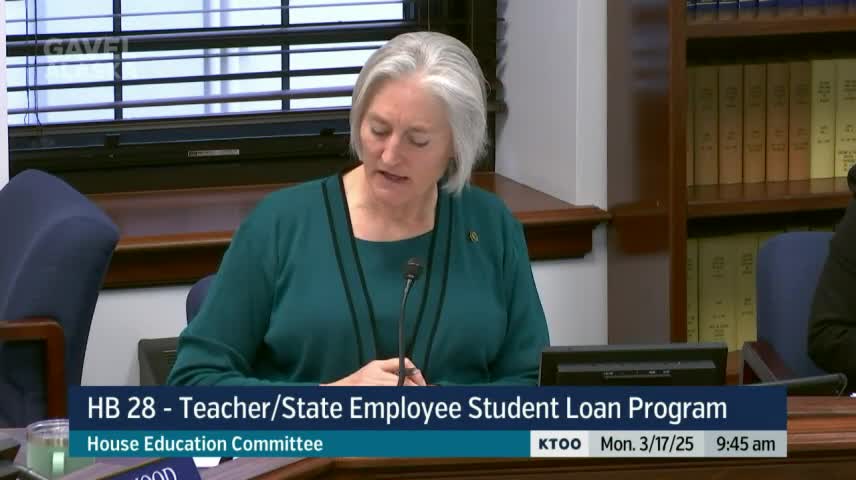
House Bill 28, a measure to create or reactivate a teacher and state‑employee loan repayment program, was moved out of the House Education Committee on March 17 after a 4‑3 roll‑call vote.
House Bill 28, a measure to create or reactivate a teacher and state‑employee loan repayment program, was moved out of the House Education Committee on March 17 after a 4‑3 roll‑call vote. The vote followed an objection, floor discussion of funding sources and a debate about program design and sustainability.
Nut graf: Sponsor Representative Andy Story moved HB28 as a loan‑repayment pilot designed to recruit and retain educators and other public employees. Opponents argued the proposed funding source—the Higher Education Investment Fund—was not an appropriate or sustainable use of the account; supporters said a modest pilot would be a prudent, innovative use of the fund.
Representative Story moved the bill and described it as an innovative pilot to bring educators and state employees to Alaska and encourage them to stay. Representative Schwanke (objecting) and others said the Higher Education Investment Fund should remain dedicated primarily to scholarships (Alaska Performance Scholarship) and related higher‑education investments; Schwanke said the fund’s sustainability was a concern and preferred alternative loan‑repayment models that emphasize retention past multi‑year milestones.
Representative Story replied that similar repayment programs had produced positive returns in other contexts and that this bill uses a repayment (not forgiveness) mechanism that avoids the administrative and default risks that had earlier troubled other state programs. Representative Underwood asked staff to gather additional data on past programs; Story noted the bill’s design differs from earlier loan forgiveness programs and argued it could be run as a $1 million‑per‑year pilot spread across multiple years.
A roll call was requested and recorded. Members voted as follows: Representative Eisheid — yes; Representative Underwood — no; Representative Schwanke — no; Representative Elam — no; Representative Deibert — yes; Co‑chair Andy Story — yes; Co‑chair Himshoo — yes. The tally: 4 yeas, 3 nays; the bill was advanced from committee.
Ending: The committee clerk posted the committee vote and concluded the hearing; the bill will proceed in the legislative process with the committee record reflecting the divided vote and objections.