Get Full Government Meeting Transcripts, Videos, & Alerts Forever!
Get email alerts on the Economic Development Transparency topic
No spam. Unsubscribe anytime.
Bill would require public meetings, time limits on some local economic development agreements
Summary
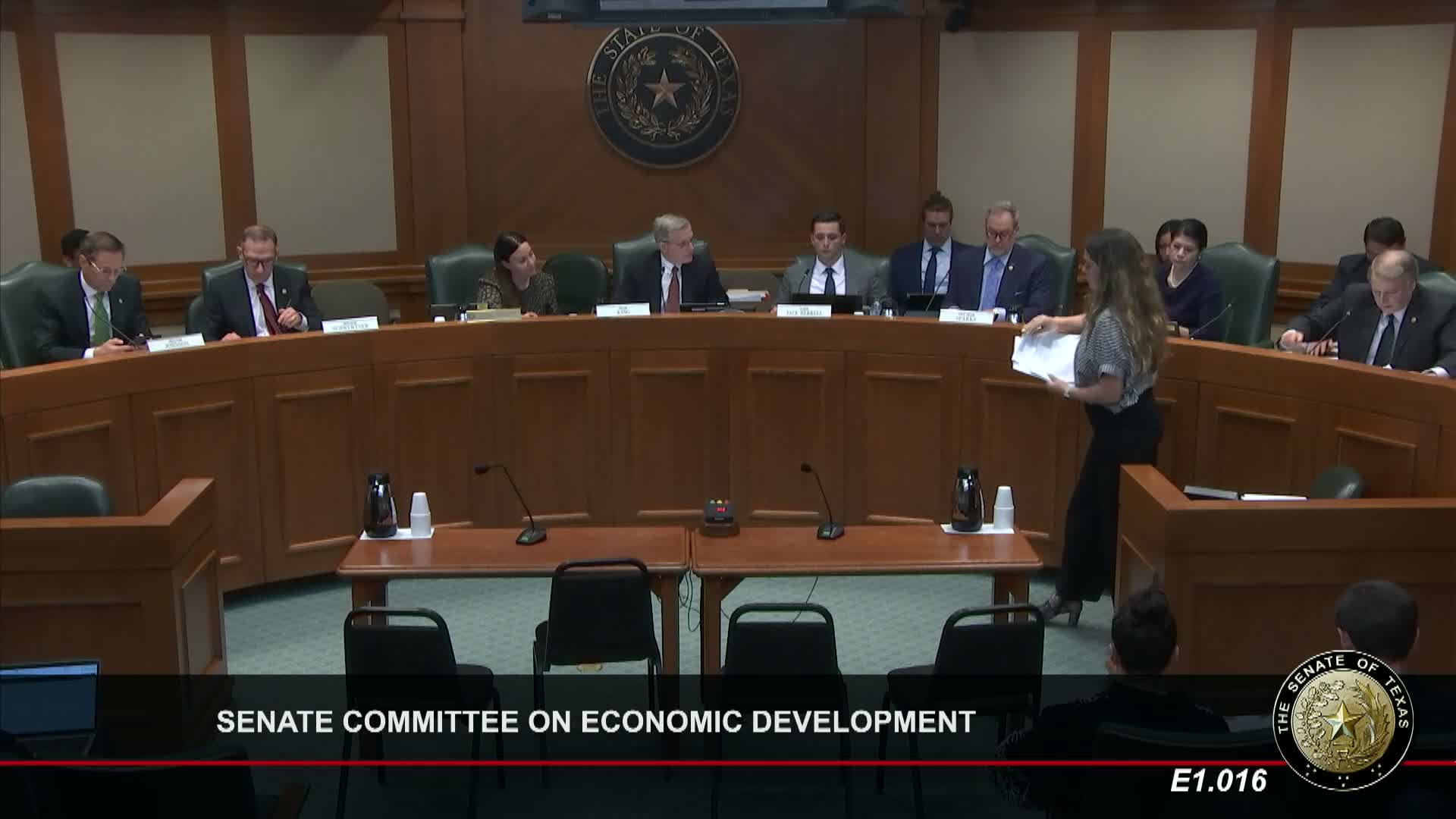
Senate Bill 878 would add public‑meeting notice and time limits to agreements authorized under chapters 380 and 381 of the Local Government Code; proponents framed it as transparency and guardrails, while economic development groups and local officials warned of competitiveness and flexibility losses.
Senate Bill 878, described as a follow‑up to prior interim study work, would require public meetings and specified notice periods for economic development agreements under chapters 380 (cities) and 381 (counties) of the Local Government Code, and would impose time limits on those agreements with a default initial term of 10 years and up to three renewals of five years each for a total potential 25‑year term. The bill would also exclude ad valorem (property tax) abatements from chapters 380 and 381 so those abatements could remain subject to chapter 312 (and related statutes) processes.
Author Senator Birdwell said the broad authority in chapters 380 and 381 has sometimes produced agreements with “questionable practices and little transparency,” and read reporting that some local agreements exceeded the 10‑year cap that applies in other statutory contexts. Birdwell framed the bill as creating guardrails and public notice that would give voters an opportunity to be heard before agreements are authorized.
Opponents included Stuart MacGregor of the Texas Economic Development Council and Chris Collins with the Greater Waco Chamber of Commerce, who said chapters 380 and 381 are essential tools for local economic development. MacGregor and Collins described instances where flexibility, including sometimes longer terms, supported site development, infrastructure partnerships and successful projects that generated private investment and jobs. They warned the bill could hamper competitiveness, particularly for smaller jurisdictions or non‑sales‑tax communities that rely on creative agreements to attract investment.
Committee members asked about specific alleged abuses; Birdwell cited a Houston Chronicle review that found dozens of agreements that exceeded typical time caps and noted the bill does not limit dollar amounts, only transparency and duration. Local economic development witnesses said most jurisdictions tailor agreements to project needs, often use confidentiality or nondisclosure during site selection, and present agreements to elected officials before final approval. Waco’s representative said typical agreements there had not exceeded 15 years and that most projects are negotiated to fit the specific investment.
Public testimony included elected and business‑community voices on both sides; the chair left SB 878 pending. Several committee members expressed willingness to work with local officials to refine language, and the author said he welcomed collaboration to address concerns such as whether property‑tax abatements should be carved out differently.
Ending: The bill remained pending; the hearing featured extended discussion weighing transparency and public notice against local governments’ desire for flexibility in competing for large projects.