Get Full Government Meeting Transcripts, Videos, & Alerts Forever!
Get email alerts on the Childcare Reimbursement topic
No spam. Unsubscribe anytime.
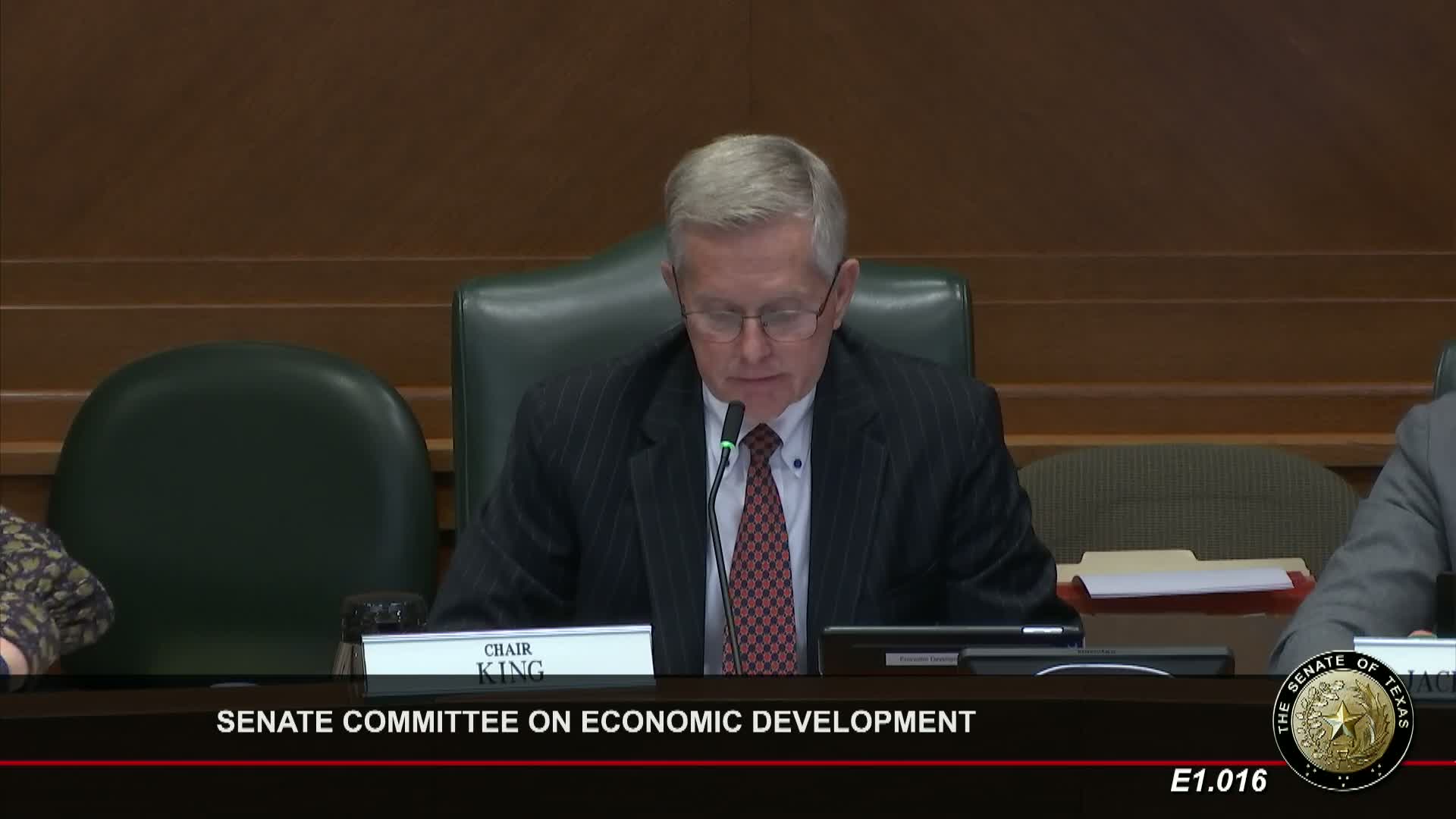
Committee considers bill to allow higher reimbursement for high-quality childcare in low‑income areas
Summary
Senate Bill 972 would let local workforce boards pay Texas Rising Star providers up to the maximum quality-based rate even when local published market rates are lower; proponents said it could reduce 'childcare deserts' while resource witnesses described safeguards.
Senate Bill 972 drew several providers and policy witnesses who described how the Texas Rising Star (TRS) quality tiers interact with local market rates and the Texas Workforce Commission’s Child Care Services (CCS) scholarship program.
The bill, as described by the author, would allow workforce development boards flexibility to reimburse TRS‑certified providers at the maximum quality‑level rate for their rating even when the provider’s published private-pay rate in a low‑income area is lower. That option would be allowed only if it does not reduce the average number of children served each day under the CCS program in the board’s area.
Proponents said the change would help prevent closures of high-quality providers in low-income neighborhoods. Kim Coughran of Children at Risk said Texas has roughly 850 “childcare deserts” for low‑income families and gave an example in Tarrant County where a TRS‑4 infant slot in a higher‑income area may be paid at the full reimbursement ($53.80 cited in testimony) while a high‑quality provider in a lower‑income neighborhood receives only the local published rate ($40 in the example) and therefore less state revenue despite providing the same quality. Jordan Maclay, executive director of Ebenezer Child Development Center in East Austin, described long wait lists, teacher pay pressures and facility maintenance costs that threaten long‑standing providers.
Reagan Miller, director of the Childcare and Early Learning Division at the Texas Workforce Commission, appeared as a resource witness and said the substitute would not change providers’ published private‑pay rates; the higher reimbursement would apply only to CCS‑subsidized children and would be conditional on maintaining the contracted number of children served. Miller described CCS as already using performance metrics tied to the number of children served and said the bill’s option would be limited to children enrolled through CCS, not all privately paying families.
Questions from committee members focused on whether the policy would raise market rates for families who do not receive CCS subsidies and whether providers might shift enrollment to accept more subsidized slots; the TWC witness said the law limits payments to the contracted number of subsidized children and parents still select providers from available slots.
The chair closed public testimony and left SB 972 pending subject to the chair’s call.
Ending: The bill remains pending; supporters urged the change as a targeted tool to stabilize high‑quality care in low‑income communities while TWC emphasized program safeguards tied to contracted slots and performance metrics.