Get Full Government Meeting Transcripts, Videos, & Alerts Forever!
Get email alerts on the Property Taxation Agricultural Storage topic
No spam. Unsubscribe anytime.
Committee rejects broader ag-storage property-tax exemption; adopts 'do not pass' on Senate Bill 2039
Summary
Senate Bill 2039, which would expand agricultural property classifications to include certain storage facilities, failed to win committee approval after debate over local tax shifts and zoning; an amendment narrowing definitions was adopted but the committee ultimately voted 7-5-1 for do not pass.
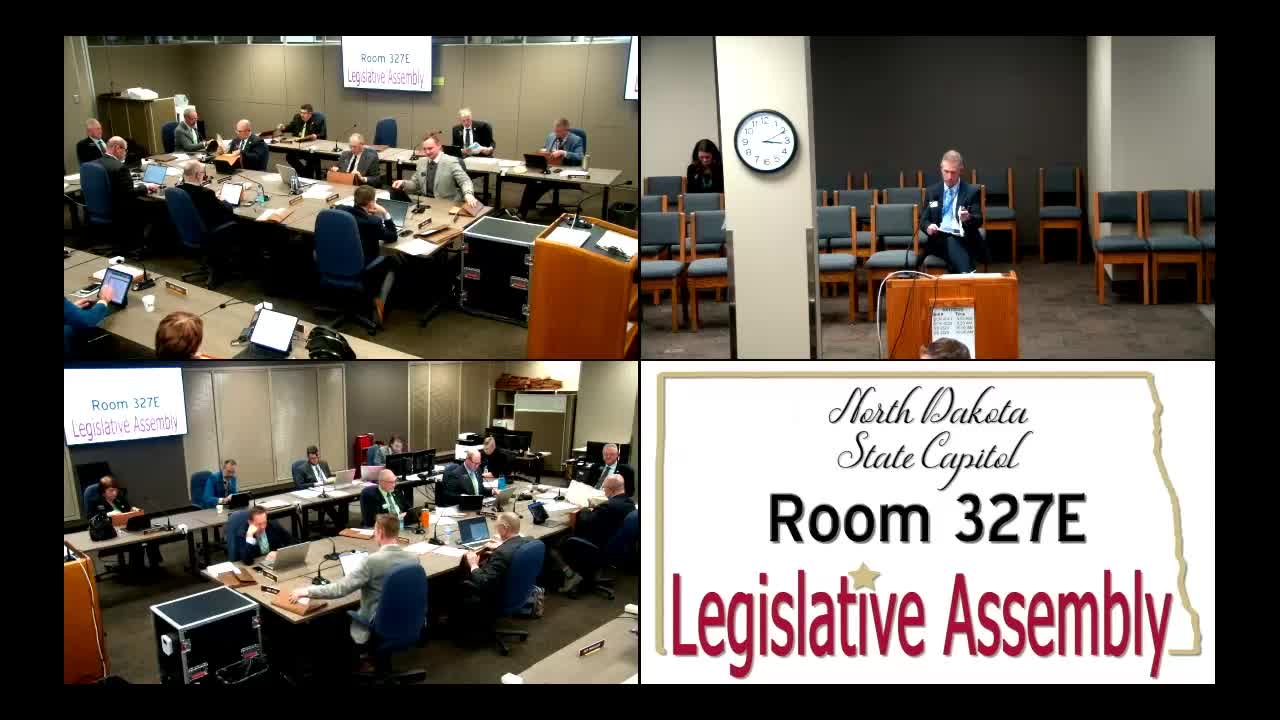
The Finance and Taxation Committee debated Senate Bill 2039, a measure that would expand agricultural property‑tax treatment to certain storage facilities (including potato warehouses) even when those buildings sit on land platted or classified as non‑farm. After adoption of a sponsor-proposed amendment to tighten definitions, the committee voted to recommend do not pass on the bill 7-5-1.
Representative Greenheck presented the interim bill and an amendment intended to clarify which storage facilities would qualify for agricultural classification and to limit eligibility to farmers or direct relatives. The amendment (identified in the transcript as amendment 01002) was moved and approved on a roll call.
Committee members raised several concerns during debate: potential tax-shifting to local property taxpayers if previously taxable commercial property becomes exempt; whether the bill would produce large, unintended exemptions in urban or near-urban locations; and the absence of a definitive "endpoint user" or "first point of sale" definition for storage facilities in the draft language. Several members argued the matter is a local zoning and tax‑assessment issue; others said inconsistent county practice is already producing unequal tax treatment and the statute merits clarifying changes.
On an initial vote to recommend due pass as amended the motion failed (recorded as 3-10-1). Members then moved and passed a motion for do not pass as amended; the roll in the transcript records that motion as passing 7-5-1. The committee selected a member to carry the defeated or withdrawn proposal as appropriate for committee follow‑up.
The transcript shows no fiscal impact estimate was entered into the record during the discussion; several members and stakeholders (including the League of Cities) emphasized the need for an accurate estimate of lost local property tax revenue before authorizing a broader exemption statewide.