Get Full Government Meeting Transcripts, Videos, & Alerts Forever!
Get email alerts on the Exemplary Damages topic
No spam. Unsubscribe anytime.
Committee recommends do-pass for bill changing exemplary-damages rules, removing DUI carve-out
Summary
The committee voted 12–1 to recommend House passage of Senate Bill 22-90, which clarifies standards and limits for exemplary (punitive) damages, adjusts the definition of malice used in law and removes an existing carve-out related to certain DUI incidents.
The House Judiciary Committee voted to recommend Senate Bill 22-90, a measure adjusting the law on exemplary (punitive) damages, removing a carve-out for certain DUI-related incidents, and clarifying the malice standard used in awards.
Chairman Clamine and members discussed the court process for adding exemplary-damages claims to civil litigation: a plaintiff first files standard compensatory claims and may later move to amend pleadings to add exemplary damages. Committee discussion emphasized procedure: courts conduct a hearing based on affidavit or evidence before allowing an amended pleading for exemplary damages, and juries must not be told of statutory caps during deliberations.
The bill clarifies the definition of malice in statute — removing the word “actual” from the current phrasing so malice is defined under the bill’s section 1 — and keeps the existing cap on exemplary damages (no more than two times compensatory damages or $250,000, whichever is greater). Chairman Clamine explained the cap and the multi-step process for obtaining exemplary damages at trial.
Members debated whether removing the DUI carve-out was appropriate. Supporters said removing the carve-out ensures victims of alcohol-related crashes can seek exemplary damages; opponents questioned whether the change was necessary and said the decision would increase potential liability that insurance policies generally do not cover.
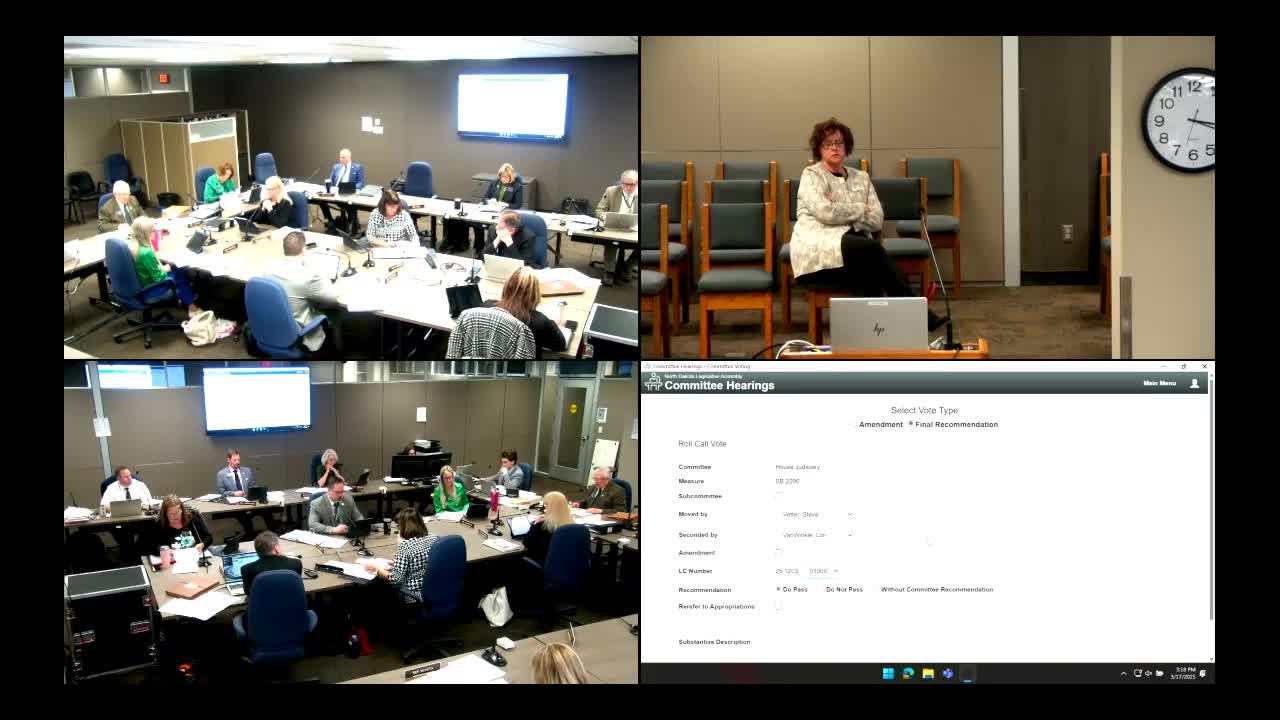
On roll call, the committee approved a do-pass recommendation for Senate Bill 22-90, 12 yes, 1 no, 1 absent. Representative Wolf agreed to carry the bill to the floor.