Get Full Government Meeting Transcripts, Videos, & Alerts Forever!
Get email alerts on the Domestic Violence Funding topic
No spam. Unsubscribe anytime.
Advocates cite rising caseloads, federal funding uncertainty and ask state to maintain or increase support
Summary
Representatives of North Dakota domestic and sexual violence service providers described rising demand, reliance on federal grants and private fundraising, and urged the legislature to preserve House‑level funding and consider prevention and supervised-visitation expansion.
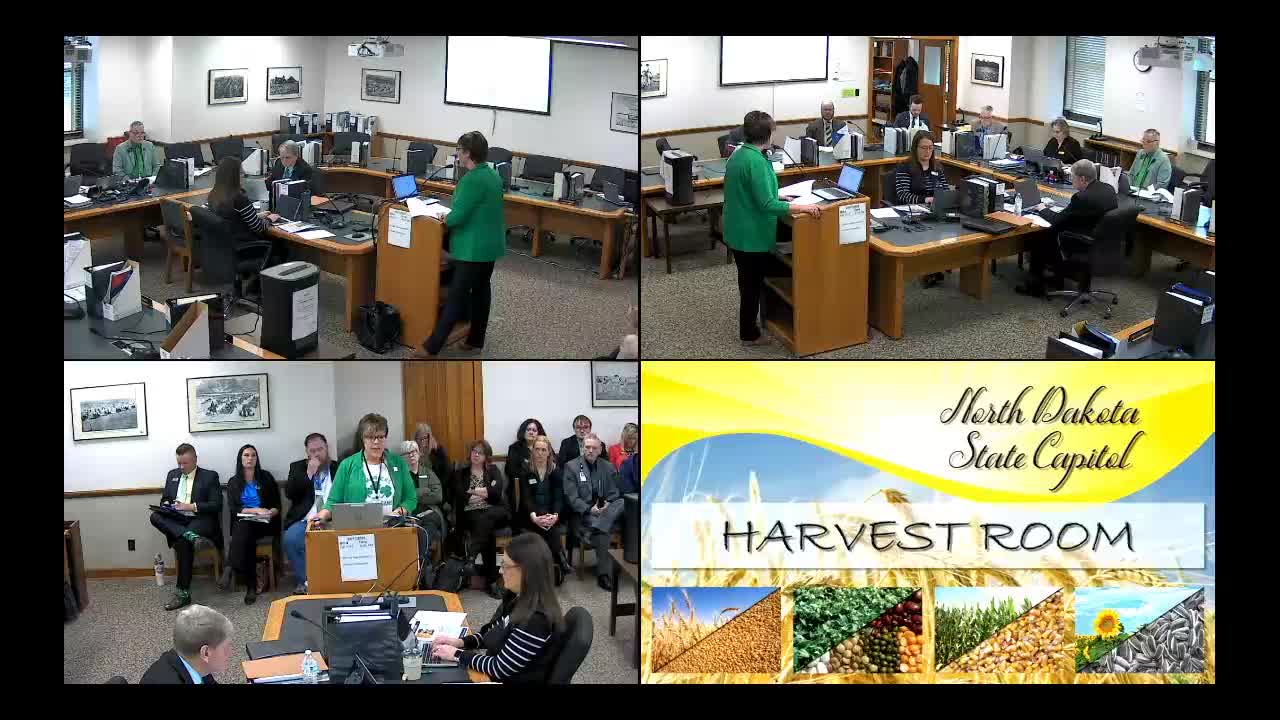
Representatives of North Dakota's domestic and sexual violence service network told the Senate Appropriations Human Resources Division that demand for services has grown and that federal grant uncertainty is causing concern for programs that rely on a mix of federal, state, local and private funding.
Seth O'Neil, speaking for the North Dakota Domestic and Sexual Violence Coalition, said the network of 19 member organizations served 7,400 survivors in 2023 and reached about 49,000 community members with prevention education. He urged preservation of the House funding levels included in the state's budget proposal and noted that 40% of North Dakota homicides are related to domestic violence in the period cited by the coalition.
Koya Tompkins Inman, president and CEO of Community Violence Intervention Center (CVIC) in Grand Forks and volunteer legislative committee member for the coalition, described the coalition's revenue mix: "The federal piece of this pie chart here is about $6,800,000 statewide. Private funding is $6,500,000. State funding...is now 3.7, almost 4 [million]." She said local contracts (city and county) form another material funding component and that recent volatility in federal Victims of Crime Act (VOCA) funding has increased uncertainty.
Why it matters: witnesses described growth in service demand and a substantial share of victims who are children—CVIC and partners reported roughly 4,200 children impacted statewide in 2023—and told senators that both crisis services and prevention programming require steady funding. Koya noted the coalition uses state funds to expand shelter, advocacy and supervised‑visitation services and to pilot school‑based prevention programs.
Program details and outcomes: CVIC representatives gave a prevention example (PACT youth bystander program), reporting post‑training survey improvements in students' willingness to intervene and seek help. Witnesses said last session's state funding increases allowed some organizations to add advocates and outreach programs statewide; smaller programs still face capacity and data-collection constraints.
Ending: coalition leaders asked lawmakers to preserve or increase state allocations (the coalition had requested more than the House recommendation) and to consider continued attention to VOCA and other federal funding streams. No committee vote or formal action occurred during the testimony.